

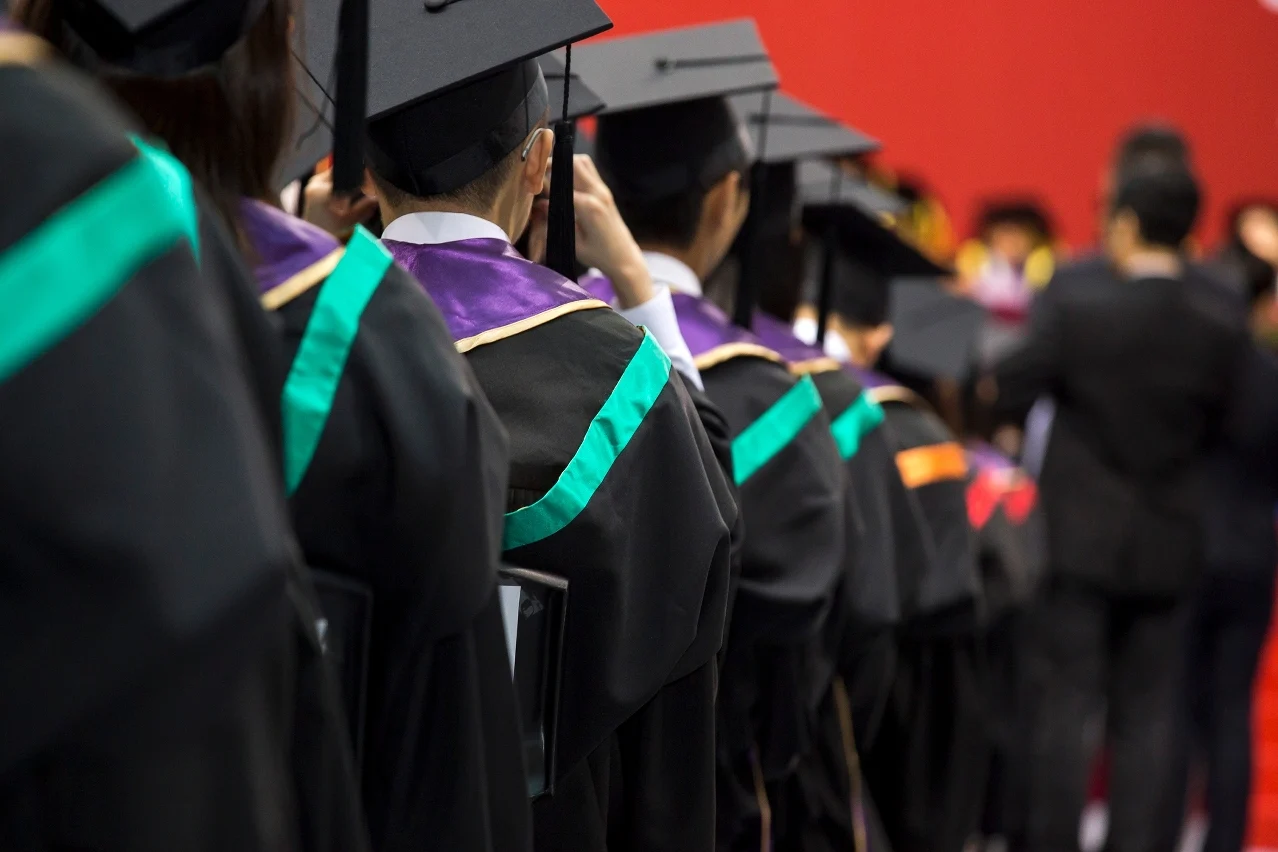
When she chose Neuroscience, Lok I found information on career opportunities in this field in Macau and mainland China that she describes as “almost non-existent.” The student also tried to look for an internship during the summer break in Hengqin, but ended up working in marketing, in a role unrelated to her degree.
For Ben Wong, a career advisor, the government should not “limit itself to encouraging students to choose areas considered strategic.” Investment in industries covered by the “1+4” strategy should be accompanied by the “early identification” of the “skills and specializations that will be needed in the coming years.”
“Beyond providing funding and land, what network of contacts and policy incentives can the government offer?” asks Ben Wong. “We cannot leave all responsibility to the market, because the market is driven by profit; if something is not profitable, it will not move forward. Therefore, the government must reflect and intervene from a macro-industrial perspective, rather than assuming that leaving things to market mechanisms will make them resolve themselves.”
Lok I, who studies Neuroscience and Psychology at King’s College London, has considered alternative pathways offered by her training, including a “possible transition” into areas such as “machine learning” and “artificial intelligence.”
The mismatch between degree and profession has, in fact, become the new normal. This does not mean a waste of specialization, but reflects the advantage of ‘interdisciplinarity’ – Ben Wong, advisor
Her experience in Hengqin, however, showed her that “vacancies in high-tech fields, except for Artificial Intelligence, remain limited in Macau and in the In-Depth Cooperation Zone.”
Courses without guaranteed employment
“Professions once seen as ‘iron rice bowls’ [lifetime jobs] that guaranteed employment immediately after graduation are now highly saturated,” says Ben Wong to PLATFORM.
Read more: Sands China hosts “New Norm · New Mindset” Talent Development Showcase
Working in career planning since 2013, Wong has observed a shift in students’ priorities. Before 2017, most chose degrees based on personal interests. In later years, more than 70% became primarily concerned with which degree would make it easiest to enter the civil service.
The pandemic, declining birth rates, and other social changes have meanwhile contributed to saturation in traditionally popular fields such as education, forcing students and families to rethink expectations.
Wong also recalls earlier incentives to train “Chinese–Portuguese translation talent.” Many high-performing students chose that field, but “found few job openings after completing their studies,” in a context where major conferences were held only every two years. “Some ended up leaving Macau or changing professions.”
Lok I says the career guidance she received in secondary school had little practical use. “At the time, career planning was handled by a Physics teacher, and the content was limited to providing interview questions or past university admission cut-off scores.”
Vacancies in high-tech fields, except for Artificial Intelligence, remain limited in Macau and in the In-Depth Cooperation Zone – Lok I, university student
In her view, the system functioned mainly as a “matching of grades to courses,” with the “university admission rate as the main performance indicator.”
When she decided to apply for Psychology and Cognitive Sciences, despite strong science grades, teachers questioned her for “wasting her grades.” Her family also tried to convince her to study Medicine, linking it to “high salaries and social status.”
For the student, the problem continues through university, especially for those studying outside Macau and with limited contact with the local job market: “Career planning at the university stage should no longer be one-way, but needs interaction and real information.”
Lok I advocates for “more seminars and job fairs” that allow students to establish “direct contact with representatives from different sectors,” with the aim of reducing “information isolation” and providing a “more concrete view of available opportunities.”
Talent follow-up
To avoid waste of resources, Ben Wong proposes that the government “make better use of the existing talent database” and “connect secondary-school career guidance with post-graduation tracking of students.”
Read more: O Lam wants to promote the mobility of talent in the cultural sector between Macau and Hengqin
For young people pursuing priority fields abroad, he suggests creating a “long-term contact and joint training mechanism.”
Faced with the perception that no degree currently guarantees employment, Wong believes it is necessary to “accept a new professional reality”: “The mismatch between degree and profession has, in fact, become the new normal. This does not mean a waste of specialization, but reflects the advantage of ‘interdisciplinarity’.”
The advisor urges graduates from mainland China, Hong Kong, or other countries not to “limit themselves to returning to Macau to work immediately after graduation.”
“They should consider working in those markets first”, gaining “experience” in their respective industries. A later return could “broaden professional perspectives” and bring to Macau “knowledge capable of contributing to the development of industries covered by the ‘1+4’ strategy.”
