

For years, the debate over Macau’s economic diversification has focused on infrastructure, investment, public policy, and new industries. Traditional Chinese medicine, technology, modern finance, conventions and exhibitions, the digital economy, and cooperation with Hengqin have all featured prominently. All of these are important. Yet, as the Region enters a new phase of its development, it is becoming increasingly clear that the central question lies elsewhere.
Who will build this diversification? No economic strategy delivers results simply because it exists in a government plan. No technology park generates innovation on its own. No research centre creates wealth without people capable of transforming knowledge into products, businesses, and solutions for society. The real challenge of Macau’s economic diversification is not financial—it is human.
The history of the world’s most successful economies shows that the decisive factor is neither the size of a territory nor the abundance of natural resources. What truly matters is the ability to attract, develop and retain talent. This was the case in Singapore, Silicon Valley and Shenzhen. It will also be the case in Macau.
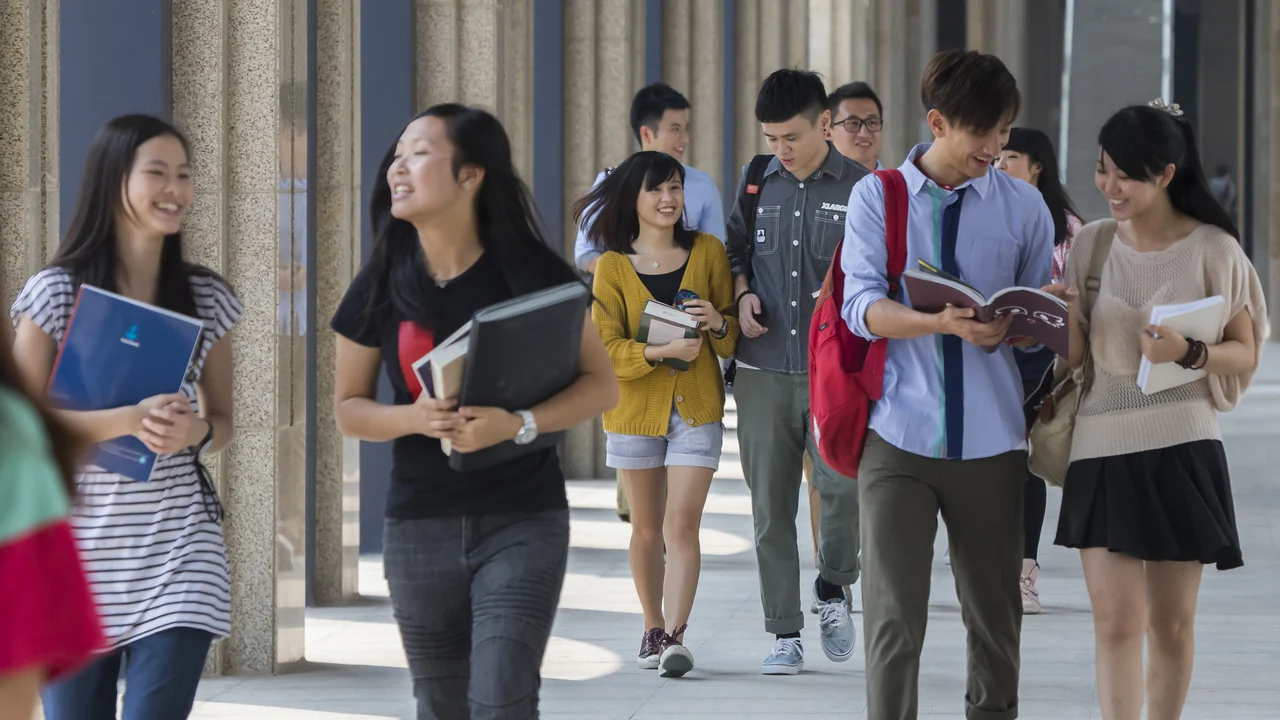
Over recent decades, the Macau Special Administrative Region has invested significantly in education, higher education and the qualifications of its population. Local universities have raised their international profile, established advanced research laboratories and strengthened cooperation with institutions around the world. Today, Macau’s academic quality is recognized far beyond the limits of its geographical size.
But education is only the first step. The next question is whether the Region can create enough opportunities for its young people to remain in Macau and find career prospects that match their qualifications and ambitions.
This is particularly relevant for an economy that, for decades, has been heavily concentrated in a small number of sectors. Many of the brightest graduates in fields such as engineering, data science, biotechnology, artificial intelligence and scientific research continue to seek professional opportunities elsewhere in the Guangdong-Hong Kong-Macau Greater Bay Area or in international markets.
This phenomenon is not unique to Macau. Global competition for talent has become one of the defining characteristics of the contemporary economy. Cities and regions now compete for researchers, entrepreneurs, engineers, technology specialists and highly skilled professionals with the same intensity that they compete for investment and businesses.
Macau’s response increasingly depends on its integration with Hengqin. The Guangdong-Macau In-Depth Cooperation Zone has been designed as a laboratory for new development policies. Its mission is not simply to provide physical space for Macau’s economic expansion; it is to create the conditions for new industries, businesses and professional opportunities to emerge.
The logic is straightforward: Macau offers universities, research centres, international experience and strong global connectivity. Hengqin provides space, scale, infrastructure and the conditions necessary for the growth of emerging industries. Together, the two can create an ecosystem capable of competing for talent in one of Asia’s most dynamic regions.
 Macau and Hengqin have been strengthening joint recruitment programmes, incentives for attracting and retaining highly qualified professionals, and mechanisms designed to facilitate mobility between the two. Increasingly, the concept of a “Macau + Hengqin” model is built around the creation of an integrated platform for talent and innovation.
In this context, the future Macau-Hengqin International University Town assumes particular strategic importance. More than an educational project, it represents a vision for the future. The objective is not simply to educate students, but to create an environment capable of attracting academics, researchers and young talent from around the world, bringing together education, research, entrepreneurship and innovation within a single ecosystem.
This international dimension is particularly important for Macau. Under the “One Country, Two Systems” principle, the Region possesses unique characteristics that enable it to serve as a platform connecting different cultures, markets and systems of knowledge. Its longstanding relationship with Portuguese-speaking countries represents an additional advantage at a time when China is seeking to deepen international cooperation in science, technology and education.
The talent of the future will be increasingly global: researchers will collaborate across continents; companies will recruit multicultural teams; innovation will emerge from the combination of different experiences, skills and perspectives. Macau has exceptional conditions to participate in this process. But for that to happen, tangible opportunities must be created.
Young people need career prospects. Researchers need funding and infrastructure. Entrepreneurs need access to capital and markets. International professionals need conditions that allow them to live, work and develop their projects.
 Building a knowledge-based economy requires far more than modern buildings or strategic plans. It requires an environment in which people can imagine their future. For a long time, the city was recognised for its ability to connect markets, cultures and countries. In the 21st century, it has the opportunity to establish itself with an even more ambitious mission: connecting talent, knowledge and innovation.
Because economic diversification will ultimately be determined not only by the sectors Macau seeks to develop, but above all by the people who choose to build their future here.
