

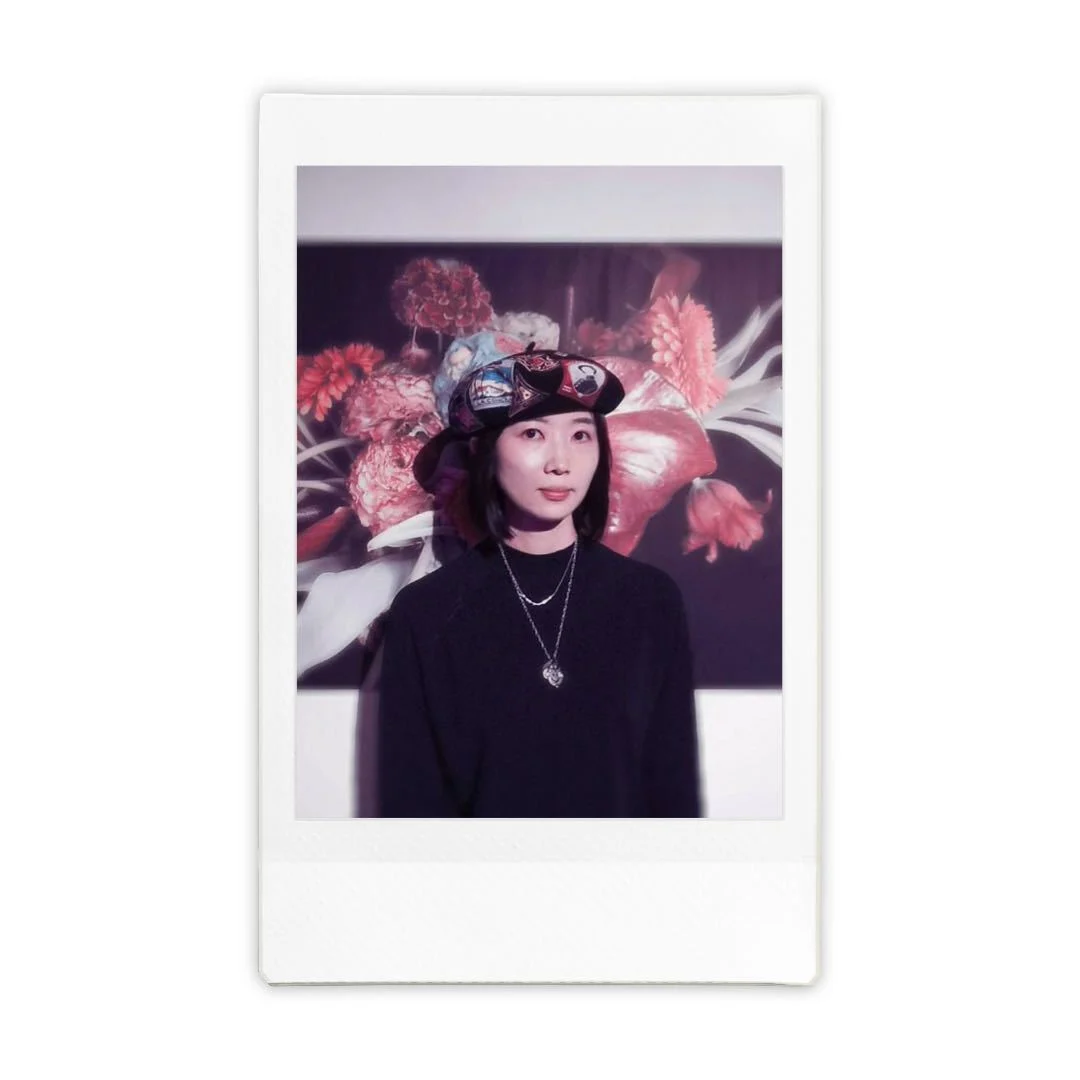
– How have MyLand Culture’s interventions in public spaces and communities shaped your view of Macau?
P.L.C. – MyLand Culture means “people coming together” in Cantonese; its English pronunciation, My Land, represents our exploration of the culture of this land. That is why many of our earlier projects sought to use art to expand our urban imagination and discover Macau’s unique cultural spirit.
Beyond conventional formats such as exhibitions and performances, and traditional venues such as galleries and museums, we also frequently enter public spaces such as markets and old villages. We firmly believe that art can maintain a high level of professionalism while drawing inspiration from local life and integrating itself into everyday life, becoming a subtle force for responding to society and the public.
For us, community intervention is not simply about organizing events, but about breaking down boundaries between mediums, disciplines, regions, and communities. When different ideas and cultures meet in everyday life, art stops being something inaccessible and becomes fertile ground connecting people to the land and inspiring the city’s endless possibilities.
– You have worked at the Cultural Affairs Bureau, in commercial galleries, and in independent organizations. How do those experiences influence your approach to arts management and curating today?
P.L.C. – Throughout my career, my experiences in the institutional, commercial, and independent sectors have allowed me to better understand the different operating models and underlying needs of art within different institutions, contributing to my thinking about administration, management, and artistic development.
These multidisciplinary experiences taught me to put myself in the position of different stakeholders and think from their perspectives. This has helped me greatly in finding a more precise balance between different viewpoints in managing MyLand Culture and developing its various projects.
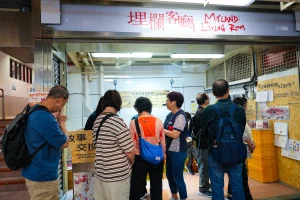
More specifically, Macau’s nonprofit arts and cultural organizations generally rely heavily on government subsidies, but this funding inevitably comes with certain administrative structures and limitations. My administrative experience led me to think about how to break away from a single model and maximize artistic benefits within limited conditions.
In addition, we maintain in-depth exchanges with partners outside Macau and in other regions. Understanding how similar organizations elsewhere overcome existing structures and gain access to more diverse resources has not only given MyLand Culture a broader international perspective, but has also led us to continually consider ways of ensuring sustainable operations in the face of real resource constraints.
– Given the high costs and shortage of independent spaces, what is the central idea behind MyLand Living Room and the temporary-space model?
P.L.C. – In Macau, independent art spaces are facing a situation close to collapse. Although some groups have tried in the past to rent permanent spaces for exhibitions, the high costs have ultimately made it difficult for many independent spaces to survive.
Read more: Macau: “A Glimpse of Chinese Culture” in Lisbon
Given the shortage of spaces, we believe the most flexible and appropriate response at this stage is to introduce the concept of Pop-up Space and launch the Hidden Living Room project. We are currently implementing this concept in two stalls at the Red Market.
For us, the idea of Hidden Living Room is not simply about borrowing or renting a space, but about creating a dynamic and sustainable Art Space platform. Holding exhibitions and community projects continuously in different locations allows us to stimulate dialogue quickly and create micro-communities with a sense of belonging.
Given Macau’s current circumstances, MyLand Living Room aims to continue its temporary, guerrilla-style artistic interventions, penetrating more deeply into existing gaps within communities and opening up new possibilities for independent artistic practice in Macau.
– What role should the government, gaming concessionaires, and local businesses play in building a more sustainable arts ecosystem?
P.L.C. – The biggest obstacle to building a healthy and sustainable arts ecosystem in Macau is excessive dependence on a single source of funding, a problem that has existed for a long time.
In other cities, however, in addition to government subsidies, there are many private companies, commercial entities, or individual foundations that support the arts. This is precisely what Macau lacks most.
I believe that, beyond the resources currently provided by the government, it would be a significant step forward if large corporations, financially capable local companies, or individuals could fund different forms of artistic creation through foundations or long-term support funds.
Currently, funding guidelines tend to follow certain policy priorities established each year, requiring groups to align with those policies in order to survive. The existence of more diverse and independent funding organizations would allow Macau society to foster multifaceted creative expression. A healthy arts ecosystem is built precisely on this diversity and potential.
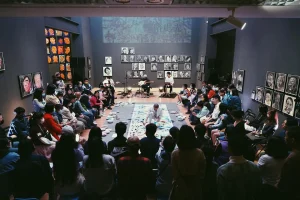
Beyond funding and spaces, human resources are another major challenge.
Current funding is, in most cases, calculated on a project-by-project basis, but running an organization involves far more than actually carrying out each project. Before a project begins, the team has to invest a considerable amount of human resources and time in negotiations and coordination with different stakeholders, including the government, the community, and businesses, while also ensuring the organization’s day-to-day operations. These upfront human-resource costs are rarely reflected in project subsidies.
What Macau needs now is no longer just short-term funding for individual events, but operational support and stable, long-term spaces for arts and cultural groups with potential. Only by providing people and spaces with sufficiently fertile ground can Macau’s artistic and cultural energy truly take root.
– As a curator and educator, how do you view the intergenerational transmission of Macau’s artistic spirit and the development of new audiences?
P.L.C. – For Macau’s arts and cultural ecosystem to develop in a healthy way, broadening arts education and developing audiences are ultimately the most important foundations.
This shows that the public’s current entertainment choices and consumption habits still rarely include “artistic and cultural life.” Yet the sustainability of an ecosystem depends to a large extent on the number of people who appreciate art and are willing to invest in cultural life. Only when audiences develop the habit of appreciating art and the willingness to consume it can resources create a virtuous cycle in the arts and cultural market.
That is why expanding arts education is urgent. We have seen the government continuously promote it, for example through the Macau International Children’s Arts Festival in recent years, which is a very positive start.
However, arts education is a long-term project, and Macau may have started later than other places in these areas. Prolonged collaboration between the government, schools, and different arts and cultural institutions is therefore necessary, along with time and patience to deepen this work and truly create fertile artistic and cultural ground for the next generation.
– What is unique about Macau art in the regional and international context, and what role do you hope MyLand Culture will continue to play?
P.L.C. – Although MyLand Culture has very limited resources, we hope to remain rooted locally, innovate across borders, establish international connections, and engage with society through art. We hope to collaborate with partners from different fields through curatorial and artistic practices, allowing art to continue growing through exchange and promoting the creation and sharing of ideas and knowledge.
Macau has an extremely rich history and culture, and many academics and historians have conducted extensive research into historical archives and oral histories. However, this valuable information is often far removed from the general public. I believe one of the most important functions of art is to “transform” this dense knowledge and information, making it easier for the public to absorb and understand.
Read more: Macao’s Century-old Industrial Memory Flourishes Anew
Ao mesmo tempo, o contexto social de Macau é único a nível mundial: temos uma área territorial reduzida, mas uma profunda riqueza histórica, e o PIB encontra-se entre os mais elevados do mundo. Esta estrutura particular encerra muitas questões contemporâneas que merecem ser debatidas. Por isso, também esperamos explorar a sociedade através da arte.
Para estimular novas possibilidades, realizaremos em breve, em Portugal, uma exposição intitulada “Into the Radiant Darkness”, convidando artistas das duas regiões e provenientes de duas diferentes formas artísticas a participar num diálogo urbano intercultural. Esperamos que esta combinação produza uma reação química de “1+1>2”.
Para mim, estabelecer ligações com a comunidade internacional não significa apenas levar artistas de Macau ao estrangeiro e permitir que o exterior conheça a criação local. Significa também expor os artistas locais a diferentes modelos de trabalho e permitir-lhes compreender as questões que estão a ser debatidas na linha da frente da arte contemporânea mundial.
No futuro, eu e a MyLand Culture esperamos continuar a desempenhar este papel de ponte, reforçando o desenvolvimento local através do intercâmbio entre regiões e permitindo que a arte de Macau continue a demonstrar a sua vitalidade insubstituível, tanto no plano internacional como no seio das comunidades.
