

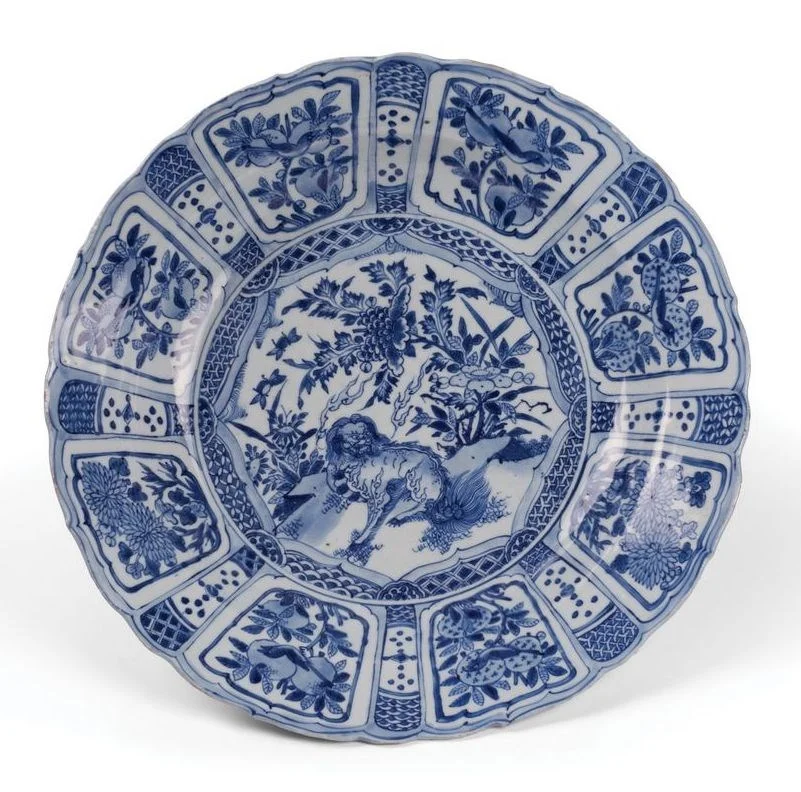
The “Jingdezhen Handcrafted Porcelain Industry Remains” consists of 5 components, encompassing 15 groups of heritage elements including kiln sites, porcelain stone mines, processing sites, and land and water transport networks, totalling 45 heritage locations. The property area covers 1,979 hectares, with a buffer zone of 5,545.7 hectares, amounting to a total of 7,524.7 hectares.
These remains represent the handcrafted porcelain industry system of Jingdezhen from the 10th to the 19th centuries, bearing witness to China’s profound impact on the development of the global porcelain industry and the mutual exchange of civilizations. In this history of global expansion, Macau played a pivotal role.
Macau heritage expert Zhao Qiang once pointed out: “As the foreign trade hub connecting China’s inland production system with global ocean routes in the 16th and 17th centuries, Macau is the indispensable ‘Maritime Silk Road code’ and historical witness for interpreting Jingdezhen’s World Heritage value and highlighting the global spread of Chinese porcelain.”
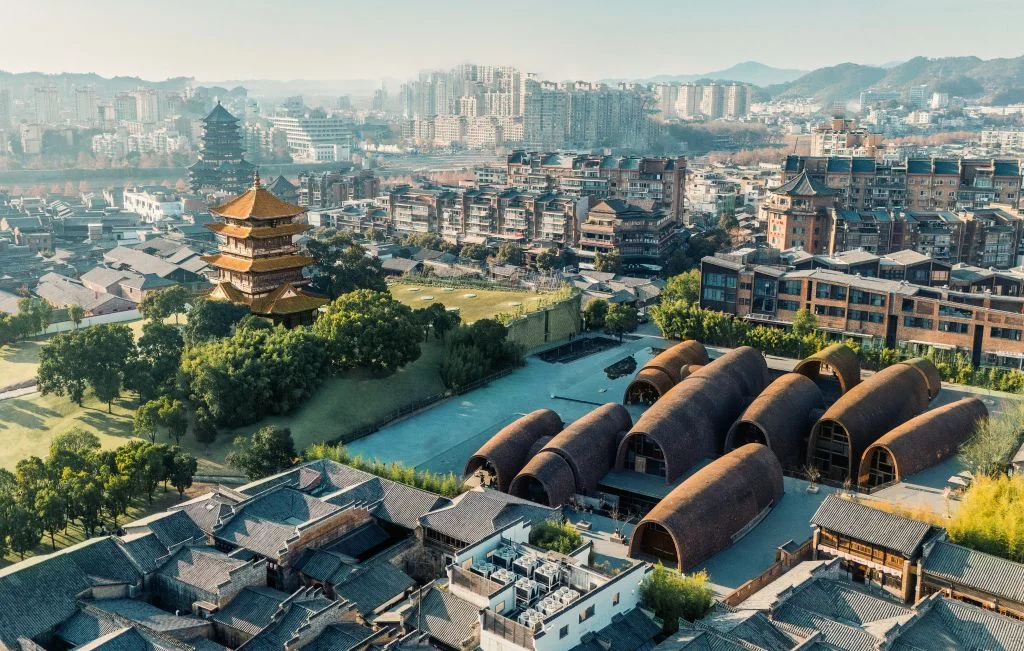
Known as the “Millennium Porcelain Capital,” Jingdezhen is located in Jiangxi Province in southeastern China. Although an inland province, it borders coastal provinces such as Zhejiang and Fujian to the east, and Guangdong to the south.
As early as the mid-16th century, there were records of Portuguese merchants ordering porcelain from China. After the Portuguese were permitted to settle in Macau in 1557, it rapidly developed into the most important international free-trade transit port on the South China coast.
Since then, the trade of custom-ordered porcelain from China became normalized, and the variety, quantity, and scale of Chinese ceramics exported to Europe grew exponentially. European merchant agents and missionaries in Macau submitted requests for specific shapes, patterns, and functions, which were transmitted to Jingdezhen via Chinese merchant networks, ultimately leading to the birth of “Kraak porcelain.”
Kraak porcelain is a type of export blue-and-white porcelain produced during the Ming Dynasty. The term “Kraak” originated from the 16th and 17th-century European name for Portuguese carracks (armed merchant ships). In the early 17th century, the Dutch captured a Portuguese Kraak ship in the Strait of Malacca, causing a sensation. The name “Kraak porcelain” from the subsequent auction became globally renowned.
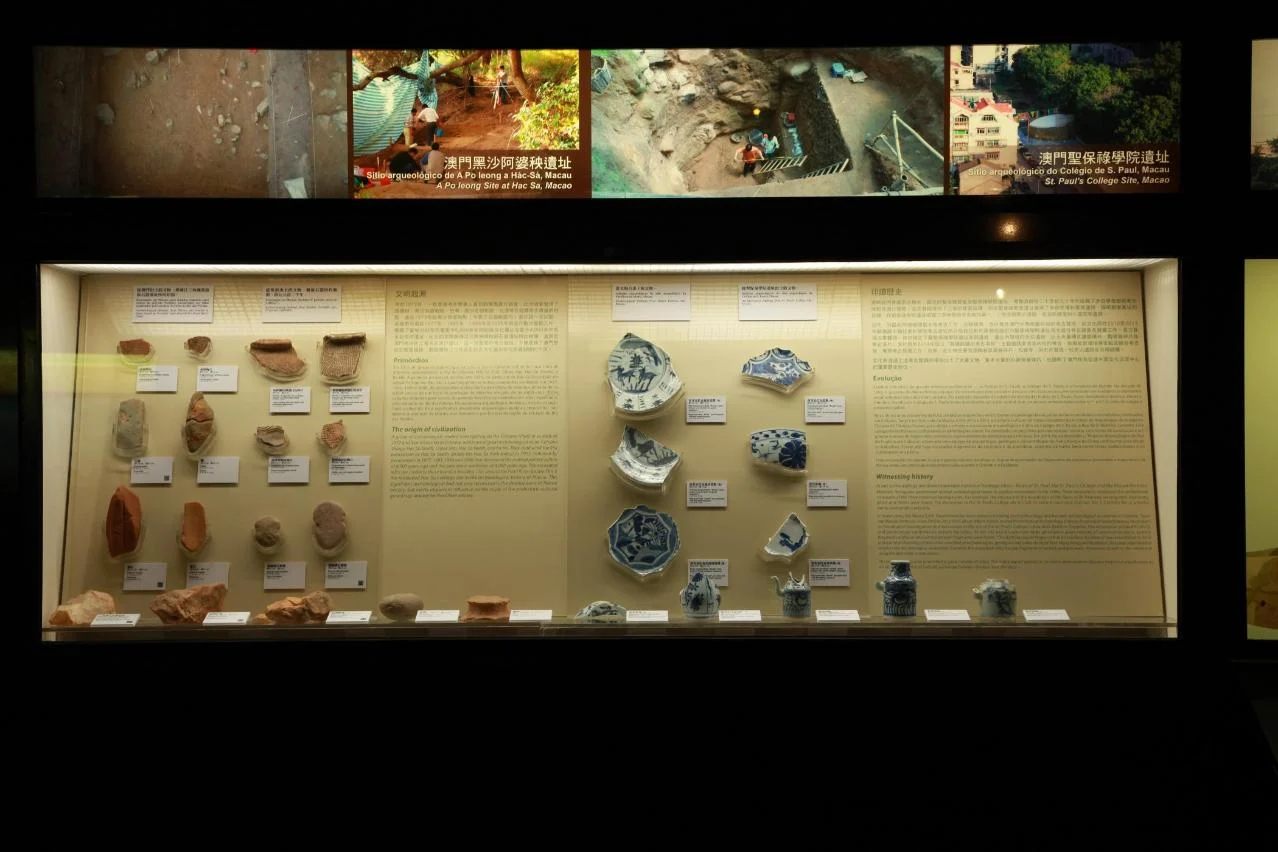
The Macao Museum displays Kraak porcelain from the Ming Dynasty.
Meanwhile, Jingdezhen’s products were integrated into the global supply chain via Macau, exported not only to Portugal and the Netherlands but also as far as Spain, Britain, and other European nations, as well as the American colonies.
The continuous flow of Jingdezhen porcelain to Europe via Macau inspired European innovations—such as the German Meissen kiln’s breakthrough in high-temperature hard-paste porcelain technology—making Macau a true frontier for the integration of Chinese and Western technology and art.
This development reached its peak in the 17th century. Portuguese potters extensively utilised blue decoration, referencing the style of Chinese Kraak porcelain and striving to replicate distinctive Eastern themes such as landscapes and figures, pavilions and terraces, as well as flora and fauna.
Read also: Macau: “Heritage has no value without people”
These prominent Chinese cultural elements profoundly influenced the aesthetic tastes of the Portuguese pottery industry. Entering the 18th century, the iconic blue-and-white colour scheme of Chinese blue-and-white porcelain was widely applied to the decorative motifs of Portuguese azulejos (painted ceramic tiles) and extended into the realm of architectural ceramics.
European countries were enthusiastic about incorporating Chinese artistic styles into their ceramic production, while Chinese ceramic production concurrently made adaptive innovations in response to the demands of the European market.
From the 17th to the 19th centuries, the production of custom-ordered European porcelain reached its zenith, and Chinese artisans began integrating their own imaginations of the West into the painting of export wares. During this period, both the structural shapes and the decorative details of the porcelain demonstrated a harmonious integration and mutual brilliance of Chinese and Western cultures.
Jingdezhen’s successful World Heritage bid has filled a gap regarding the theme of “porcelain” in the World Heritage List. Furthermore, the cultural ties forged among Jingdezhen, Macau, and Lisbon through blue-and-white porcelain and tiles serve as vivid testimonies to the Maritime Silk Road. A single porcelain connects three cities; blue-and-white reflects both East and West. This civilizational dialogue, spanning 500 years and connecting three continents, continues to endure to this day.
