

“The audience is essential to the life cycle of an audiovisual work. I made the documentary for the audience and the more people who see it, the better,” he tells PLATAFORMA. Sanmarful thanks the Rui Cunha Foundation for the opportunity to screen the film again and stresses that Macao remains the place where the work “makes the most sense”, as it was conceived with the city’s residents in mind.
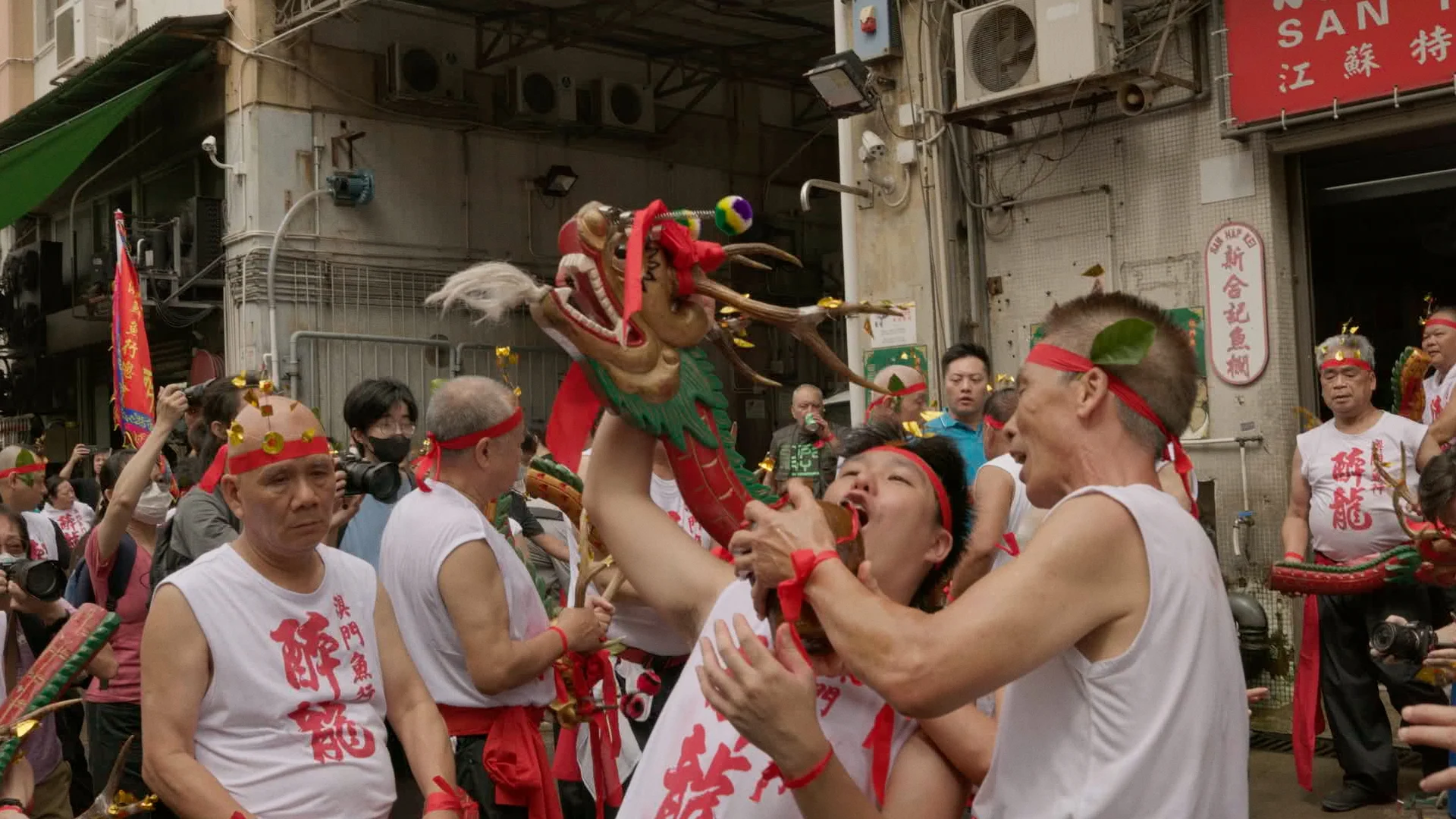
Running for around an hour, the documentary combines archival footage of the 1999 handover with testimonies from eight residents, including Ip Tat, president of the Na Tcha Temple Association, and Elisabela Larrea, president of the Macanese Culture Research Association.
Spoken in three languages, “Heritople” seeks to portray a city shaped by different communities, memories and traditions. Its title combines the English words “heritage” and “people” — the two ideas underpinning the entire narrative.
Sanmarful draws on a definition by film critic Roger Ebert, who described films as “machines that generate empathy”. With this principle in mind, he explains, he sought to bring together communities that, despite cultural differences and communication difficulties, share “the same concerns about the city, its heritage and its future”.
“We all want what is best for Macao,” he says. The director also wanted to show that “heritage has no value without people”: without the stories of those who experience it, all that would remain would be “forgotten stones, papers and sounds”. The testimonies therefore serve as the documentary’s narrative thread.
Read also: Macau recognizes 8 promoters of intangible cultural heritage
Produced by the International Institute of Macau, “Heritople” required several weeks of filming and around 200 hours of editing. In December, it was named best documentary at the Bangkok Movie Awards, recognition that helped promote the work outside the city.
Even so, Sanmarful acknowledges that the film “was not made for a foreign audience” and requires a deep understanding of the local context, which may explain its more limited reception at some festivals. Despite this, it has already been screened in Macao, Portugal, France, Thailand and Hong Kong, “always receiving a positive response from audiences”.
A year after its premiere, the director says he does not interpret the testimonies differently. He describes himself in this process as “more of a taxi driver than a director”: he carried the interviewees’ feelings into the film, while trying not to alter what they had expressed.
He recognises, however, that Macao has changed and that, if he conducted the interviews again today, he would probably receive different answers. “We, like culture itself, are constantly changing.”
Sanmarful is now working on a new documentary, which is expected to be completed by the end of 2027. He has also finished a Cantonese-language short film, currently competing at festivals, and is seeking funding for another short film to be shot later this year. “All of the projects remain connected to Macao”, he concludes.
