

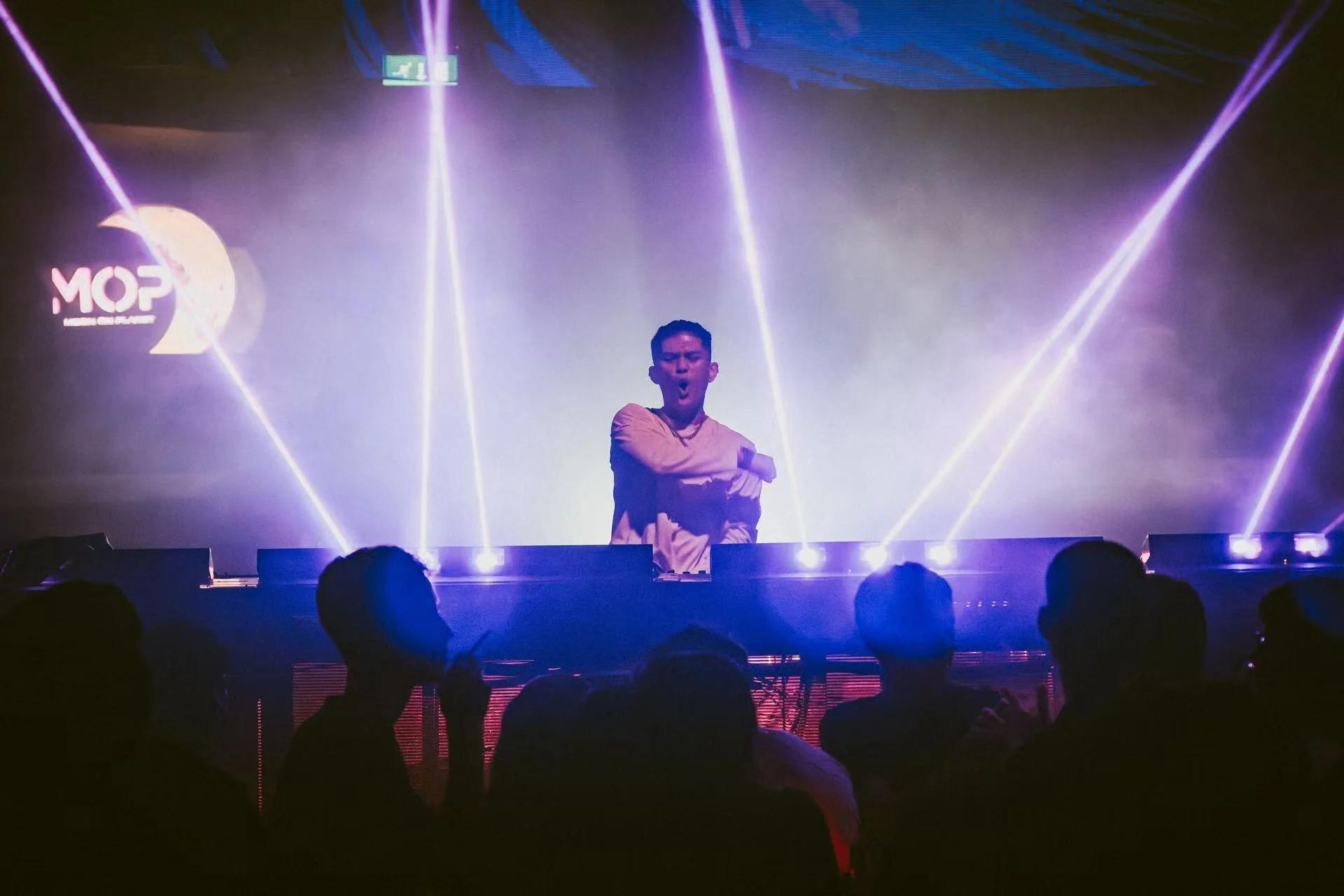
Although they coexist in the same city, the two DJs operate in quite different circuits. PRINSI works as a resident DJ, meaning he’s contracted to work at a specific club, where the audience is mostly looking for “a fun night out.” RASREI is part of the local underground scene, made up of independent events promoted by collectives and small venues.
For PRINSI, artistic freedom exists, but it comes with the responsibility of responding to the context of the night. “I’d say it’s a 50-50 split. Most of the time it depends on me, but if there’s a theme or a specific event, I have to follow that style.” Even so, he sums up his philosophy in one simple line: “I believe being a DJ is about taking the audience on a journey.”
That capacity for adaptation is also the main lesson he’s drawn from years as a resident DJ: “The main goal of a DJ is to create an atmosphere where people want to dance and to be able to read the energy of the room,” he tells PLATFORM. “These days, when I step onto the stage, I don’t even need to think. I just let my passion and experience flow,” he says.
In the underground scene, the logic is different. RASREI has freedom to choose the music in “90%” of his performances: “There are no rules imposed by the venue or the audience, because people already know the sound I play and know what to expect.” Even so, he acknowledges that programming still depends on “the theme of the event or the time slot you’re playing.”
Two dance floors, two audiences
The differences between the two circuits become even clearer when looking at who’s on the other side of the booth.
As a resident club DJ, PRINSI mostly encounters people “looking for a fun night out and a few drinks.” Some follow the music closely and dance, but many “don’t really pay attention to what’s playing, as long as the rhythm has energy.”
At underground events, meanwhile, the relationship between artists and audience takes on a different dimension: “People interact a lot with the performers and with the music,” RASREI describes. “They respond really well to what we play and they’re there to dance and express themselves in their own way,” he explains to PLATFORM.
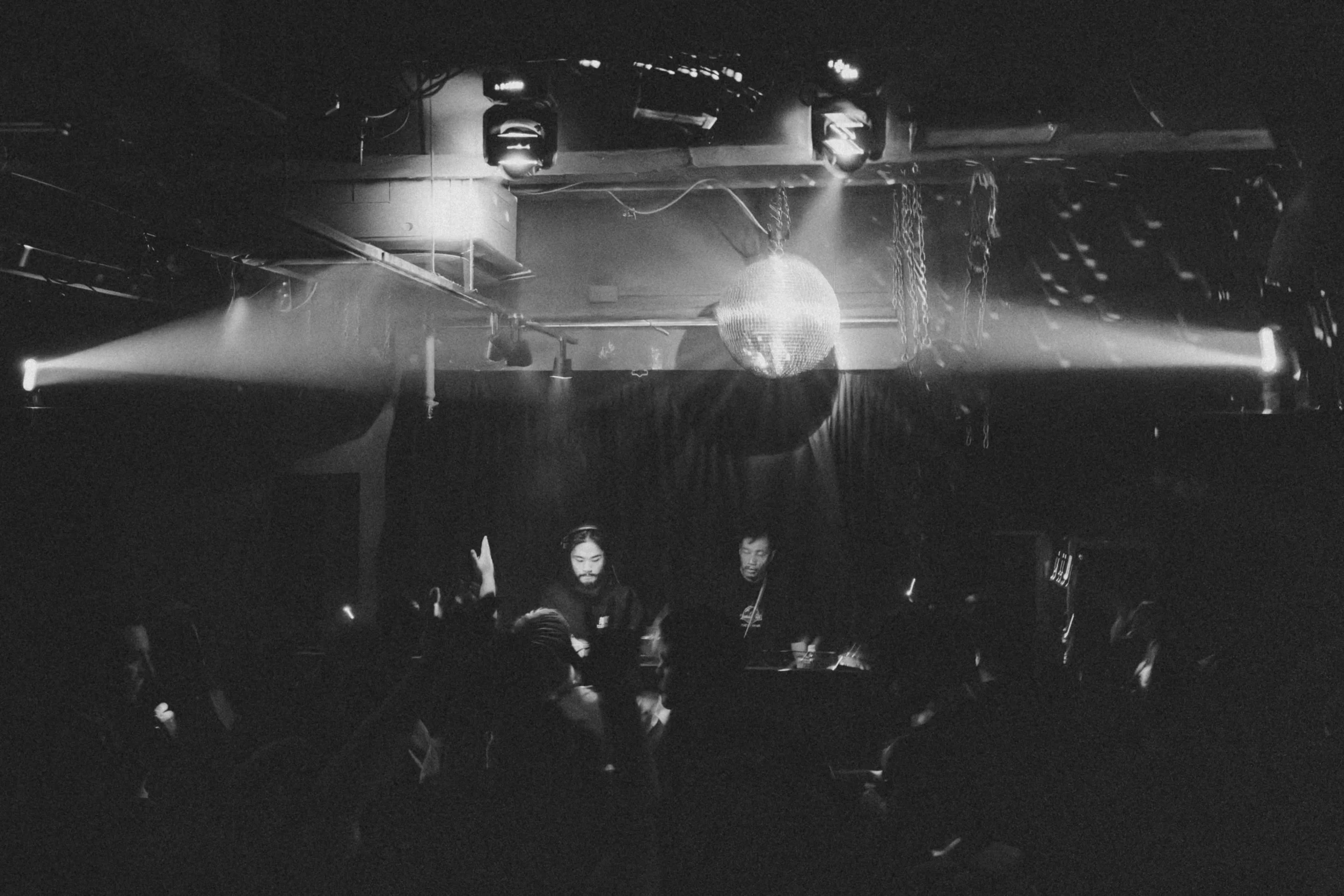
RASREI performing in an underground club
That difference also shapes how each of them approaches the profession. For PRINSI, music is a full-time career. “It’s my only source of income. I dedicate all my time and energy to DJing and music production.” He’s never questioned that choice: “I’m genuinely immersed in music and I can’t imagine myself doing anything else.”
In the alternative scene, the reality is different: “Being a DJ isn’t my only job. I don’t make much money from it because we’re not here for the money.” The goal, RASREI says, is something else: “We’re here for the culture, for the music and for the community.”
Read more:
More than income, RASREI sees these events as spaces of collective creation. “I wouldn’t want to switch sides. I’d rather be surrounded by people who like the same music I do. We’re not here to generate income, but to build something together, a space where everyone can be themselves.”
Despite operating in different circuits, both reject the idea of rivalry between the two scenes. PRINSI highlights the path he’s built alongside local and international artists and promoters. “I’ve taken part in and collaborated with several artists and organizers in and outside Macau, at many events and parties, and produced music across various genres.” His overall takeaway is one of gratitude: “All I can say is that I’m thankful for everything I’ve learned from my friends and colleagues.”
RASREI echoes that sentiment: “I respect the other scene. I think every audience has its own tastes.” Regardless of musical style, “the goal is to live in that moment with friends and have a good time,” always “with mutual respect.”
Neither of them is fazed by the possibility of switching stages. PRINSI believes his years as a resident DJ taught him “the importance of adaptability” and the ability to “read the energy of the room,” skills he considers essential in any performance.
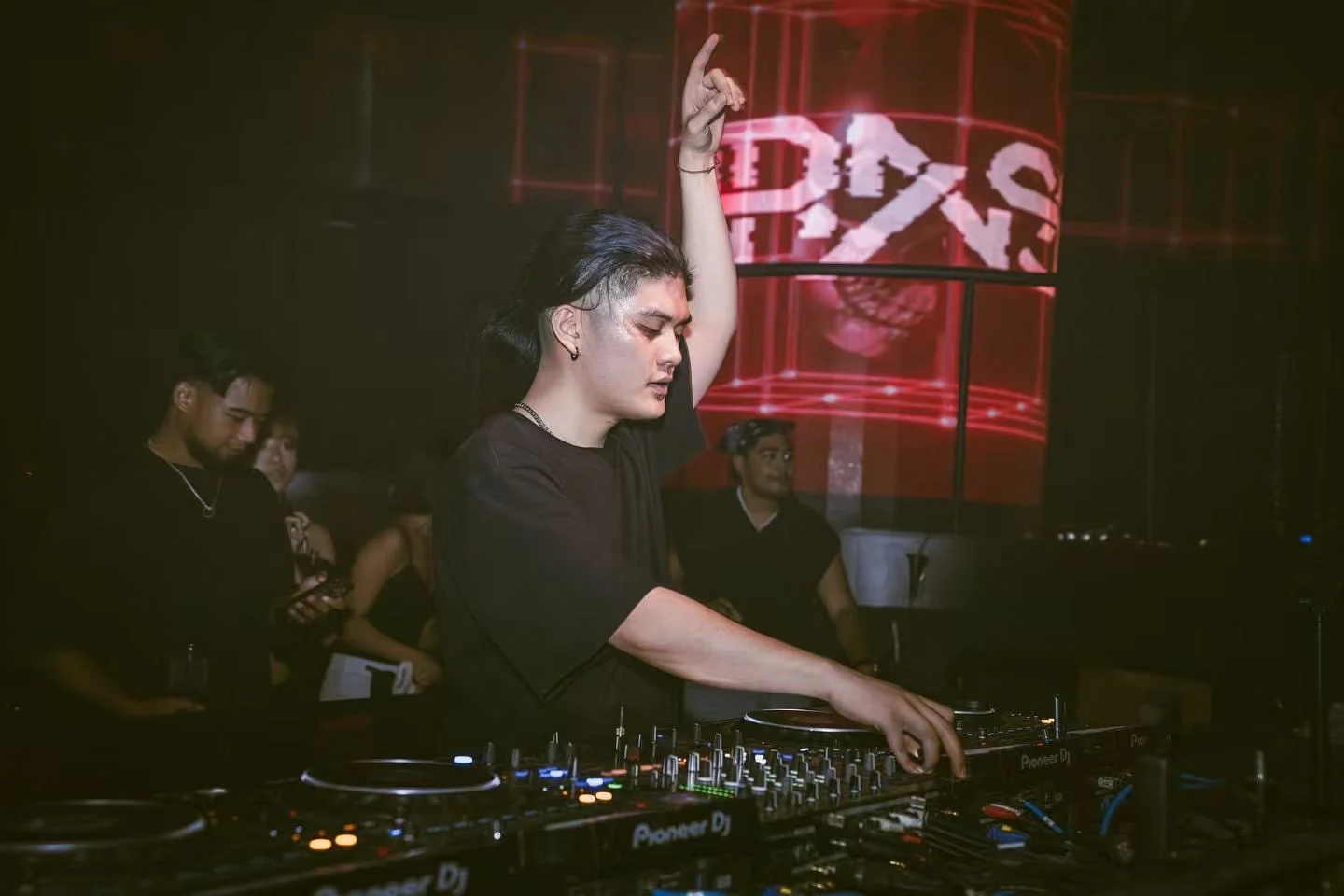
DJ PRINSI at a nightclub
On the other side, a similar view emerges: “Being a DJ is also about adaptation, reading the room, bringing people together and introducing them to new music. It’s all of that,” RASREI states.
Music beyond the casinos
When the conversation moves away from the DJ booth and into the city itself, the differences between the two paths become less obvious. Both acknowledge that Macau’s nightlife exists beyond the casinos, but each finds it in different places.
For PRINSI, the city has a low-key nightlife. “Locals avoid the casinos and go instead to some bars in Taipa or Cotai. There are clubs, but midweek everything is very quiet.” The rest is made up of simple routines: “Late-night drives, going to grab something to eat late, or having a drink somewhere. It’s boring if you’re looking for adventure; it’s charming if you’re looking for calm.”
RASREI points in another direction. The city’s true musical identity, he says, is found “in creative spaces, at a friend’s bar, in a studio or a café.” These are places where “people come together to create these spaces collectively.” He concludes: “Honestly, the best places are the ones you least expect.”
