

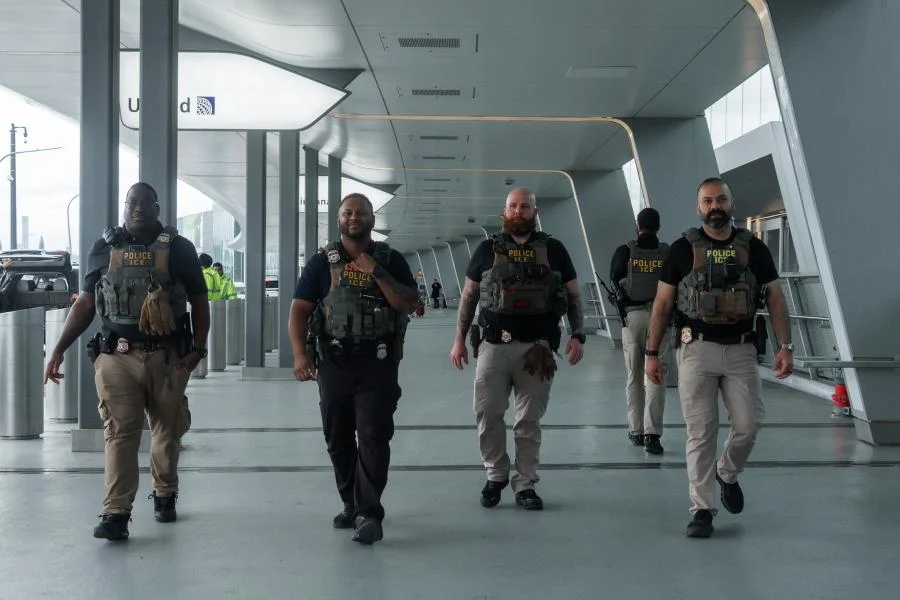
The Department of Homeland Security is preparing to spend up to $20 million to equip federal immigration enforcement agents with electric-shock gloves, drawing swift criticism from civil rights advocates.
According to a federal procurement notice, the government estimates allocating between $10 million and $20 million through early 2027 to acquire the devices for officers within Immigration and Customs Enforcement, specifically targeting distribution among Enforcement and Removal Operations and Homeland Security Investigations personnel.
The specialized gear, known commercially as the CT-G5 G.L.O.V.E. or Generate Low Output Voltage Emitter, delivers targeted electric pulses capable of temporarily disrupting muscle movement when brought into direct contact with a subject’s skin.
Federal documentation describes the procurement as an effort to provide agents with tools for distraction and de-escalation during field operations and detentions. The manufacturer maintains that the technology offers a humane method of physical control without causing permanent physical trauma, provided operators complete certified training and avoid applying the device to vulnerable populations, including pregnant individuals, children, and elderly persons.
Read more about this topic: ICE is increasingly arresting travelers at U.S. airports, even those with pending legal status. Here’s the agreement making it possible (with videos)
The planned non-competitive contract has ignited pushback from legal and advocacy groups, who argue that expanding non-lethal weaponry within immigration enforcement risks increased mistreatment of detainees and protestors. Rights organizations pointed to recent congressional budget increases under the Secure America Act as enabling expanded equipment acquisitions, raising concerns over oversight and agent accountability during enforcement operations.
The Department of Homeland Security and the device manufacturer have declined to provide additional details on the timeline for distribution or operational protocols governing the use of the equipment in the field.
