

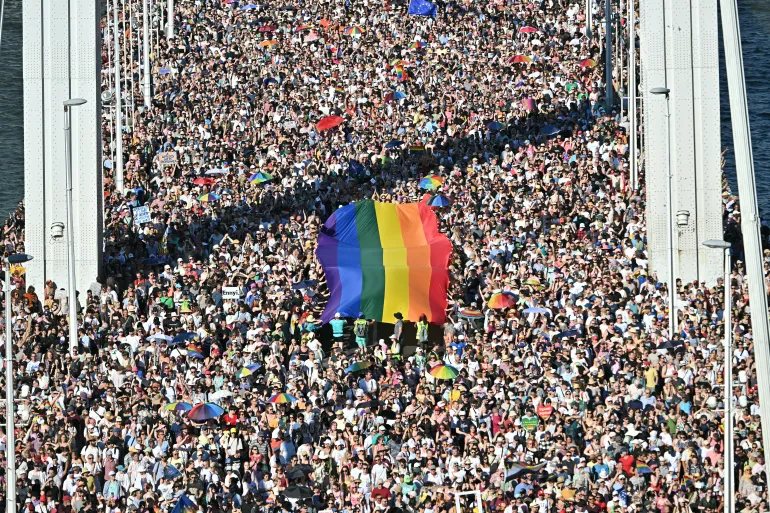
Pride Month, observed annually in June, traces its roots to the Stonewall Uprising, which took place in New York City in 1969.
Regarded by institutions such as the U.S. Library of Congress and the U.S. National Archives, as well as historians specializing in LGBTQIA+ (Lesbian, Gay, Bisexual, Transgender, Queer, Intersex, Asexual, and Others) history, including David Carter and Lillian Faderman, as a landmark in the modern LGBTQIA+ rights movement, the episode triggered a new phase of political mobilization.
Over the following decades, that mobilization influenced campaigns for legal equality, social recognition, and decriminalization in various parts of the world.
Today, Pride Month is celebrated in dozens of countries through marches, cultural events, educational initiatives, and awareness campaigns, although its expression varies according to the legal and social contexts of each region.
Read more: Booking.com Research Reveals Majority of Aussie LGBTQ+ Travellers Conceal Their Identity Abroad
The Catalyst and the History
The origins of Pride Month date back to the early hours of June 28, 1969, when New York City police raided the Stonewall Inn, a bar frequented by members of the LGBTQIA+ community in the Greenwich Village neighborhood. Although similar operations were common at the time, the raid sparked several days of clashes and protests, becoming a symbol of resistance against institutional discrimination.
The period was marked by laws and policing practices that restricted the daily lives of LGBTQIA+ people. Among them were the so-called “masquerade laws,” frequently used to detain individuals who did not dress according to the gender norms of the time. These measures particularly affected transgender people and those whose gender expression did not conform to prevailing social expectations.
Several figures became associated with the Stonewall Uprising and the development of the LGBTQIA+ movement in the years that followed. Among them were Marsha P. Johnson and Sylvia Rivera, two transgender activists who became leading advocates for the rights of transgender people and vulnerable LGBTQIA+ youth.
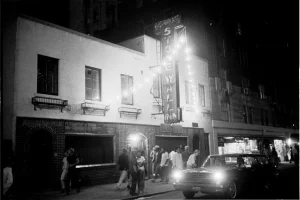
The Stonewall Inn on July 2, 1969, on the fifth day of clashes between patrons and police. The bar, which is still in operation today and remains virtually unchanged from what it was back then, was designated a national monument in 2016. (Photo: The New York Times)
Stormé DeLarverie, an artist and activist known for her role in New York’s drag scene – a form of artistic expression in which participants adopt characters and presentations associated with a gender different from their own, often incorporating performance, theater, and aesthetic exaggeration – is frequently identified by witnesses as one of the individuals whose resistance during the raid helped spark the protests.
Brenda Howard, a bisexual activist, played a decisive role in organizing the first anniversary commemorations of Stonewall, helping establish the model for future Pride marches and earning the nickname “Mother of Pride” for her contribution to the creation of the annual Pride march format.
The term “Pride” itself is generally attributed to activist Craig Schoonmaker, who advocated for the use of the word as an affirmation of dignity in the face of social stigma.
Institutional Evolution and Impact
One year after the events at Stonewall, thousands of people took part in the first commemorative marches held in New York, Los Angeles, Chicago, and other American cities. These demonstrations, known as the Christopher Street Liberation Day Marches (a reference to the street where the Stonewall Inn is located in Greenwich Village), established the model later adopted by similar events around the world.
The uprising also had immediate political consequences. Later in 1969, the Gay Liberation Front (GLF) was formed, an organization that sought a more visible and confrontational approach to LGBTQIA+ rights advocacy than the groups previously known as “homophile” organizations – a term now considered outdated and used to describe organizations of the 1950s and 1960s that favored more discreet strategies of social integration and gradual reform.

Prominent LGBTQIA+ figures from the United States, from left to right: Arthur Laurents, author of “West Side Story”; the poet Walt Whitman; the German-born lesbian activist Lilli Vincenz; gay rights activist Frank Kameny, who coined the phrase “gay is good”; and the first African American woman ordained as a priest in the Episcopal Church, Pauli Murray. (Compilation: Library of Congress)
In the decades that followed, activism expanded to other countries and became a reference point for campaigns advocating decriminalization and legal equality.
Institutional recognition gradually grew throughout the 1970s, 1980s, and 1990s as Pride marches spread to hundreds of cities across the United States, Canada, Western Europe, and later other regions of the world, while LGBTQIA+ movements gained greater public visibility.
During these decades, activism was also profoundly shaped by the HIV/AIDS epidemic of the 1980s and 1990s, which disproportionately affected LGBTQIA+ communities and mobilized community organizations to campaign for healthcare access, scientific research, and the fight against stigma and discrimination.
In 1999, U.S. President Bill Clinton issued the first presidential proclamation recognizing June as Gay and Lesbian Pride Month. A decade later, in 2009, Barack Obama formally expanded that recognition to the broader LGBTQ+ community.
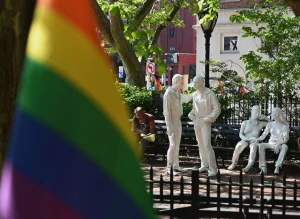
At the Stonewall National Monument in New York City, rainbow flags and sculptures can be seen. (Photo: AFP)
Meanwhile, the Stonewall Inn evolved from the site of a police raid into a national historic landmark, culminating in the creation of the Stonewall National Monument in 2016, the first U.S. national monument dedicated to LGBTQIA+ history.
Then and Now: A Comparative Analysis
The first Pride marches took place in an environment of intense social hostility. Many participants risked losing their jobs, facing public discrimination, or suffering family consequences simply for joining the protests. The primary objective was to demand legal recognition and challenge discriminatory practices.
Five decades after the first marches, the events have taken on a much broader dimension. In many cities, the celebrations attract hundreds of thousands or even millions of participants and combine festive, cultural, and advocacy-oriented elements.
The logistical scale has also changed substantially: while the earliest events depended almost entirely on volunteers and community organizations, they now benefit from institutional support, private funding, and corporate sponsorship.
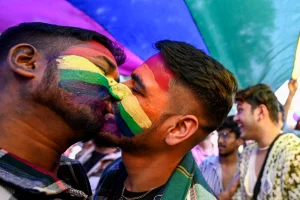
Gender rights activists and supporters of the LGBTQIA+ community kiss at the queer pride parade in New Delhi on November 26, 2023. (Photo: AFP)
Security requirements have increased as well. Large contemporary marches involve coordination among organizers, public authorities, and emergency teams, reflecting both the scale of the events and the need to respond to potential threats to participants’ safety.
Global Impact
Over the past several decades, Pride Month has become an international reference point for promoting discussions on human rights, legal equality, and social inclusion. While some countries organize large public parades, in other contexts activities take more discreet forms due to legal or social restrictions.
Pride Month has also become a space for stories of solidarity and visibility that transcend borders. In June 2024, a photograph shared on social media went viral after showing an elderly man standing outside his home in Porto, Portugal, waving a Portuguese flag during Pride celebrations.
During the parade, one participant approached him and exchanged the Portuguese flag for a rainbow flag. Upon receiving it, the man embraced it emotionally, with tears in his eyes. The episode was widely shared as an example of spontaneous and inclusive support, illustrating how Pride Month continues to generate symbolic gestures that resonate far beyond official events.
Despite these advances, realities continue to vary significantly between countries. While some jurisdictions, such as Portugal, Spain, and Canada recognize same-sex marriage and provide legal protections against discrimination, others continue to impose significant restrictions or criminalize consensual same-sex relationships between adults, including several countries in the Middle East and Africa.
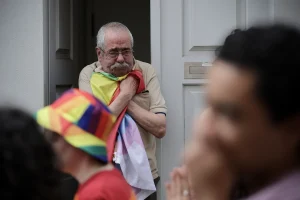
The man, whose name is unknown, handed over the Portuguese flag and received the LGBTQIA+ flag in Porto in June 2024. (Photo: Lusa)
Modern Challenges
Despite legislative progress in many parts of the world, international organizations such as the United Nations, Human Rights Watch, and ILGA World continue to document challenges related to discrimination, violence, and legal inequality. In several jurisdictions, same-sex relationships remain criminalized or subject to legal restrictions.
Security during public events has also become an increasing concern. Pride marches in different countries have been targeted by threats, assaults, or bias-motivated incidents, leading organizers to strengthen protection measures and risk-management strategies.
Another contemporary debate involves the concept of “rainbow washing” or “pinkwashing,” a term used to describe situations in which companies use Pride-related symbols in marketing campaigns without necessarily supporting them with consistent policies on inclusion, workplace protections, or support for LGBTQIA+ rights initiatives.
The issue has been examined by researchers in LGBTQIA+ studies, marketing, and corporate social responsibility, as well as by civil society organizations such as the Human Rights Campaign, ILGA World, and GLAAD, which assess the consistency between public diversity campaigns and the practices companies actually adopt.
More than 50 years after the Stonewall Uprising, Pride Month continues to play an important role in preserving the historical memory of the LGBTQIA+ movement and promoting discussions about equality and human rights.
Although contemporary celebrations differ significantly from the demonstrations that gave rise to them, their existence remains tied to an event that permanently altered the trajectory of LGBTQIA+ activism around the world.
