

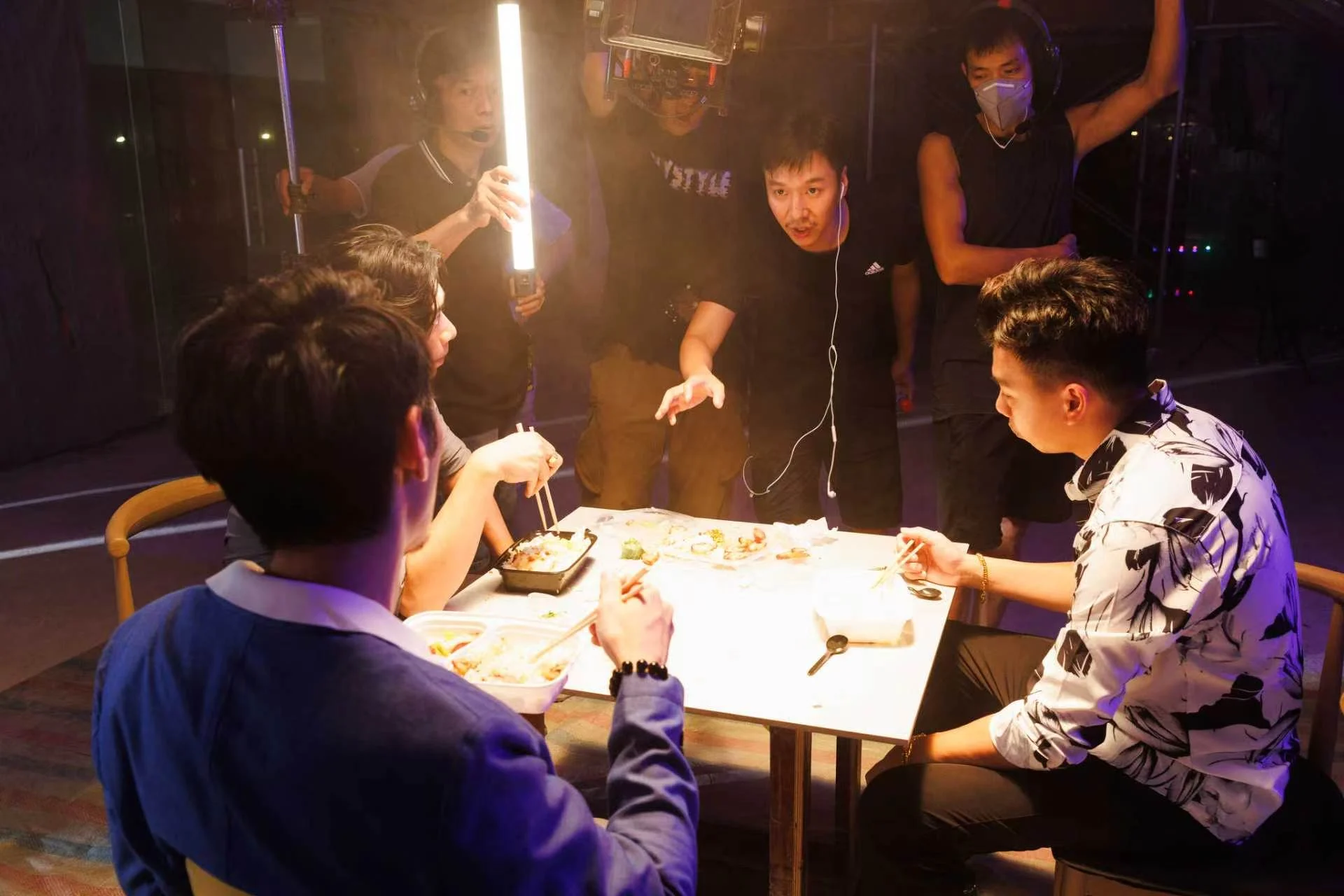
Given the size of the mainland Chinese market and the growing film activity across the Greater Bay Area, Keo Lou, a director and video creative director at FreeDream – a local film production company – considers an outward-looking strategy inevitable.
“If a film is produced entirely by Macau residents and distributed only in Macau, the potential audience is around half a million people, which is not commercially viable,” he told PLATFORM.
It is precisely in the way support is provided that Lou sees one of Macau’s advantages. “Film and cultural subsidy policies are common around the world, including in Hong Kong and mainland China, but the regulations vary.”
In some markets, access to incentives is subject to stricter conditions. “Some jurisdictions require the entire production to be filmed locally, with subsidies granted only after the project has been completed and evaluated,” he explained to PLATFORM.
Read more: Alternative Cinema Takes Over Macau
In Macau, the model gives productions greater flexibility, as “Macau’s policies are very flexible. They may require only a small portion of the filming to take place in Macau, and subsidies are provided ‘in advance,’ rather than functioning as a reimbursement afterwards.”

The same flexibility extends to productions made in mainland China that seek to reach international markets.
“I have never seen a policy like this anywhere else. Normally, films shot in mainland China have to apply for subsidies through the mainland government to be exported. In Macau, however, mainland productions can obtain subsidies and international distribution simply by using Macau’s platforms.”
The approval process also takes into account the participation of local professionals, while outside or mainland Chinese teams must submit applications through Macau companies. “This gives us the opportunity to establish contacts with countless industry professionals,” Lou said.
Cooperation to achieve scale
Opening up to other markets can also “raise the standards of local creative and production teams.” “When our work needs to reach a broader target audience, we have to keep up with market trends. We can no longer limit ourselves to Macau’s audience, nor can we focus solely on ‘what we personally want to film,’” he said.
Hengqin provides production conditions that Macau, because of land costs and the shortage of large indoor spaces, can hardly offer: “The existence of film and television production cities provides a completely interference-free space for creation and production.”
Creating for the audience
Lou rejects a divide between artistic creation and commercial viability, arguing that “commercial films can also have cultural value, artistic quality and depth. Of course, the premise of a commercial film is that it has the potential to generate profit.”
“As film and television professionals, our main task is to create, with limited resources, works that interest audiences while maintaining our own perspective. I believe this is the fundamental requirement of any creator,” he told PLATFORM.
Read more: “Girlfriends” Macau Premiere and Three Hong Kong Film Award Nominations Signal a New Chapter
The push overseas is already translating into concrete projects. Lou’s team has secured approval for a “documentary about the history of Hong Kong stunt performers.” With support from Macau, it financed the “translation into Portuguese” and is now seeking to “enter the Portuguese market and move closer to Portuguese-speaking countries.”
However, Lou stresses that one of the obstacles to internationalization is establishing “relationships of trust” with foreign companies in highly commercial markets that are not always familiar with “public financing models similar to those in Macau.” He hopes the “Government can take the lead and bring us overseas for exchanges.”
“I believe current cultural policies are very outward-looking,” Lou said, contrasting them with the past, “when we were confined to the local market.” The incentive for works to “reach the world” forces Macau teams to think about “broader markets,” while increasing opportunities for “contact with foreign professionals” and “strengthening their own capabilities.”
