

The journey, covering an estimated 42,000 kilometres, was initially expected to take three months but ended up lasting four months longer. There was no fixed itinerary or predetermined number of countries to visit, only the intention of following lesser-known routes and discovering the stories and cultures of the people encountered along the way.
“The idea was simply to travel and, eventually, go around the world,” says 42-year-old Anderson Araújo, who works between Portugal and Angola.
The project manager bought a Toyota Land Cruiser 78 in 2019 — a vehicle that is very common in Africa, he explained — after abandoning his original idea of making the journey by motorcycle.
The 2006 vehicle became his home for much of the trip, taking him through around 30 African countries and across landscapes ranging from dense jungle to the Sahara Desert.
From the vehicle, he watched Africa’s star-filled skies and sunsets whose colours defied description, saw herds of animals running through wildlife parks at night, and turned the few possessions he carried into the comforts of home.
Read also: Brazil launches plan to open markets to companies affected by Trump tariffs
During the first stage of the journey, he travelled through southern and eastern Africa. Between safaris, beaches and mountains, one of the experiences that left the strongest impression on him took place in Kenya, where he explored a volcanic crater and ended up getting lost with the guide accompanying him.
“We were lost, but the situation was under control,” he recalls, explaining that the incident ultimately turned into “a random and fantastic experience”.
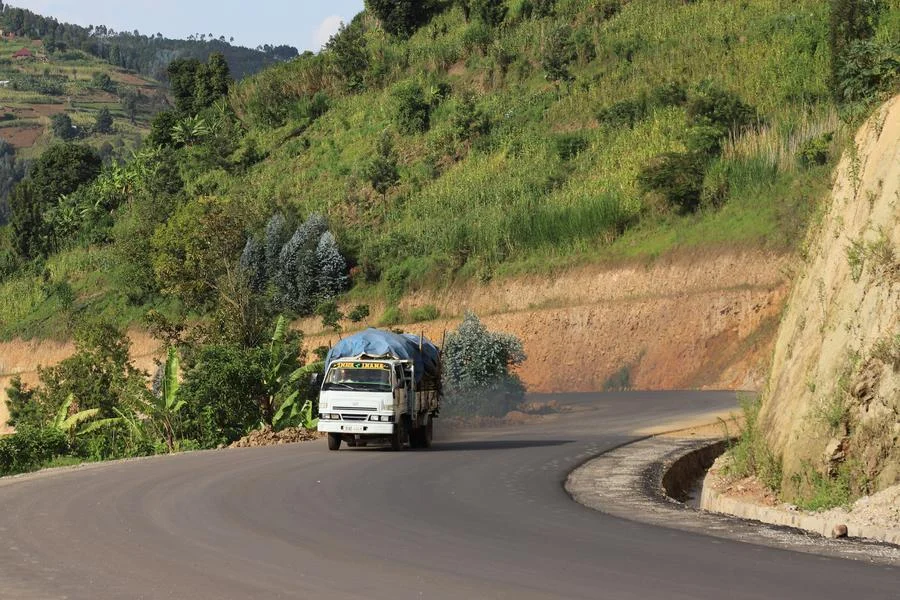
Another highlight was Burundi, one of the poorest countries in the world, where he was surprised by the warmth of the people, who were always willing to help. The second stage of the journey took him through Central and West Africa.
It was during this part of the trip that some of the most difficult moments arose, particularly when he contracted malaria in Senegal and was the target of an attempted robbery in Lagos, Nigeria.
After Senegal — which borders Guinea-Bissau — came another particularly difficult stage, as he tried to head towards North Africa and later Europe. His visa application for Mauritania was rejected 10 times. Travelling through Mali — a country affected by conflict with terrorist groups — was not an option for him, leaving increasingly few alternatives.
When he was finally able to enter Mauritania, he crossed part of the Sahara and travelled on the famous iron ore train. The experience is technically illegal but, in his words, “touristically permitted”. It involves spending around 12 hours in a wagon filled with iron ore, under a scorching sun and temperatures that feel close to 50 degrees Celsius.
Read also: Brazil’s public debt rises 2.6% in June and reaches 1.58 trillion euros
From Mauritania he continued to Morocco before crossing the Strait of Gibraltar into Europe. Despite the setbacks along the way, the vehicle suffered no serious breakdowns. He had one flat tyre and had to replace a radiator, but was never stranded on the road during the roughly 42,000-kilometre journey.
“I think I have more luck than sense,” he says, recalling that when he set off he did not even know how to change a tyre and, to make matters more difficult, Portuguese is the only language he speaks.
Throughout the journey, he had no major difficulty finding fuel, although he said he managed his resources carefully and filled up more in countries where fuel was cheaper.
Asked about the impact the journey has had on his life, he says he has still not “fully processed the experience” and that this was only the end of one stage, which he intends to resume from Europe as soon as possible.
Among the lessons he takes from the journey is the realisation that countries are much more than the prejudices people sometimes associate with them, and that there can always be surprises. “There are more people along the way who want to help than to make things difficult,” he concludes.
