

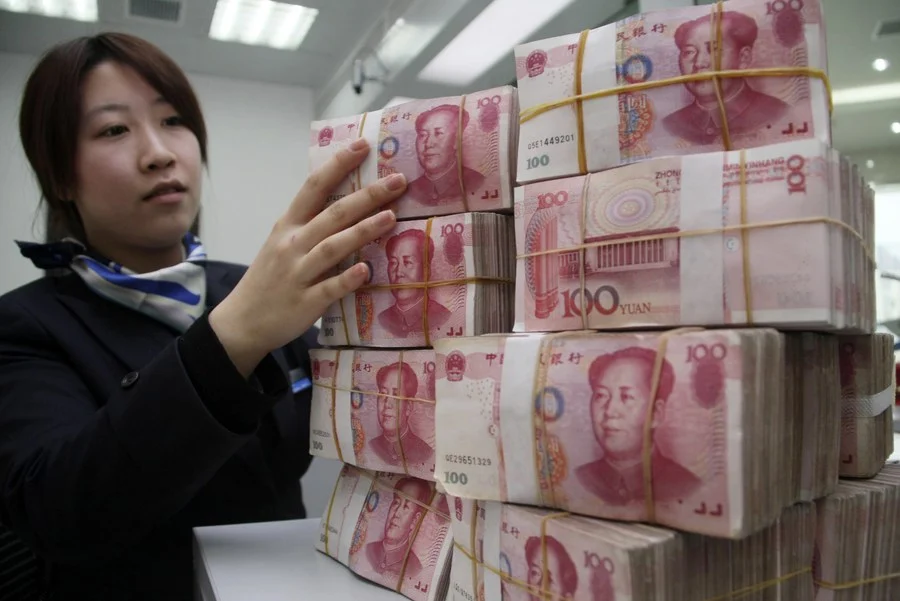
“The RMB 6 billion issuance supports diversification by increasing market liquidity, creating benchmark sovereign debt instruments, attracting more issuers and strengthening the local bond market ecosystem,” Lei told PLATFORM.
The issuance could also strengthen Macau’s capacity to operate across different markets. The development of the bond market, Lei says, can cover “issuance, settlement and disclosure” and subsequently serve as a “cross-border financial platform between China and Portuguese-speaking countries, both for financial investment and infrastructure and sustainable projects.”
“Financial services have been identified as one of the key pillars in the process of Macau’s economic diversification,” Lei says. For the professor, the RMB 6 billion issuance contributes to this process by “increasing market liquidity, creating benchmark sovereign debt instruments, attracting more issuers and strengthening the local bond market ecosystem.”
The issuance can also be seen as “an endorsement from the Central Government to support Macau in developing its featured finance sector,” he adds.
Read more: Macau’s economic diversification accelerates with MOP 130 billion in investment
The continuity of the issuances is particularly important in this context. This is the fifth consecutive year that China’s Ministry of Finance has issued sovereign bonds in Macau, a regularity that, according to Lei, “demonstrates policy continuity and sustained Central Government support for the development of Macau’s financial sector.” “Consistency is arguably as important as the size of the issuance,” he adds.
A bridge for international investors
“The issuance provides a strong message that Macau is becoming a more credible offshore RMB investment platform,” Lei told PLATAFORMA.
For investors from Europe, Portuguese-speaking countries and elsewhere, “Macau offers access to high-quality RMB-denominated assets in a jurisdiction with perfect capital mobility and low taxation, as well as strong links with both China and Portuguese-speaking countries.”
The continued development of the bond market could make Macau “increasingly attractive as a place for non-US dollar assets for those looking for China-related opportunities.”
It is the possibility of creating two-way financial flows that Lei identifies as one of the consequences of the market’s development. “This issuance substantially consolidates Macau’s role as a financial bridge between China and Portuguese-speaking countries,” he told PLATFORM.
Strengthening Macau’s capacity in debt operations, including issuance, settlement and disclosure, could subsequently serve as a “cross-border financial platform between China and Portuguese-speaking countries, both for financial investment and infrastructure and sustainable projects,” according to the professor.
“In the future, it can facilitate the expected two-way capital flows,” Lei says. Chinese companies could “raise funds targeting investors from Portuguese-speaking countries,” while “investors from Portuguese-speaking countries can have better access to offshore RMB-denominated assets through Macau.”
For Lei, this potential could “translate Macau’s position as a bridge, which is currently theoretical, into tangible cross-border financial transactions.”
An impact beyond RMB 6 billion
The impact of the issuance will therefore depend on its ability to generate activity beyond the sovereign debt itself. For Lei, “a more developed bond market can create a multiplier effect” on the economy through the expansion of financial services.
“Beyond sovereign bond issuance, Macau can attract banks, asset managers, law and accounting firms, rating agencies and fintech companies [companies that use modern technology to provide financial services],” he says.
The development of this ecosystem would allow Macau to “establish itself as a broader financial services cluster, with offshore RMB and Portuguese-speaking countries as areas of specialization.”
For the professor, a mature bond market could “strengthen Macau’s resilience, broaden its economic base and help establish financial services as a sustainable growth engine,” he concludes.
