

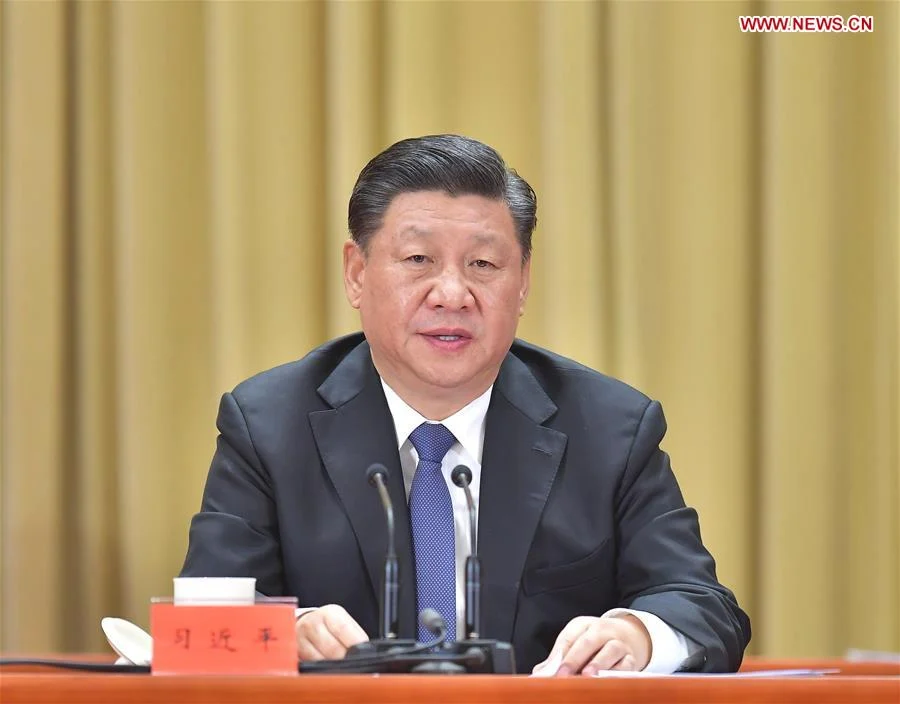
Xi described Jiang as a leader of “high prestige”, the “core” of the third generation of leadership of the Communist Party of China (CPC), and the principal driving force behind the Theory of the “Three Represents”, an ideological guideline incorporated into the Party Constitution in 2002 that paved the way for capitalists and private entrepreneurs to join the CPC, breaking with Maoism’s strictly worker-and-peasant orientation.
The ceremony was held at the Great Hall of the People, next to Tiananmen Square, with a large portrait of Jiang flanked by red flags and the dates “1926-2026”, beneath a banner marking the centenary of his birth.
Jiang, born on 17 August 1926 in Yangzhou, in the eastern province of Jiangsu, joined the CPC in 1946 and spent part of his career in Shanghai, where he served as mayor and local Party chief before being elevated to the post of general secretary following the crackdown in Tiananmen Square in 1989.
In his speech, Xi referred to that period as a time of “serious political disturbances”, in line with the official Chinese formulation, and argued that Jiang maintained stability in Shanghai during those protests and, after moving to Beijing, led the Party through a period of major international change.
Read also: Xi Jinping promotes China as a responsible AI leader amid Trump’s accusations of theft (with video)
The current Chinese leader highlighted that, under Jiang’s leadership, the goal of “building a socialist market economy” was consolidated, opening-up was further advanced, China joined the World Trade Organization (WTO), and the handovers of Hong Kong and Macau to Chinese sovereignty were completed.
Xi also underscored Jiang’s role in China’s response to the Asian financial crisis of the late 1990s and the 1998 floods.
Jiang led China from the late 1980s — becoming CPC general secretary in 1989 and president of the country in 1993 — until the early 2000s, a period marked by strong economic growth and the country’s deeper integration into the global economy.
The commemoration of Jiang took place just days after the recent death, at the age of 97, of former premier Zhu Rongji, with whom Jiang formed the president-premier duo in the 1990s that steered the decisive phase of China’s economic opening.
The remains of the late Chinese leader Zhu Rongji will be cremated in Beijing on Tuesday. National flags will be flown at half-mast that day in Tiananmen Square, at the Great Hall of the People, the Ministry of Foreign Affairs, the headquarters of provincial CPC committees and provincial governments, in the Hong Kong and Macau Special Administrative Regions, at border checkpoints, seaports and airports, as well as at Chinese embassies and consulates.
