

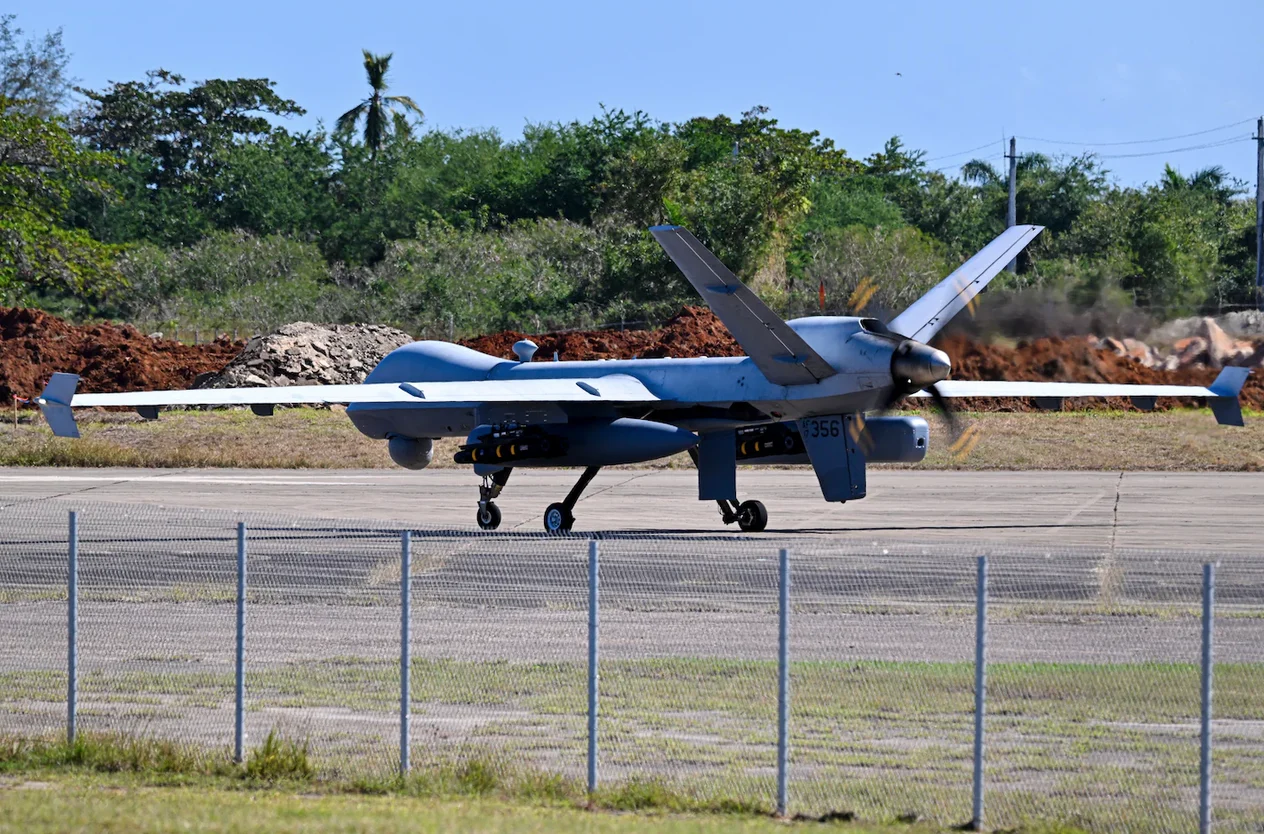
U.S. President Donald Trump has approved tariffs reaching up to 100 percent on imported drones and key components, invoking national security provisions under Section 232 to incentivize domestic production of critical defense technologies.
Under the executive order, unmanned aerial vehicles weighing over 25 kilograms at takeoff or equipped with thermal imaging technology will face the top 100 percent rate alongside their docking stations and essential parts. Smaller or less advanced models and secondary components will be subject to a 25 percent tariff.
European Union manufacturers, alongside producers in Japan, South Korea, Switzerland, Liechtenstein, and Taiwan, qualify for a preferential 15 percent tariff rate, while British firms secured a 10 percent rate.
To qualify for the lower tax tiers, companies must prove that all underlying hardware, software, and technology originate from designated partner nations or the United States—a strict requirement given the global drone industry’s reliance on Chinese supply chains for batteries, motors, and flight controllers. Non-compliant equipment will automatically revert to the higher tariff brackets.
Read more about this topic: Defense drone manufacturers stock surge following White House tariffs order
The tariffs are scheduled to take effect in 21 days for primary systems, with a 180-day transition period for less sensitive components. The order also directs the U.S. Secretary of Commerce to establish incentives for manufacturers that relocate production to American soil.
The policy directly impacts major European drone developers targeting the American market, including France’s Parrot, Germany’s Quantum Systems, and Portugal’s Tekever. However, several European firms with existing U.S. manufacturing facilities are expected to accelerate local production expansions to mitigate the tax impact.
The drone trade measures coincide with broader military logistics initiatives, including executive orders to construct the first new U.S. naval shipyard in over eight decades and reverse technological shifts on aircraft carriers by replacing electromagnetic catapults with steam-powered systems.
