

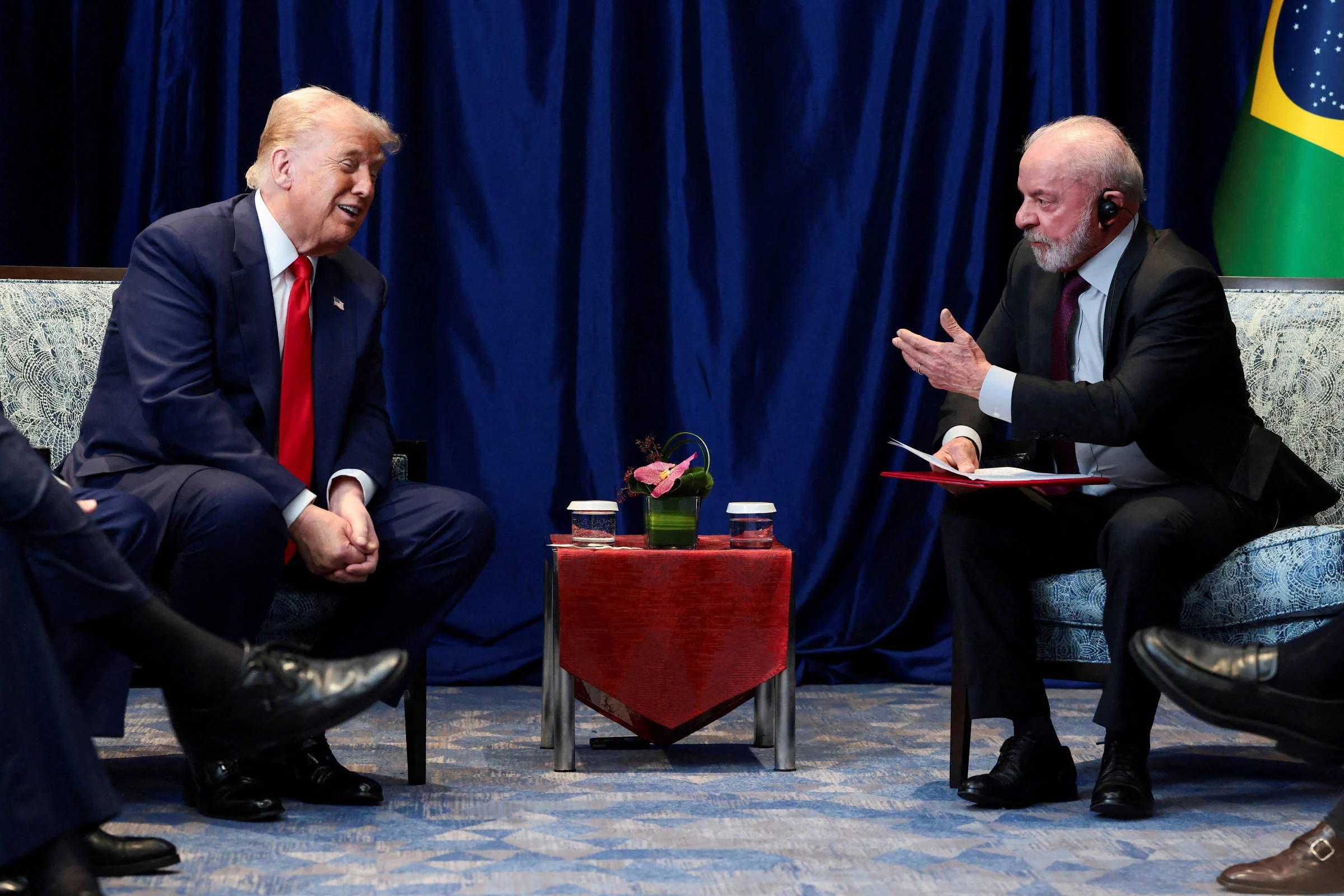
Brazil has launched a plan to help thousands of companies affected by the tariffs imposed by Donald Trump’s Government on Brazilian exports, through trade promotion actions in 36 markets alternative to the United States.
According to data from the Brazilian Government, around 5,600 Brazilian companies were directly affected by the new American trade barriers, with the Brazilian Trade and Investment Promotion Agency (ApexBrasil) available to support up to 5,300, distributed across 35 strategic sectors.
Among the priorities are agribusiness, food and beverages, footwear and leather, machinery and equipment, medical devices, pharmaceuticals, electrical and electronic materials, textiles and apparel, furniture, seafood and stones, gems and jewelry.
The new Export Diversification Plan, with a total investment of 210 million reais (about 34 million euros), was detailed on Tuesday by ApexBrasil president Laudemir Müller, at a meeting with representatives from more than 30 entities, in São Paulo.
Read more about this topic: Trump renewed his emergency order against Brazil using the same arguments as last year. The tariffs and tensions have only grown since then
“We want to diversify markets. We have 36 priority markets in which we are going to operate. And how do we do that? By bringing opportunities so that these companies can close new deals and find new paths,” Müller stressed, adding that the search for alternative markets does not mean they will stop working with the United States (US).
“We are not going to replace the [North] American market, we will continue working in the United States, the country is an important market. But our focus now is diversification, offering support and relief to companies impacted to minimize risks,” he emphasized.
The strategy provides for more than 300 market diversification actions in partnership with sector entities and direct, individualized assistance to companies affected by the tariffs. Among the measures are business meetings with international buyers, participation in international trade fairs, specialized consulting for entry into new markets, and direct financial support through the so-called Export Fund.
According to ApexBrasil, there are 2,300 spots available for business meetings, 1,400 for trade fairs, 1,200 companies for consulting, and a thousand spots in the Export Fund. The diversification actions will be carried out in Latin America (85 initiatives), Europe (77), Asia (46), Canada and Mexico (23), Africa (16), and the Middle East (11).
Read more about this topic: Brazil denied visas to two U.S. officials headed to meet Flávio Bolsonaro ahead of October’s elections. Lula says that was outside interference (with video)
A source from ApexBrasil told Lusa that the actions extend until August 2027. Brazil recorded, through July, a trade balance surplus of 49 billion dollars (42.4 billion euros), an increase of 31.9% compared to the first seven months of last year, despite a 12.2% drop in exports to the US.
Washington was the country’s second-largest trading partner until 2025, when it was overtaken by the European Union (EU). Brazilian exports increased 10.5% in the first seven months of the year, to 218.6 billion dollars (189.1 billion euros), while imports grew 5.5%, to 169.5 billion dollars (146.7 billion euros), according to data from the Ministry of Development, Industry and Trade.
The positive trade balance is mainly due to a 19.7% increase in exports to China. Sales to the US have been declining since May 2025, when the Government of American President Donald Trump imposed an additional 50% tariff on much of Brazilian products, later lifted by a judicial decision.
Washington announced, however, in July an additional 25% tariff, as a sanction for alleged unfair trade practices, and another 12.5% tariff for Brazil allegedly failing to combat forced labor.
Read more about this topic: Brazil calls the U.S. visa revocation “hostile escalation.”Washington says it could reverse the move if Brazil approves Trump’s ambassador pick
According to studies presented by Brazilian business owners, and reported in the local press, the new sanctions affect between 7.4 and 11 billion dollars (between 6.4 and 9.5 billion euros) in Brazilian exports, or between 18% and 29% of Brazil’s total sales to the US.
Although the Government of Brazilian President Luiz Inácio Lula da Silva is trying to negotiate the suspension of the tariffs, bilateral relations face a diplomatic crisis, which culminated on August 4 with the revocation of the visa of Brazil’s ambassador to the US, Maria Luiza Viotti.
