

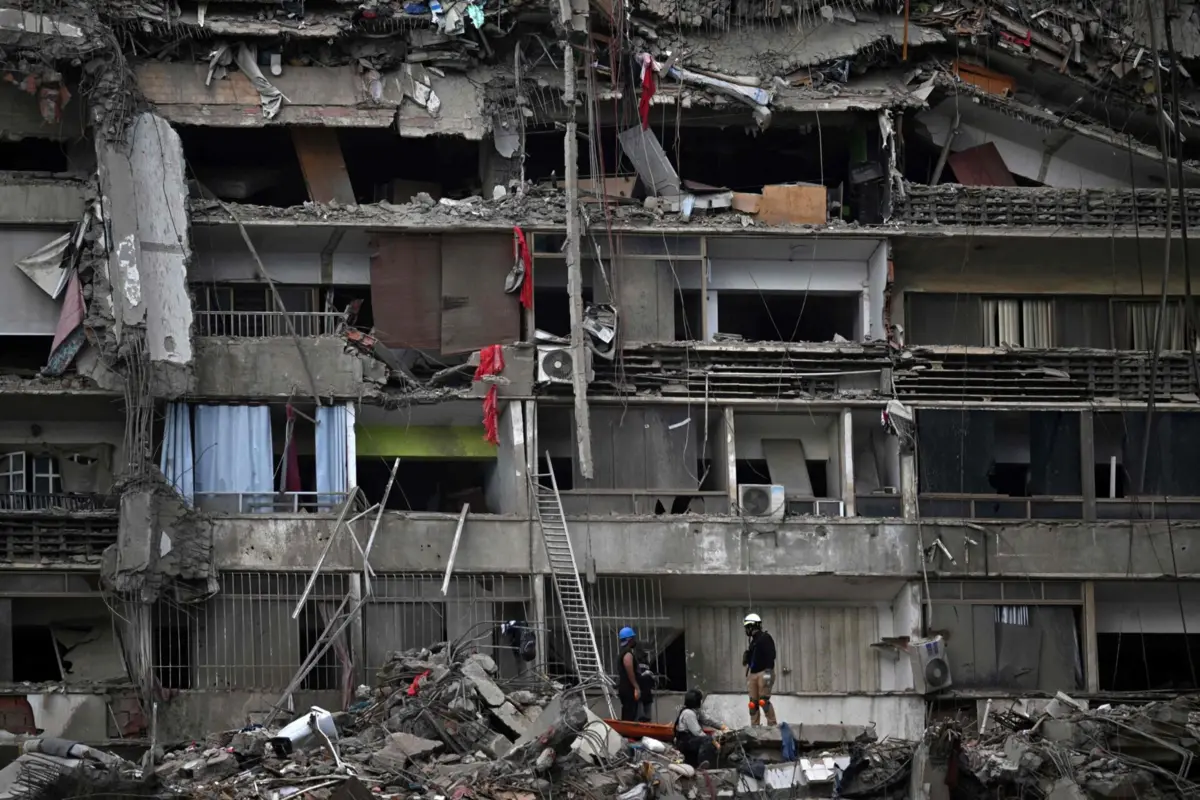
The magnitude 7.4 earthquake that struck Colombia this Monday arrives just weeks after a devastating double earthquake in Venezuela, where two quakes of magnitude 7.2 and 7.5, separated by only 39 seconds, produced one of South America’s largest recent natural disasters. Despite comparable magnitudes, early assessments point to very different outcomes.
In Colombia, the quake’s epicenter was located in San José del Palmar, in the department of Chocó, causing significant damage in cities including Cali, Pereira, Quibdó and Manizales. Authorities are still inspecting buildings, treating the injured, and searching for anyone potentially trapped. In Venezuela, by contrast, two consecutive and extremely shallow earthquakes triggered widespread destruction that had already surpassed 5,000 deaths within roughly a month.
On paper, all three quakes fall into a similar category of magnitude. Colombia’s reached 7.4, while the two that struck Venezuela on June 24 measured 7.2 and 7.5. But magnitude alone doesn’t determine the scale of destruction.
Venezuela experienced an unusually rare event: a “double” earthquake, in which two quakes of similar size struck almost the same location within an extremely short window of time. The first, at magnitude 7.2, was followed just 39 seconds later by the second, stronger quake. That timing meant structures already damaged by the initial shock had virtually no chance to stabilize before absorbing an even more powerful second blow.
Read more about this topic: Venezuela is bracing for a “Super El Niño” and asking citizens to conserve power. Its grid is still recovering from a June earthquake
One of the most decisive differences between the two events lies in depth. Venezuela’s earthquakes were remarkably shallow, with the USGS estimating a depth of roughly 22 kilometers for the first and just 10 kilometers for the second. Colombia’s earthquake, by comparison, occurred much deeper.
Initial depth estimates have been revised throughout the day, though sources generally place it several tens of kilometers below the surface; the Associated Press reported a depth of about 107 kilometers, while Colombia’s Geological Service continues refining its figures.
This distinction matters because, generally speaking, a shallow earthquake transmits far more intense shaking to areas near its epicenter than a similarly sized quake originating deeper underground. In Colombia’s case, that greater depth also helps explain why the tremor was felt across such a vast geographic area, from Bogotá and Medellín all the way to Ecuador.
Venezuela’s earthquake sequence proved especially destructive due to the combination of magnitude, shallow depth and the extremely short interval between the two shocks. Both quakes struck along the northern coast near Morón, in a region tied to the boundary between the Caribbean and South American tectonic plates, with the second, stronger quake hitting buildings that had already been weakened by the first.
Read more about this topic: Venezuela: 134 Portuguese dead in double earthquake, 12 still missing
La Guaira emerged as one of the hardest-hit areas, with entire buildings collapsing, widespread power outages, a temporary closure of the country’s main airport, and thousands of people trapped or missing in the days that followed.
The death toll continued climbing for weeks; by mid-July, Venezuelan authorities had recorded more than 5,000 deaths, 16,740 injuries and nearly 18,000 people left without housing, alongside 856 damaged buildings and 190 total collapses.
In Colombia, it remains too early to draw a definitive comparison in terms of casualties. The earthquake has caused serious structural damage nonetheless, including landslides in Cali that left people trapped, injuries and severe damage reported by Chocó’s governor in Quibdó, building collapses in Pereira, and the partial collapse of a tower at the Manizales cathedral.
President Abelardo de la Espriella has taken direct charge of coordinating the emergency response and announced the establishment of a Unified Command Post in San José del Palmar. For now, there is no toll approaching that seen in Venezuela, and Colombian authorities continue conducting inspections, rescue operations and damage assessments.
Read more about this topic: Colombia: magnitude 7.4 earthquake shook Bogotá, Medellín and Cali and killed 20 people. Authorities say there&’s no tsunami threat (with video)
The two events also differ tectonically. Venezuela’s double earthquake resulted from lateral slip movement along faults near the boundary of the Caribbean and South American plates, according to the USGS. Colombia, meanwhile, sits within a considerably more complex tectonic region where the Nazca, South American and Caribbean plates interact alongside numerous continental fault systems, making it prone to far more frequent seismic activity.
Monday’s earthquake struck in western Colombia, one of the country’s most seismically active zones.
Ultimately, comparing the two episodes illustrates why earthquakes of similar magnitude can produce radically different consequences. Venezuela endured two major, extremely shallow quakes within less than a minute of each other, both near densely populated areas. Colombia has so far recorded a single major quake of comparable magnitude occurring considerably deeper underground.
Beyond that, other factors that can only be fully assessed once a final accounting is complete, including construction quality and age, distance from population centers to the epicenter, the duration of shaking, local geology, and emergency response capacity, will ultimately shape each disaster’s true toll.
Read more about this topic: Venezuela: earthquake death toll rises to 1,450 (with video)
A magnitude 7.4 does not automatically equal another 7.4; the number reflects the energy released, but the resulting destruction depends on how, where and at what depth that energy is unleashed. With only weeks separating the two events, Venezuela continues grappling with the aftermath of a tragedy that has left thousands dead and tens of thousands affected, while Colombia is only now beginning to measure the true scope of its own earthquake.
