

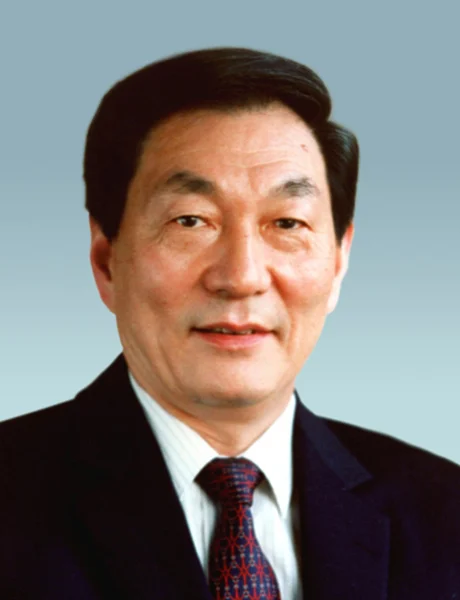
Former Chinese Premier Zhu Rongji died at the age of 98 on Wednesday morning after an illness, according to an obituary jointly issued by the Central Committee of the Communist Party of China (CPC), the Standing Committee of the National People’s Congress, the State Council and the National Committee of the Chinese People’s Political Consultative Conference, Xinhua News Agency reported.
Zhu, one of the key figures in China’s economic reforms during the 1990s, served as premier from 1998 to 2003, overseeing the country’s economy during a period of major domestic restructuring and China’s accession to the World Trade Organization (WTO).
Born in October 1928 in Changsha, Hunan Province, Zhu joined the revolutionary workforce in December 1948 and became a member of the CPC in October 1949.
He began rising through the economic bureaucracy in the late 1970s. Between 1979 and 1983, he successively served as division chief of the Fuel and Power Bureau, deputy director of the Comprehensive Bureau and director of the Technological Transformation Bureau under the State Economic Commission, while also serving as a member of the commission.
Read more: China’s exports beat estimates in July as AI-driven demand surges
From 1983 to 1987, he was vice minister of the State Economic Commission and a member of its Leading Party Members Group, later becoming deputy secretary of the group’s party committee.
From Shanghai to the top of China’s economy
Zhu was elected to the Political Bureau of the CPC Central Committee and its Standing Committee in October 1992, giving him responsibility for the executive operations of the State Council.
In June 1993, he also became governor of the People’s Bank of China, where he played a central role in advancing economic reform, opening-up and modernization.
In September 1997, Zhu was re-elected to the Political Bureau and its Standing Committee. The following March, at the First Session of the Ninth National People’s Congress, he was appointed premier of the State Council and subsequently became secretary of its Leading Party Members Group.
His tenure coincided with a period of profound economic change and significant external pressure. China faced the impact of the Asian financial crisis as well as exceptionally severe domestic flooding.
Zhu shifted the government’s macroeconomic approach from a moderately tight fiscal and monetary policy toward proactive fiscal policy and prudent monetary policy. His administration sought to expand domestic demand while deepening reforms in key areas, helping maintain economic growth during a turbulent period.
One of the defining achievements of his premiership was China’s successful conclusion of negotiations to join the WTO. The process, completed in 2001, marked a major step in China’s integration into the global economy and accelerated the country’s opening-up.
Driving economic reform
Zhu’s political career coincided with China’s transition from a planned economy toward a socialist market economy. As vice premier and premier, he played a leading role in reforms to the fiscal, financial and taxation systems.
He spearheaded a comprehensive restructuring of the tax system, with reforms aimed at creating a more equitable distribution of the tax burden and simplifying taxation. His administration also established a tax-sharing fiscal system based on a clearer division of responsibilities between central and local governments and introduced pilot reforms to rural taxes and fees.
Zhu also pushed for extensive financial-sector reforms. These included strengthening the functions of the central bank, restructuring commercial banks and reforming the foreign-exchange, securities and futures markets.
The reforms sought to establish a unified, open and competitive national financial market operating under tighter regulatory standards. Zhu stepped down as premier in 2003.
In its obituary, Xinhua described his life as one of “revolution, struggle and glory,” dedicated to serving the people and the cause of communism.
The obituary also highlighted Zhu’s insistence that government officials should regard themselves as public servants, speak frankly, avoid seeking special privileges and take responsibility for difficult tasks. It credited him with confronting major challenges and seeking practical results for the public.
