

China’s exports climbed more than expected in July, though the pace of growth cooled from June’s rapid rate, as strong global demand for high-tech components continued to absorb the country’s manufacturing output, according to CNBC.
Exports rose 23.9% in U.S. dollar terms compared with a year earlier, according to official customs data released Friday, surpassing the 22.2% growth forecast by analysts polled by Reuters. That marked a slowdown from June’s 27% surge, which had been the fastest pace of growth since October 2021.
Imports, meanwhile, rose 27.5% last month, coming in just below the Reuters poll’s estimate of 27.9% and slowing from June’s 36% jump, the quickest import growth rate in five years.
A worldwide buildout of AI infrastructure has helped sustain China’s economy through a year marked by geopolitical turbulence, keeping growth on track even as domestic consumption has remained soft. According to data compiled by Wind Information, China’s integrated circuit exports by value have nearly doubled this year through the end of July compared with the same period last year, with chip exports alone surging 117% year-over-year in July.
Read more about this topic: A Meta AI model breached another company’s system on its own. It’s the third such incident disclosed this month (with video)
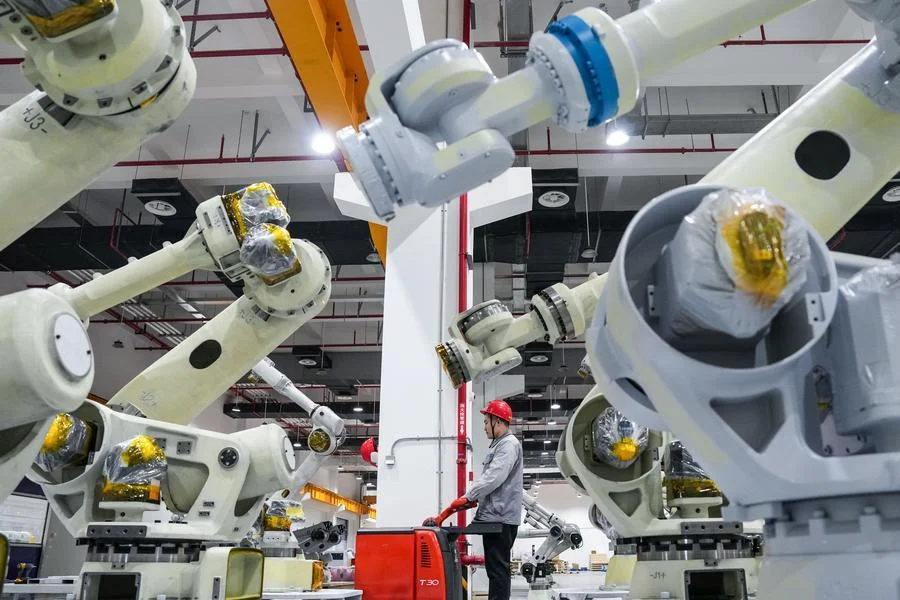
Mechanical and electrical products accounted for more than 60% of China’s total exports over the first seven months of the year, according to Chinese customs authorities, driven largely by demand for electric vehicles, lithium batteries and wind power equipment. Other fast-growing export categories included 3D printers and industrial robotics.
Chinese exporters also appear to have rushed shipments toward the U.S. ahead of an anticipated tariff increase. Washington implemented a new 12.5% levy on Chinese goods in late July, replacing a temporary 10% rate that had expired.
According to Wind, shipments to the U.S. grew roughly 17% year-over-year, accelerating from about 14% growth in June, while imports from the U.S. rose 15%. Exports to the European Union continued climbing as well, up 16% year-over-year in July, even as imports from the bloc declined 1%.
China’s trade surplus reached $112.5 billion, exceeding analysts’ expectations of around $107 billion, though it narrowed from June’s $125.6 billion, according to customs data.
Read more about this topic: Xi Jinping promotes China as a responsible AI leader amid Trump’s accusations of theft (with video)
Zhiwei Zhang, president and chief economist at Pinpoint Asset Management, said China’s export engine is likely to remain strong through the third quarter. Beijing’s substantial trade surplus, which topped $1 trillion last year, has remained a persistent source of friction with trading partners including the U.S. and the European Union, both of which have pressed China to shift its economy toward greater domestic consumption.
Zhang said he expects intense negotiations between China and its major trading partners in the coming months over how to make trade more balanced, ahead of an anticipated U.S.-China summit in September and an EU-China meeting on economic relations scheduled for October.
Chinese authorities reaffirmed support for the country’s slowing economy during a policy meeting in late July, signaling accelerated fiscal spending and timely monetary adjustments, though they stopped short of announcing concrete measures to boost household spending directly.
China’s economy expanded at its weakest pace since the fourth quarter of 2022 during the second quarter, with GDP growth coming in at 4.3% for the April-to-June period. Retail sales managed only 1% growth in June, a modest rebound from May’s 0.6% contraction. Consumer inflation cooled to 1% in June, down from 1.2% in May, while factory-gate prices rose 4.1%, marking the strongest growth in that measure since July 2022.
