

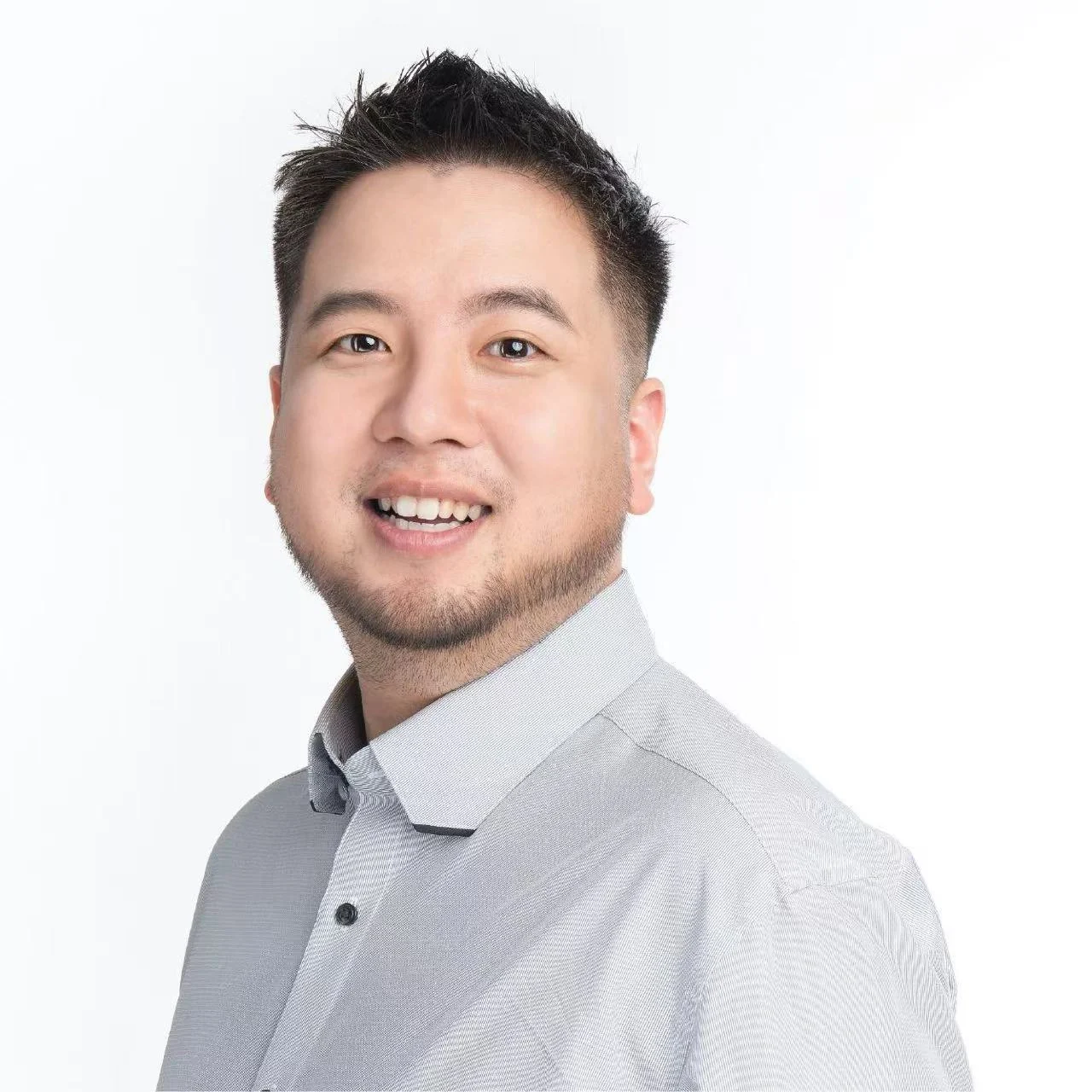
– How did you arrive at Shanghai Jiao Tong University, and how did your experience across Macau, the United Kingdom and Shanghai shape your research?
Jacky Cheong – I completed my studies and worked for many years in the United Kingdom, where I gained hands-on experience in managing biobanks and in the operation of facilities linked to the healthcare industry. Around 2017, I decided to return to Macao, but at the same time, I realized that global attention was shifting towards health-centred sectors: new technologies, precision medicine, and the demand for biobanks were increasing significantly in many countries, as these samples contain essential information for driving the healthcare industry.
I believed that China had extremely rich biological resources and that the experience I brought from the UK could contribute to the development of the country’s healthcare sector. For that reason, I joined the School of Medicine at Shanghai Jiao Tong University, aiming to put my knowledge into practice.
However, this transition between regions was not without challenges. When I first returned to Macau, I realized it was virtually impossible to find a job directly related to my specialization and that relevant research projects were very scarce. For a period of time, I even had to make a living teaching English. It was an extremely difficult phase of my career.
Moving to Shanghai brought another challenge. Academic and industrial competition in mainland China is extremely intense. Having been trained in a Western education system, I needed considerable time to adapt. I had to develop a deep understanding of how such a large country effectively coordinates its resources and policy frameworks.
There was also some cultural shock. In the West, greater importance is placed on work-life balance, while in China the focus is more on accelerating progress and seizing opportunities. This difference in pace required an adjustment period.
This experience across two cities profoundly shaped my research perspective. Working in mainland China made me realize that research can drive change at a national scale and even generate global impact. For example, it can help developing countries address public health challenges and move towards a healthier future.
In Macau, the focus is more on strengthening local capacities and on integrating the city more closely into China’s rapid development. From my perspective, both places have their own strengths and complement each other: Macau’s internationalization and flexibility combined with mainland China’s scale and resources can produce an even greater synergistic effect.
– The pandemic made virology more widely known, but also more “feared”. What still needs to be understood about this field and what does your work consist of?
J.C.– Fear often comes from lack of knowledge, as the pandemic itself showed. As scientific evidence was established, people learned to cope, and their focus shifted from “being afraid of the virus” to “how to avoid getting sick.” This reflects the progress brought by scientific education and a holistic view of health.
I work in the broad field of integrated health, and every morning I wake up to an avalanche of messages and emails from around the world, because I am responsible for managing and coordinating international collaborations.
This requires me to spend a significant part of my time identifying the needs of different stakeholders, engaging in cross-border communication, and thinking about how to design research projects with greater impact – projects that can effectively integrate resources, talent, and clinical needs. These may include the creation of biobanks, the development of precision medicine tools, the evaluation of public health policies, or health promotion programs developed jointly with countries involved in the “Belt and Road Initiative”.
– In the demanding and difficult path of scientific research, marked by high pressure, uncertainty and failed experiments, what is the main motivation that keeps you going?
J.C.– The essential force that sustains me is a positive mindset and the commitment to “doing good science.” I believe that whether in virology or broader health research, the ultimate goal is not simply to publish papers, but to generate real-world change in public health: improving people’s quality of life, reducing the burden of disease, and even helping developing countries establish basic healthcare systems.
Every failure is a learning experience, and every “no result” brings us one step closer to the truth. With this belief, the research journey, though uneven, is full of meaningful purpose and passion.
– During the pandemic, you created a Facebook page dedicated to explaining viruses, translating complex academic language into accessible scientific content for the general public. Why?
J.C.- The motivation for this initiative came from an important concept I learned during my studies and work in the United Kingdom: regardless of the scientific research we conduct, communication with the public is always essential.
In the early stages of the pandemic, I noticed a large number of questions circulating among friends, family, and online. These ranged from how the virus spreads and whether masks were effective to when a vaccine would become available.
I realized that what the public needed was not panic, but guidance grounded in expert knowledge. People needed help understanding how scientists move from the unknown to the known.
That sense of responsibility led me to step forward and share reliable scientific information in an accessible way. Many of my posts were widely shared because they were scientifically grounded and practically useful, showing that fear is born from lack of knowledge.
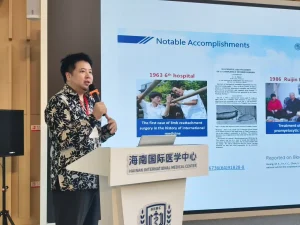
– You conduct frontline scientific research while also teaching medical students. How do these two roles complement each other?
J.C.- These two roles are not incompatible. On the contrary, they feed into and complement each other.
In the current medical system, collaboration between clinicians and researchers is an inevitable trend, especially in China, where clinicians are encouraged to produce scientific outputs. The link between basic science and clinical science is therefore becoming increasingly important.
In daily practice, clinicians are often the first to identify problems. They tell us about diagnostic obstacles, treatment difficulties, or disease mechanisms that remain unclear. From these real-world needs, researchers work backwards to find solutions.
This kind of collaboration not only brings research closer to clinical practice, but also allows real cases to be integrated into teaching, showing students how theory can be transformed into practical applications.
– What trends will shape the future of public health and virology?
J.C.- If I had to identify the main trend for the future, I would point without hesitation to digitalization.
From big data analysis and AI-assisted diagnosis to telemedicine and health monitoring devices, digital technology is profoundly transforming the way we prevent, detect, and respond to disease.
More importantly, digital solutions have relatively low barriers to entry and strong scalability, making them a key tool for helping low- and middle-income countries overcome resource constraints and address basic health challenges.
This shows that digitalization is not just a technological tool. It has become a central issue in global health governance and international cooperation.
For this reason, in the next 10 to 20 years, the greatest demand in public health and biomedicine will emerge in these developing regions, and we must begin planning ahead at the policy level now.
– What professional advice would you give to young people in Macao – and beyond – who aspire to pursue a career in biomedicine and scientific research?
J.C.- They should develop an international perspective and intercultural collaboration skills. I encourage them to learn a new language, especially one other than English, such as Spanish, French or Arabic, as these languages meet the communication needs of many low- and middle-income countries.
More importantly, they should learn to work in different cultural contexts and resource environments, understanding the realities and needs of local societies rather than simply imposing “high-tech” solutions.
True international collaboration is a two-way process of learning and co-creation. Our international experience also shows that the ability to engage in policy dialogue and translate scientific evidence into action is an essential skill for future researchers.
They should always maintain a scientific mindset. A scientific mindset is not about memorizing knowledge, but about a certain attitude toward the unknown: the courage to ask questions, the willingness to challenge assumptions, the rigor to seek evidence, the serenity to accept failure, and the ability to learn from mistakes.
In an era of information overload, this capacity for thinking is more valuable than any specialized knowledge. Whether working in clinical practice, a laboratory, policy-making, or industry, a scientific mindset will help them find a path through complexity.
They should embrace change and maintain a long-term perspective. Macao may be small, but precisely this scale allows for greater flexibility in connecting with the world. At the same time, the vast market and abundant resources of mainland China provide an enormous platform for realizing our aspirations.
