

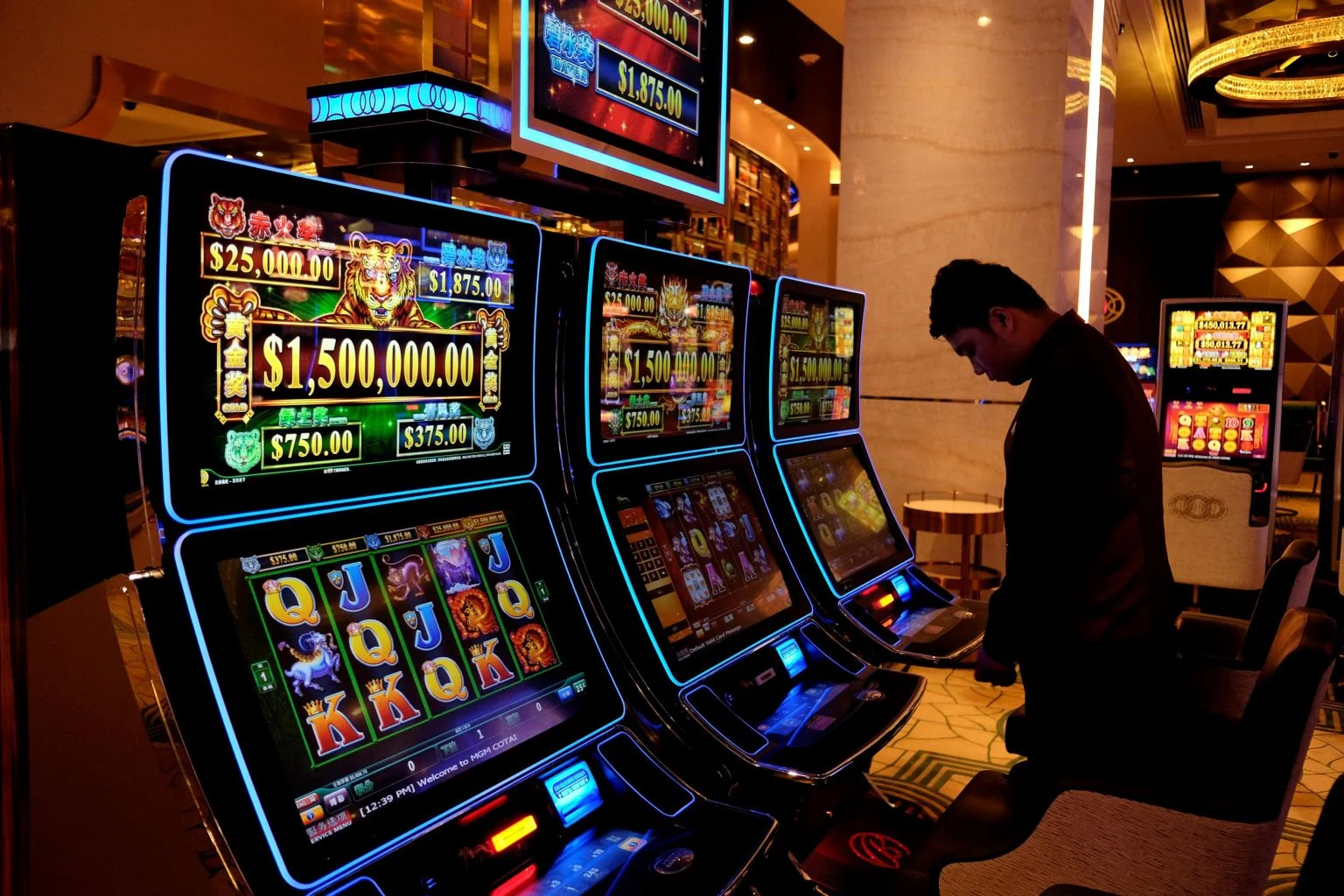
While Macau’s casino-driven economy has generated massive wealth over the past two decades, its overwhelming reliance on the gaming sector poses deep “structural risks” to the financial stability of both the city and mainland China.
That is the conclusion of a comprehensive new academic study authored by researchers Zhong Yun and Hu Zhouqin from the Institute of Economics at Jinan University.
Published in the Macau Polytechnic University’s academic journal Global Gaming and Tourism Studies, the report tracks the evolution of Macau’s gaming sector from the liberalization of casino concessions in 2002 to the present day, critically evaluating its impact on Beijing’s national security frameworks.
The study acknowledges that the gaming industry has served as the undisputed locomotive of Macau’s modern development. The influx of visitors following the 2002 market opening triggered exponential growth across the hospitality, retail, and tourism service sectors.
Read more about this topic: Macau: gaming revenue reaches lowest level in seven months
Gross gaming revenues skyrocketed from 23.5 billion patacas (€2.7 billion) in 2002 to a peak of 361.8 billion patacas (€41.6 million) in 2013, routinely accounting for 45% to 60% of Macau’s total GDP. Between 2010 and 2019, gaming taxes funded 70% to 80% of all public revenue, bringing in 88.12 billion patacas (€10.1 billion) to government coffers in 2024 alone.
The casino workforce ballooned from 23,500 employees in 2002 to 82,900 by 2025, anchoring a total active municipal workforce that expanded from 204,000 to 388,000.
However, the academics warn that the “overwhelming dominance of a single industry” leaves the territory precariously exposed to external shocks. This fragility was laid bare during the COVID-19 pandemic, when Macau’s GDP collapsed from 444.1 billion patacas (€51.0 billion) in 2019 to just 202.0 billion patacas (€23.2 billion) in 2020.
Furthermore, high casino wages create an internal “talent lock.” In 2025, the average monthly salary for casino workers hovered at 28,020 patacas (€3,200)—well above the city’s median income. This pay disparity actively disincentivizes local professionals from entering emerging sectors like technology, finance, and healthcare, stalling diversification efforts.
Read more about this topic: “1+4” seeks talent but job openings remain scarce
The most critical warning in the report centers on China’s broader national financial security. The researchers point out that the cash-intensive nature of casino operations makes the territory highly vulnerable to exploitation by criminal networks.
According to the study, mainland residents frequently leverage underground banks and illicit payment channels to move large sums of money through Macau, directly bypassing Beijing’s strict cross-border capital controls and enabling money laundering.
Furthermore, the authors note that massive gambling losses by mainland business executives and corporate managers regularly trigger corporate bankruptcies across the border, creating a domino effect that disrupts domestic industrial supply chains and strains social stability systems.
With mainland Chinese visitors accounting for more than 70% of Macau’s tourist arrivals, the city’s economic fate remains completely entangled with Beijing’s domestic policy shifts.
Read more about this topic: Macau: gaming revenue reaches lowest level in seven months
Under the government’s current “1+4” economic blueprint, Macau’s six major casino operators are facing intensifying regulatory pressure to invest heavily in non-gaming sectors like convention hosting, sports tourism, and traditional medicine.
While the study recognizes that Macau is successfully diversifying its cultural appeal, the authors conclude with a sober reality check: gaming will inevitably remain the city’s primary fiscal lifeline for the short and medium term.
