

China issued a sharp warning today stating that international cooperation should not compromise the interests of third parties, following a newly minted agreement between India and Japan to significantly bolster collaboration on critical minerals.
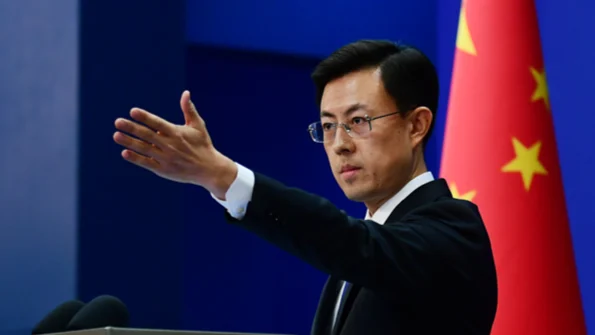
Chinese Foreign Ministry spokesperson Guo Jiakun addressed the bilateral pact during a press conference, asserting that partnerships between nations must strictly serve to “increase mutual understanding and trust” among regional states while actively “maintaining regional peace and stability.”
The Chinese government expressed strong reservations about the strategic alignment in New Delhi, cautioning against the polarization of regional trade. Spokesperson Guo maintained that these bilateral agreements “should not be directed against third parties nor harm the interests of third parties.”
“Under the pretext of cooperation, exclusive blocs must not be formed, nor should opposition and confrontation be fostered,” Guo added. He emphasized that preserving the stability and security of global industrial supply chains remains a shared responsibility for all nations, urging both Tokyo and New Delhi to maintain an attitude of “openness and cooperation” and to play a constructive role in the region.
Read more about this topic: China says cooperation between Japan and the Philippines “aggravates” tensions
The diplomatic pushback from Beijing follows a high-level meeting in New Delhi on Thursday between Indian Prime Minister Narendra Modi and Japanese Prime Minister Sanae Takaichi. Following their talks, Modi announced that India and Japan would aggressively intensify cooperation in the critical minerals sector to build greater resilience into their respective supply chains.
While Prime Minister Takaichi avoided naming China directly during the joint announcements, she pointedly noted that both Japan and India are facing shared geopolitical challenges, explicitly highlighting the growing threat of “economic weaponization.”
To counter these pressures, the two leaders announced a wave of joint investments designed to secure supply chains across several highly strategic sectors. Critical minerals and rare earths, semiconductors and microelectronics, Artificial Intelligence (AI) engineering, and next-generation clean energy infrastructure.
The rapid diplomatic and economic convergence between Tokyo and New Delhi unfolds against a backdrop of severely deteriorating relations between China and Japan. Tensions escalated sharply in late 2025 after Takaichi publicly declared that a potential Chinese military assault against Taiwan would constitute a direct threat to Japan’s survival, legally justifying an active defensive intervention by the Japanese Self-Defense Forces.
Read more: China says Japan is unqualified for a permanent seat on the UN Security Council
Beijing responded to those remarks with a series of aggressive diplomatic and economic retaliatory measures. The Chinese government lodged formal diplomatic protests, issued official travel advisories recommending citizens avoid traveling to Japan, instituted targeted trade restrictions, and clamped tight export controls on dual-use goods destined for Japanese commercial entities.
