

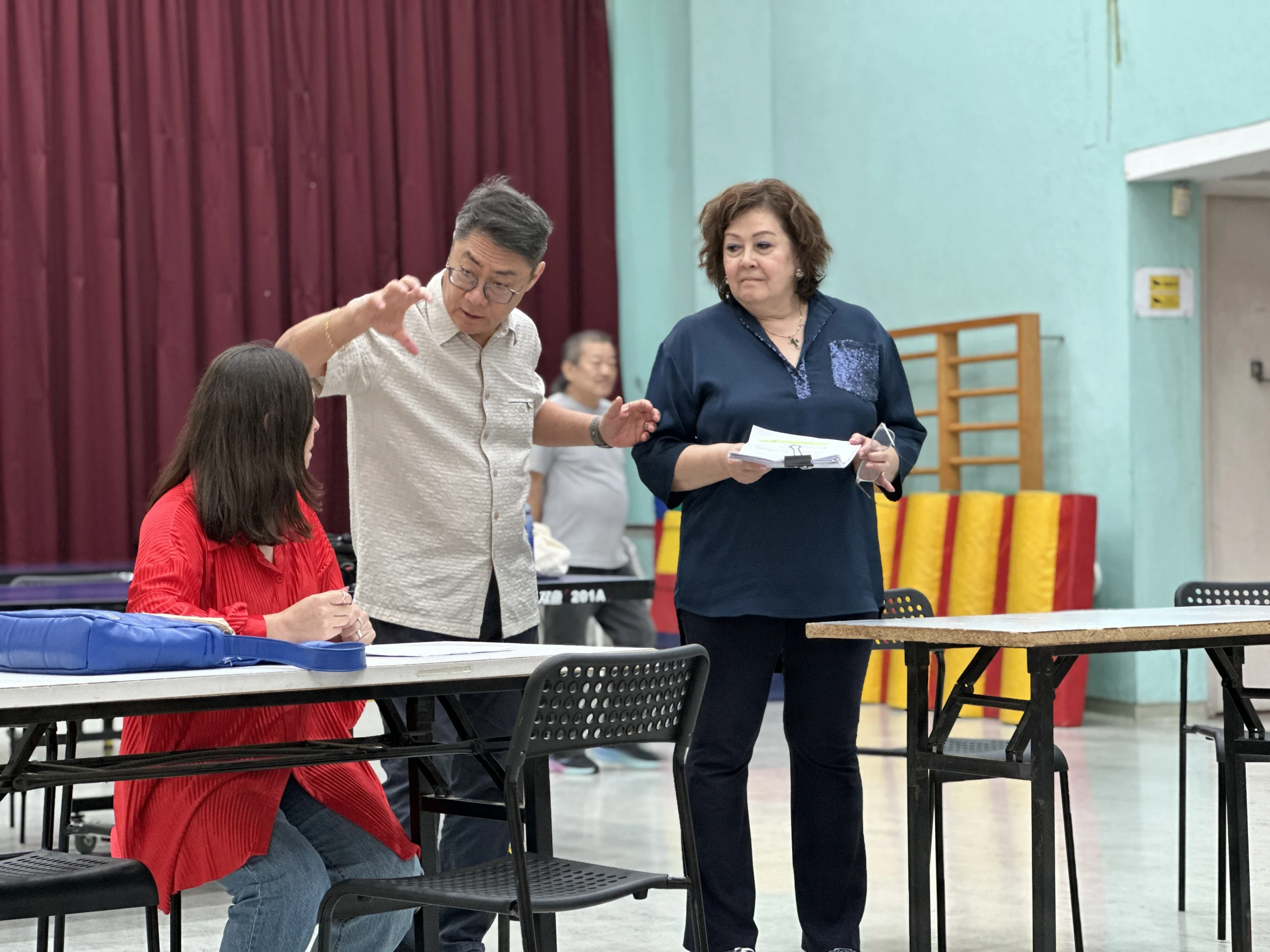
The story follows two sisters who return to Macau to take over the café left behind by their father. The business is struggling, customers are scarce, and the question naturally arises: stay or leave?
Miguel de Senna Fernandes explains that the central idea of the play stems precisely from this sense of deadlock. Despite the economic recovery and the increase in tourist numbers, he feels that many residents still cannot see a path towards stability. The closure of satellite casinos, the trend of “consumption in the North” and the growth of online shopping continue to place pressure on small and medium-sized enterprises.
“When survival becomes necessary, what is the best strategy?” he asks. He recognises that Macau needs deeper integration into the Greater Bay Area and economic diversification, but stresses that such transformation does not happen overnight. “In order to survive, is leaving mandatory? With the reduction of local job opportunities, it is natural for people — especially the younger generation — to go elsewhere,” he tells PLATAFORMA.
During the research process for the play, one sentence stayed particularly vivid in the director’s mind: “there is no way to compete.” Miguel de Senna Fernandes admits the idea struck him deeply because it reflects a feeling increasingly present in society. Still, he refuses to accept such conformism.
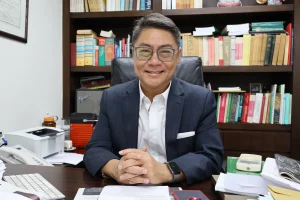
“AI may be able to express itself [in Patuá], the pronunciation may be very standard, but does it have a soul? Does it possess our cultural context? That is the great challenge” – Miguel de Senna Fernandes
The director believes many residents now live with a kind of permanent contradiction. On the one hand, they remain emotionally attached to the city and “certainly feel proud when Macau prospers”; on the other, the general atmosphere appears increasingly pessimistic and insecure. “What should we do? Is it really necessary to leave Macau in order to progress? And if so, what will Macau’s future look like?”
Read also: Book unites Lusophone cultures in a reflection on media, art, and technology
It is precisely this unease that “Agora Como?” seeks to transform into humour and reflection. The aim is to provoke laughter, but also to leave questions hanging in the air.
AI “too perfect”
Artificial Intelligence also became part of the creative process behind the play. Miguel de Senna Fernandes reveals that he used AI tools mainly for gathering information and monitoring public opinion. “In the media and on the internet, what is the reaction to a certain issue? Or the perspective of outsiders looking at Macau from the point of view of an observer?”
Despite this, he remains sceptical about the possibility of AI playing a relevant role in preserving Patuá theatre. “AI is also a machine; it needs to be fed with a great deal of data. Once it is sufficiently fed, does it work? More or less — after all, language belongs to humans. I do not believe machines can replace humans in this aspect,” he told PLATAFORMA.
For the director, the central issue is not merely technical. “AI may be able to express itself [in Patuá], the pronunciation may be very standard, but does it have a soul? Does it possess our cultural context? That is the great challenge,” he says.
Read also: Lusophony: Musical trio plays in Hong Kong in search of new audience for Macau Creole
New faces on stage
This year’s edition once again combines experienced actors with new participants. Recruitment rarely happens through public auditions and is mainly based on personal contact. “First I speak with the person, imagine them on stage, think about which role would suit them. If the appearance, body language and voice are appropriate, and if they have the courage to step onto the stage, then I make the official invitation. Not knowing how to speak Patuá is not a problem at all.”
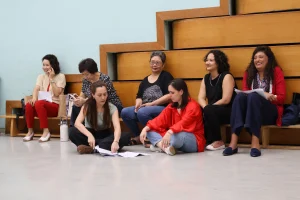
This year’s production once again mixes different languages and cultures. Macau has always been a place of cultural diversity, and those elements are reflected in the play
According to the director, finding adult actors has become more difficult in recent years. Even so, the group continues to include participants from different backgrounds, including a Portuguese actress performing in Patuá. “She still has an accent, but that is not a problem — she is able to carry the story forward. In truth, nowadays, what is standard and what is non-standard? We are protecting this language. It is already fortunate that there are still people willing to speak it.”
Miguel de Senna Fernandes believes the future of Patuá theatre does not depend on repeating exactly the same model, but one element remains essential: “Do not forget that Patuá theatre is comedy focused on current social realities. Whatever the form of presentation, social criticism is very important.”
In 2025, China’s Ministry of Culture and Tourism officially recognised Miguel de Senna Fernandes as a representative inheritor of Patuá theatre. Still, he insists the distinction changed little: “I am still the same Miguel de Senna Fernandes as always.”
