

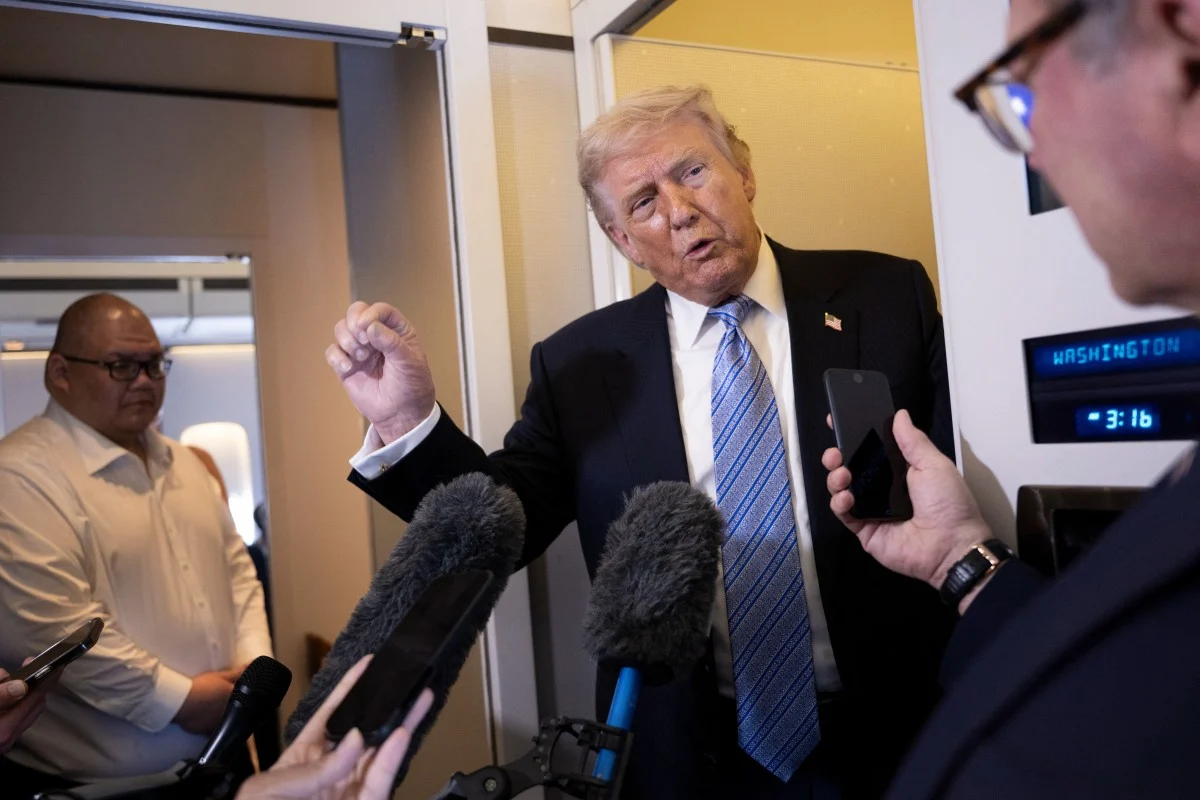
US President Donald Trump issued an ultimatum to Iran today to conclude a nuclear agreement “in the coming days,” warning that the United States is fully prepared to launch a large-scale military strike if negotiations collapse entirely. “I am saying two or three days, maybe Friday, Saturday, Sunday, something perhaps early next week, a limited deadline,” Trump declared to reporters during an official visit to the construction site of the new White House ballroom.
According to the US head of state, Washington was on the verge of resuming its military offensive against the Islamic Republic on Monday, but decided to postpone the operation following specific requests from several Gulf Arab allies, including Saudi Arabia and Qatar, to allow space for final diplomatic efforts.
Trump stated that he was “within one hour” of ordering the resumption of airstrikes against Iran, which would have effectively ended the current military ceasefire that has been in place since April.
“We cannot allow them to obtain a nuclear weapon, because if they had a nuclear weapon, they would quickly destroy Israel and attack Saudi Arabia, Kuwait, the United Arab Emirates, Qatar, and the entire Middle East, resulting in a nuclear holocaust,” the president argued. On Monday, Trump had announced that he ordered the United States Armed Forces to prepare to unleash a massive attack against Iran at any moment if the delicate negotiation process breaks down.
Read more about this topic:
On the same day, he had commented that there were “very positive” developments in the ongoing negotiations with Iran, emphasizing that Middle Eastern allies told him they were very close to reaching an agreement that would prevent Iran from acquiring nuclear weapons. The complex negotiations between Washington and Tehran to halt the war initiated on February 28 by the United States and Israel have remained heavily deadlocked for several weeks.
The primary point of contention continues to be the Iranian nuclear program, with the US government demanding strict and verifiable restrictions on uranium enrichment by Tehran. The Islamic Republic has repeatedly rejected the conditions imposed by the United States and presented a counterproposal on Monday through Pakistani mediators, although the exact contents of the document remain hidden.
Meanwhile, the ongoing naval blockade of the Strait of Hormuz continues to fuel deep global fears of severe disruptions to international oil trade and a sharp worsening of international economic instability. Maritime security experts warn that any resumption of open hostilities between the coalition and Iranian forces could push global energy markets into unprecedented volatility.
