

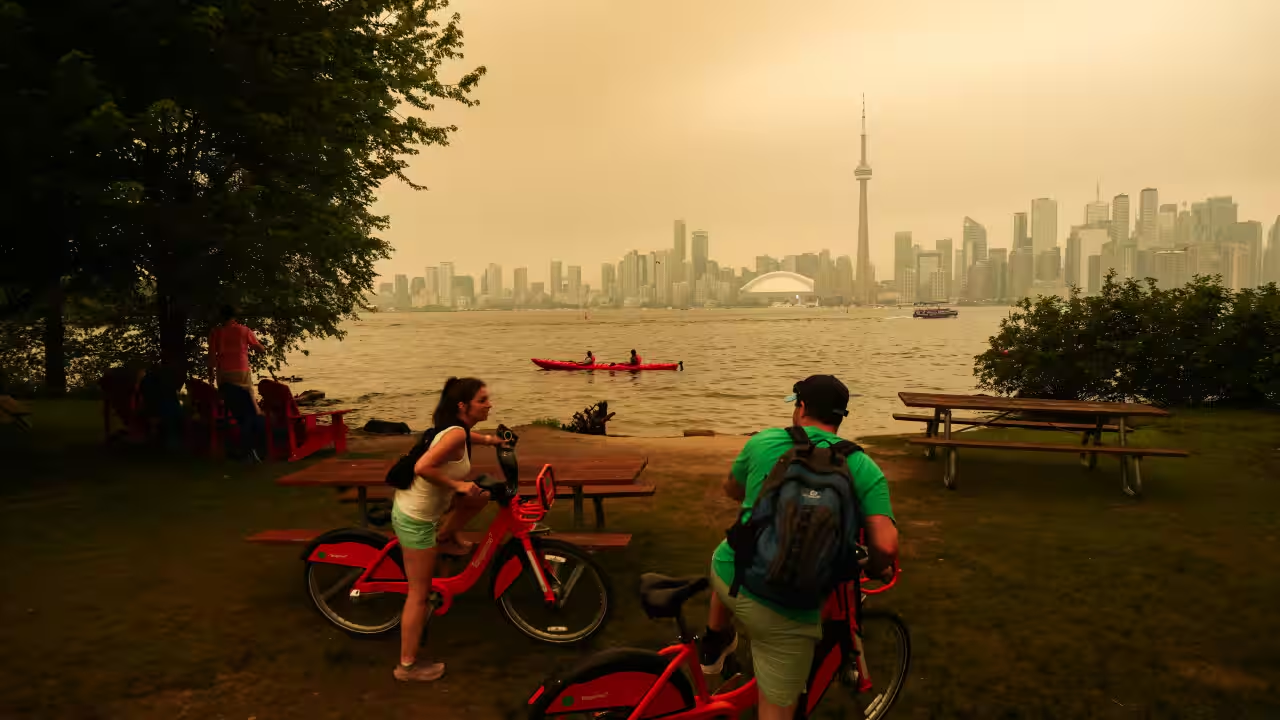
More than 800 active wildfires are tearing across Canada, sending thick plumes of smoke south and triggering hazardous air quality alerts across several US states. The US Air Quality Index has classified conditions in parts of Michigan and Minnesota as hazardous, prompting officials to advise residents in affected areas to remain indoors.
According to the Canadian Wildland Fire Information System, 858 blazes are currently burning, with dozens of new fires igniting daily and the vast majority remaining completely out of control.
The current crisis is largely driven by a massive cluster of fires in northwestern Ontario. Winds are carrying the heavy smoke across the Great Lakes and into the northeastern US, creating dense orange hazes over major urban centers. Cities like Detroit, Minneapolis, Chicago, and Toronto have ranked among the worst in the world for air pollution, BBC reports.
In New York, where skies have turned a dusty orange, officials activated emergency protocols by opening cooling centers and distributing KN95 masks to help residents cope with the unhealthy conditions. Forecasters warn that the prevailing winds could continue to push the smoke south toward New Jersey, potentially impacting the upcoming World Cup final.
Read more: Spain: critically burned British hikers rescued from ravine amid deadly wildfires
The persistent air pollution has sparked political tensions across the border. Republican lawmakers in Michigan issued an open letter to Canadian Prime Minister Mark Carney, expressing deep frustration over the recurring air quality issues and demanding better forest management.
Carney responded by emphasizing that both nations share a joint responsibility to combat climate change, while Ontario Premier Doug Ford defended local efforts, noting that hundreds of crew members are battling the blazes with unlimited financial backing.
On the ground, the fires have had devastating local consequences. Hundreds of residents from remote First Nations communities in northern Ontario have been forced to evacuate, some fleeing by boat as flames destroyed homes. Industrial operations have also been disrupted, highlighted by the dramatic emergency rescue of a train crew surrounded by flames near Armstrong, which led Canadian National Rail to temporarily suspend regional services.
Experts attribute the growing frequency and eastern shift of these massive fires to extreme climate warming and dry atmospheric conditions, which have made containing the blazes incredibly difficult for regional fire crews.
