

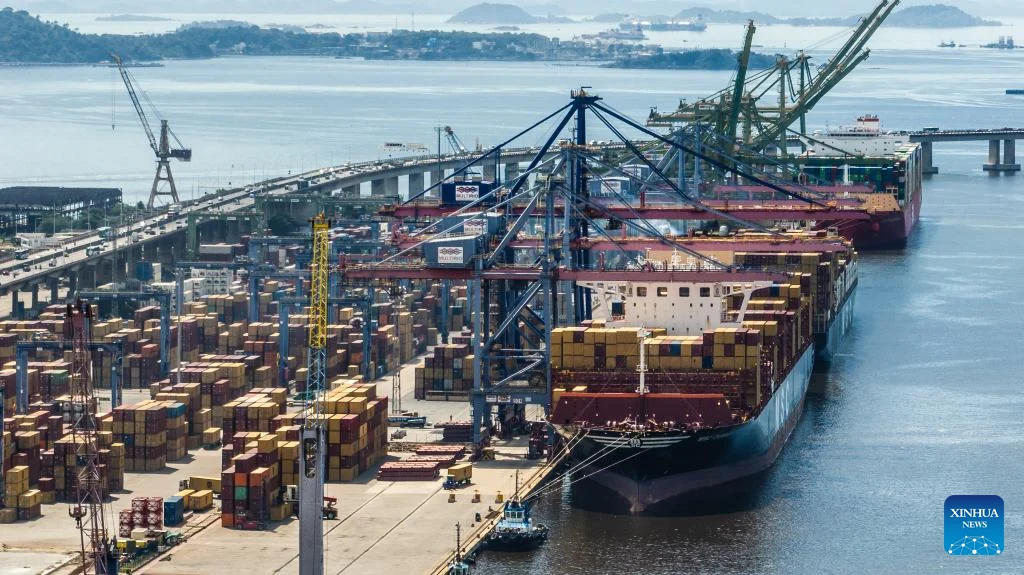
The Trump administration has announced a new 25% tariff on a broad range of Brazilian imports, escalating a bitter trade conflict centered on the business practices of Latin America’s largest economy.
The penalty, scheduled to take effect on July 22, follows a year-long probe conducted by U.S. Trade Representative Jamieson Greer under Section 301 of the Trade Act of 1974. Washington maintains the action is a necessary response to unfair trade barriers that hurt American businesses and workers.
Specifically, U.S. officials pointed to Brazilian court orders requiring U.S. tech firms to secretly censor political speech, domestic preferences favoring Brazil’s central bank-operated instant payment system, Pix, over U.S. credit card companies, and lax anti-corruption enforcement.
The administration also accused Brazil of giving unfair tariff treatment to countries like India and Mexico while shutting out American ethanol, and failing to stop illegal deforestation, which U.S. officials argue gives Brazilian agricultural producers an unfair cost advantage.
Read more about this topic: Brazil and U.S. business sectors call for negotiations to avoid new tariffs
Despite the sweeping nature of the new duties, Washington has carved out critical exemptions for high-volume commodities to shield American shoppers from immediate price hikes. Major consumer staples like beef, coffee, oranges, orange juice, and aerospace components are excluded from the tariff list.
Senior administration officials explained that these exclusions are intended to prevent supply chain disruptions and minimize domestic inflation ahead of the upcoming U.S. midterm elections.
The tariff announcement has immediately intensified the frosty political relationship between President Donald Trump and his Brazilian counterpart, Luiz Inácio Lula da Silva.
The Brazilian government has fiercely condemned the decision, calling it a “deplorable milestone” and a clear violation of multilateral trading rules. Lula’s allies have also raised concerns that the commercial pressure is politically motivated, pointing to a recent Washington visit by Brazilian Senator Flávio Bolsonaro—the son of jailed former President Jair Bolsonaro, a prominent Trump ally—just before the tariffs were finalized.
Read more about this topic: Lula fiercely rebukes Flávio Bolsonaro over formal plea to delay U.S. trade tariffs. What’s at stake?
While Trump administration officials deny any political motivation, the tariffs halt a brief diplomatic thawing between the two nations that followed a Supreme Court ruling earlier this year, which had struck down Trump’s previous attempt to levy a 50% tariff on Brazilian imports. With Washington indicating that it remains open to continuing negotiations, Brazil’s leadership is already preparing to challenge the unilateral measures through the World Trade Organization.
