

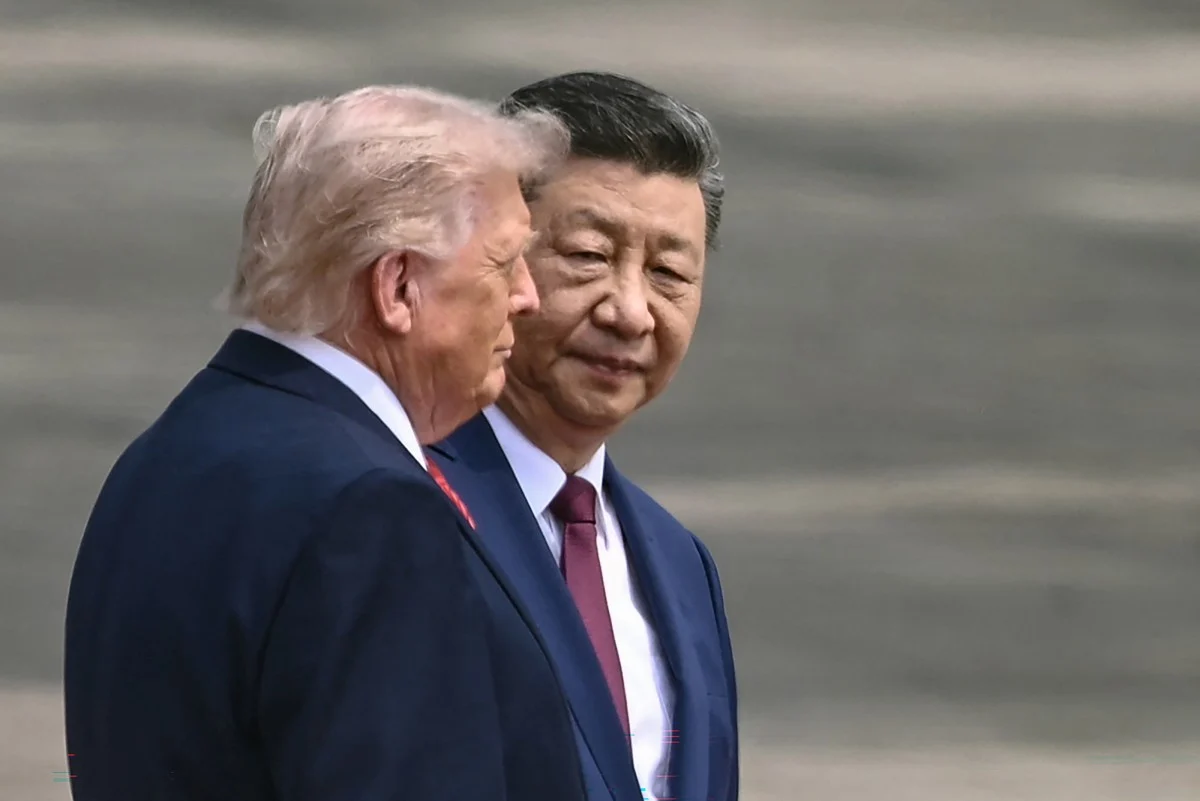
Relations between China and the United States are entering a new phase of strategic pragmatism. After years marked by trade wars, technological rivalry and growing geopolitical tensions, Beijing and Washington now recognise that international stability requires understanding between the world’s two largest economies.
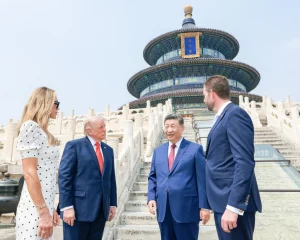
Donald Trump’s visit to Beijing — the first by an American president in almost a decade — confirms the shift in tone. Despite the structural differences between the two countries, the Chinese message is clear: competition does not eliminate the need for cooperation. “China and the United States should be partners rather than rivals,” stressed Xi Jinping. On the one hand, “the success of one is an opportunity for the other”; on the other, a stable bilateral relationship is “good for the world”.
From a long-term strategic perspective, China’s Ministry of Foreign Affairs says the two powers have reached a “new common understanding” aimed at a relationship of “constructive strategic stability” capable of ensuring the “stable, healthy and sustainable development” of Sino-American relations.
The reorganisation of global supply chains carries important implications. For years, the debate surrounding economic diversification in the Macau SAR has focused on reducing dependence on gaming: integrated tourism, conventions, traditional Chinese medicine, modern finance, technology and the digital economy have formed the pillars of the official discourse. Yet the global economy demands a broader vision within the context of the national strategy.
Diversification does not simply mean creating new economic sectors, but also innovating in strategic functions within China’s process of opening up and internationalisation. In this context, a pragmatic rapprochement between Washington and Beijing creates relevant opportunities. Throughout history, Macau has developed a unique identity based on the coexistence of different cultures, legal systems and economic models — a legacy that enhances a new strategic dimension.
In a polarised international environment, cities capable of building bridges, facilitating dialogue and offering institutionally comfortable environments become important geopolitical assets.
Macau possesses rare characteristics within the Chinese context: an internationalised environment, links to the Portuguese-speaking world, its own legal system, a multicultural tradition and consolidated experience in connecting different economies — elements that strengthen its complementary role in reinforcing international confidence and deepening China’s economic opening.
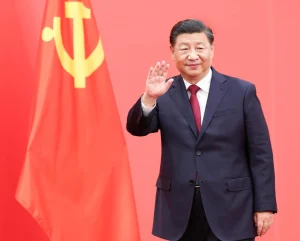
During Trump’s visit, China’s Foreign Ministry stated that contacts between the two presidents had “injected stability and predictability into the world”.
The search for such stability creates space for intermediate platforms of international cooperation — a context in which Macau can strengthen its role as a platform for economic forums, business meetings, commercial arbitration services, financial cooperation and the internationalisation of Chinese and Lusophone companies.
The objective is not to compete directly with Hong Kong or Singapore, but rather to develop specific niches where Macau’s institutional and diplomatic dimension can add value. The connection with Portuguese-speaking countries therefore gains growing relevance.
Without overlooking the new Hispanic ambition, the reorganisation of investment and supply chains in markets such as Brazil, Angola and Mozambique is becoming strategically important in sectors such as energy, critical minerals, agriculture, infrastructure and the energy transition.
The Macau platform is no longer merely a diplomatic or cultural instrument, but increasingly presents itself as an economic tool aligned with the national strategy of diversifying international partnerships and strengthening cooperation with the Global South.
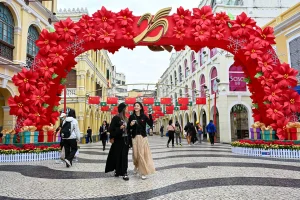
Another sector where Macau could gain relevance is academic and technological cooperation. Even amid strategic competition with the United States, there remains a need for international collaboration in areas such as healthcare, artificial intelligence, sustainability, clean energy and scientific innovation.
University of Macau, integration with Hengqin and the development of the Greater Bay Area provide the conditions for international research and innovation platforms. Academic internationalisation could become one of the most important — though less visible — pillars of Macau’s new economy.
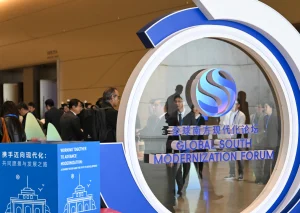
The conventions and international forums industry is also gaining a new dimension. In a fragmented world, spaces for dialogue become strategic assets; and Macau has accumulated experience in hospitality, security, event organisation and business tourism. The challenge is to transform this logistical capacity into a platform for international projection with greater economic and strategic substance.
All this naturally depends on integration into the Guangdong-Macau In-Depth Cooperation Zone, which enables Macau’s internationalisation through the territorial, technological and industrial scale of the Greater Bay Area. Beijing sees Hengqin as a laboratory for the Macau SAR’s economic diversification and the creation of new internationally oriented industries.
The new phase of Sino-American relations accelerates the need for hybrid platforms – internationalised yet simultaneously integrated into national priorities.
The greatest challenge is strategic. For decades, the city prospered mainly as a regional tourism and gaming platform; however, the reorganisation of the global economy opens space for an international platform of trust.
Xi Jinping recalls that the “unprecedented transformation of the world is accelerating”, challenging the United States to “create a new paradigm of relations between major powers”. For Macau, that challenge means diversification depends not only on the creation of isolated new sectors, but also on understanding the connection between China and the world. Perhaps there Macau may find a strategic role in the new cycle of China’s opening-up.
