

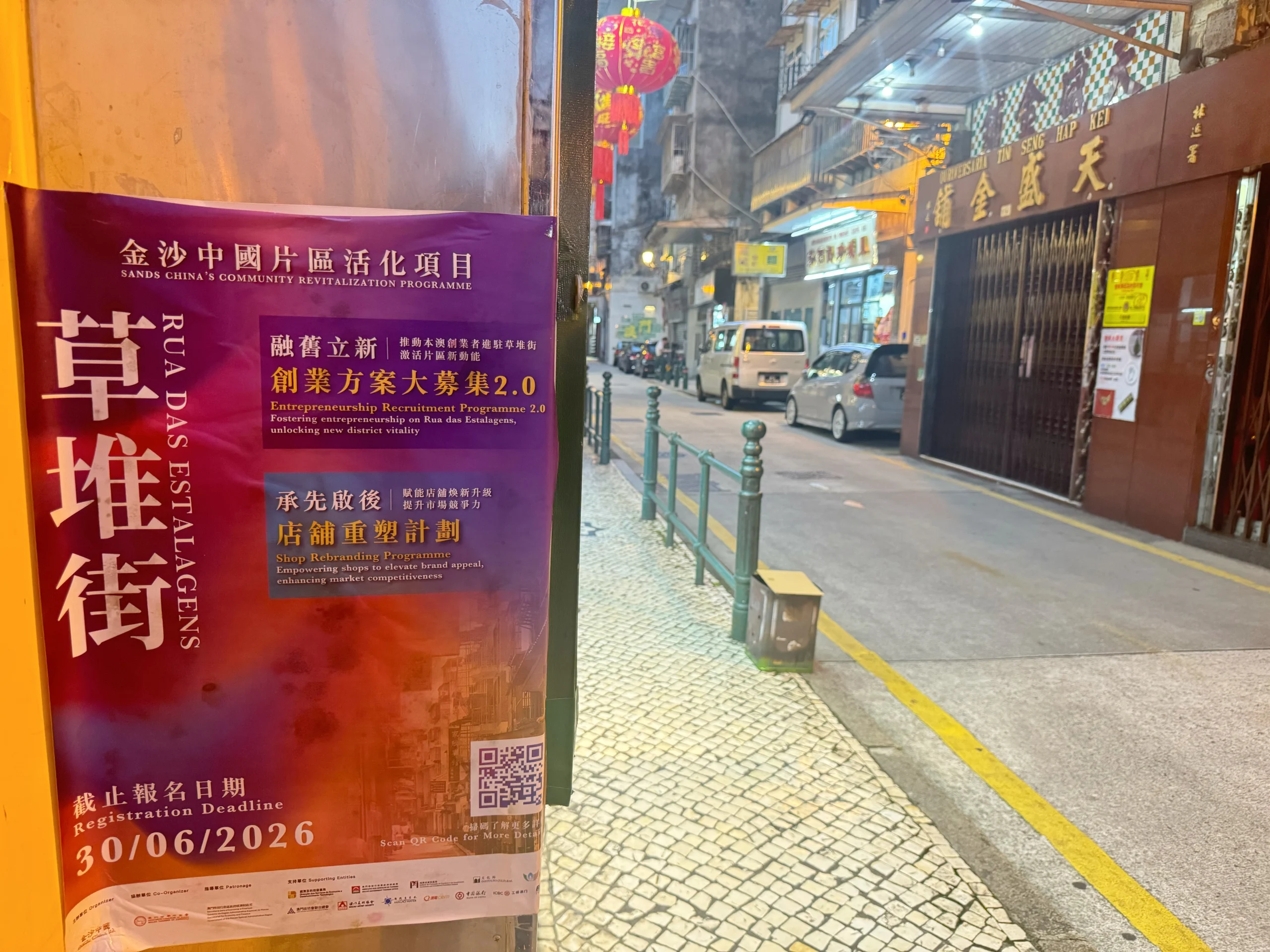
The initiative comes at a time when the historic street continues to face difficulties in terms of foot traffic and consumer activity, despite its proximity to the Ruins of St. Paul’s. There are currently around 12 shops available for lease, and the new phase of the programme aims precisely to tap into that potential through a combination of financial support, training and joint promotion.
The first edition received 128 applications and ultimately selected seven businesses mainly linked to food and beverage, creative retail and cultural products. Among them are Café Fantart, PANPAN, Glow Gelato, Voyage Thai Kitchen, Catfee and Little Port.
For many merchants, the programme’s main impact was not solely financial. Chan Iat Seng, head of Café Fantart, explains that Sands China’s support was particularly important during the startup phase. “The financial support was especially critical in the initial stage,” he told PLATAFORMA.
Wong Chun Fai, head of PANPAN, also believes the programme helped strengthen confidence in opening a business in the area. Beyond the subsidies, he highlighted the promotional initiatives that helped increase foot traffic on the street. “It was precisely because of Sands China’s programme that we felt more determined to open a shop on Rua das Estalagens.”
Read also: Sands China hosts briefing session for ‘Community Revitalization Programme 2.0 for Rua das Estalagens’
The businessman also believes revitalisation depends on creating a genuine cluster effect. “The food and beverage industry benefits greatly from business concentration. The more operators there are, the better it will be for everyone.”
Glow Gelato, which has been operating on the street for nearly a year, also points to joint promotion as one of the programme’s key advantages. Owner Billy Kuok says participation in Sands China-organised events, such as food festivals and the Sands Shopping Carnival, helped raise awareness of both the brand and the district among residents and tourists.
Still, challenges remain. Lao, head of Voyage Thai Kitchen, admits that foot traffic in the area remains relatively low compared to other parts of the city. Nevertheless, he believes the district has strong potential due to its proximity to tourist attractions and the street’s historical value. “The key issue is how to attract more visitors and help more tourists discover this historically valuable street.”
The real estate sector has also noticed changes. Real estate agent Kwan believes the programme’s first phase clearly changed the street’s commercial dynamics. “Before the programme, most shops focused on everyday local consumption. After Sands China introduced the subsidies, the activity level increased significantly,” he told PLATAFORMA.
Read also: Rua das Estalagens: Stories of Resilience in Fabric and Glass
The programme’s second phase continues to focus on local entrepreneurship. Applicants to the “Entrepreneurship Recruitment Programme 2.0” will be required to invest at least MOP300,000 and may receive subsidies of up to MOP1 million. Meanwhile, the new “Shop Rebranding Programme”, aimed at existing businesses, offers support of up to MOP500,000 for image upgrades, packaging and storefront renovations.
The programme also includes the “Rua das Estalagens Open Day”, taking place between today and Sunday, as well as from June 12 to 14, allowing the public to visit available commercial spaces on the street. The initiative is primarily aimed at entrepreneurs and SMEs interested in joining the programme, offering an opportunity to better understand the district’s conditions and develop more concrete and targeted business plans.
