

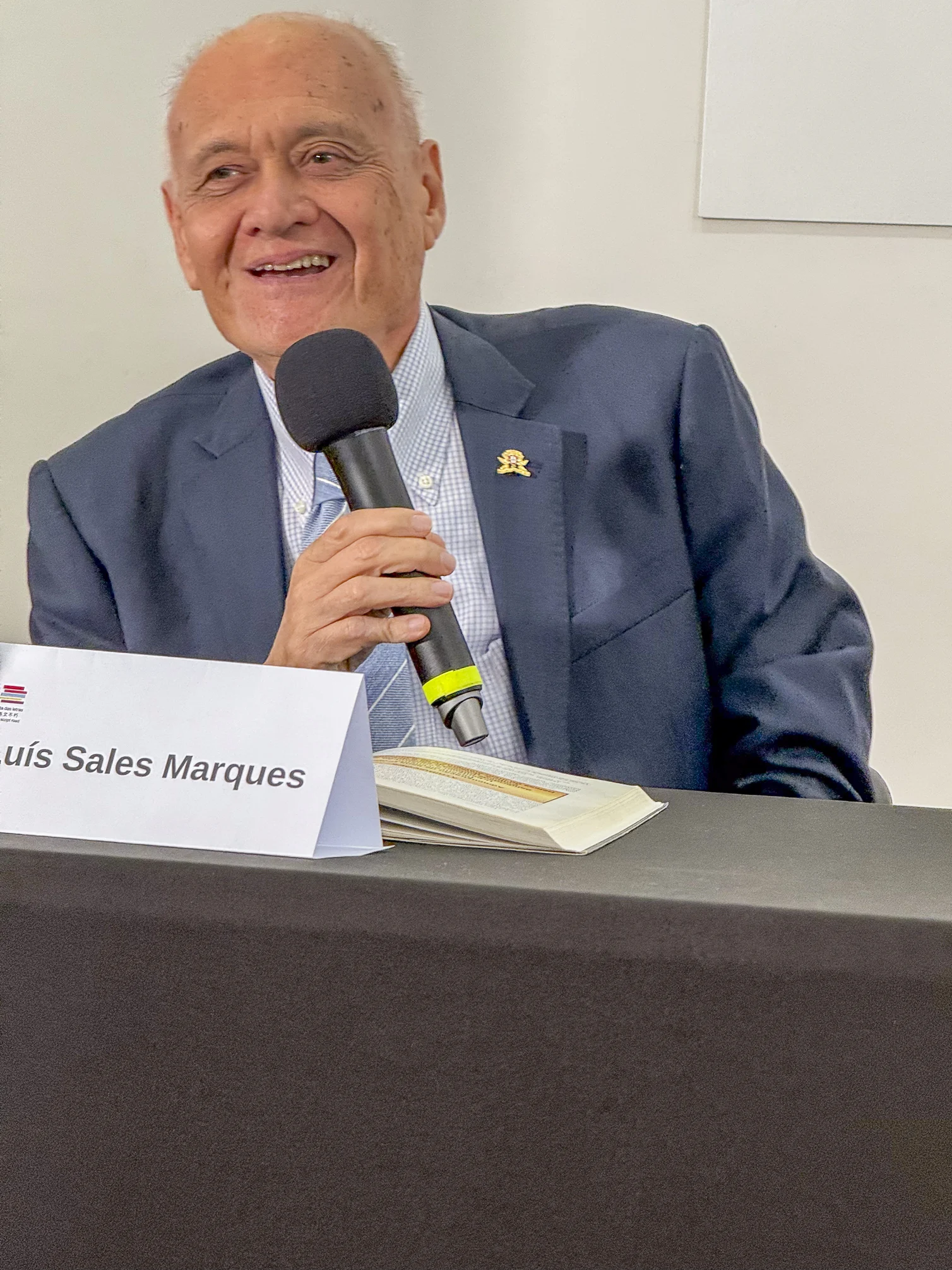
— In a context of global uncertainty, the new cycle accelerates Macau’s political integration, but fails on economic diversification. How can that leap be made?
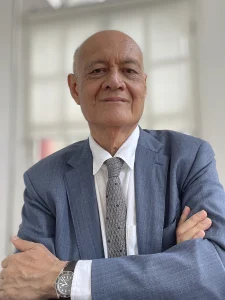
Sales Marques — In the context of economic diversification, there are several levels of importance, or impact. First, the four emerging industries: big health, high technology, modern finance and MICE. I think big health will mainly mean Traditional Chinese Medicine (TCM), where the Government has already invested — and not a little. It remains to be seen what the results will be, particularly in the Hengqin Park.
— MICE is not new either, and it has foundations in the integrated resorts. Should investment be concentrated on technology and finance?
S.M. — Yes, especially on those two fronts. The Government Guidance Fund and the Macao Investment and Management Company are very important. For the first time, the Government is putting on the table a plan to allocate 11 billion patacas — in an initial phase — which may rise to 20 billion. It is a significant amount, but the draft Five-Year Plan did not set a timing for that company to start operating. I hope it will be this year, because investors are watching this. Then there is Hengqin, the Science and Technology Park, and all those announced projects, which will still take time.
Private capital is waiting to see the conditions offered by the market; the Government must create clear and transparent conditions; above all, there must be predictability
— All on paper…
S.M. — Potential investors — local, from mainland China or foreign — are waiting to see. The Guidance Fund is a tradition in mainland China; there should be no difficulty in adapting it to Macao’s characteristics. Then good decisions and good choices have to be made; we are talking about very big things.
— There are still many doubts about that Fund…
S.M. — The Government will have to define its participation; we are talking about public-private partnerships. The problem is that private capital is waiting to see the conditions offered by the market; the Government must create clear and transparent conditions; above all, there must be predictability.
— And infrastructure?
S.M. — A financial industry does not need much space; a technological industry may need facilities. In Macao, I do not think so; in China there is the issue of access. In the case of TCM, or small private investments, barriers to circulation have to be resolved; the potential of the so-called first- and second-tier checkpoints must be maximised.
Read also: Macau: economy grows 7.1%; driven by tourism
— Abolish the border between Macau and Hengqin?
S.M. — Exactly. In principle, what can enter Macao should be able to enter Hengqin; that is a problem that has to be solved for there to be greater integration. I think the Government is aware of this, but it is not easy to act in an area that has two heads — or more. The impression I have is that someone opens a restaurant and then cannot import codfish. These are small, concrete cases, but paradigmatic ones, which do not correspond to the expectations created around free circulation.
— Does integration depend on free circulation?
S.M. — It has to be done; it is crucial. For mainland China there are no major problems; already during Ho Iat Seng’s time, the formula was found: made in China, designed and conceived in Macao. The problem lies with third jurisdictions, because of rules of origin. Perhaps there could be a solution through some kind of preferential trade agreement, a free trade zone… I do not know; but we have to export it as a product made in Macao. Making Made in Macao compatible with World Trade Organization rules would be ideal.
We need qualified young people to come and live and work in Macao; we need to create conditions so that they feel dignified, wanted and appreciated
— Where is the qualified labour force?
S.M. — It is not in the Five-Year Plan; at least I did not find it, and I can say I read it carefully. I do not want to use the word talent; it reminds me of light music competitions. I call it specialised labour, qualified professionals… the issue, in fact, is that we have to create conditions to retain people; not in Hengqin — in Macao. They can come from anywhere in the world, including mainland China. Macao’s universities invest in training many highly capable people; but after graduation, they have to leave. We need to have them here; use merit-based criteria, hold competitions… whatever it may be. We have a demographic problem; we are indeed ageing. We need qualified young people to come and live and work in Macao; we need to create conditions so that they feel dignified, wanted and appreciated.
— Private capital is not investing; the Government Guidance Fund still has no rules or timings; there are barriers to circulation in Hengqin; critical mass is not being imported… Other than that, everything is fine, is that it?
S.M. — Without a doubt.
— Nothing is actually happening…
S.M. — Well… there is no defined time horizon. What is happening, at the level of integration, is ease of circulation: consumption and services. Obviously advantageous for Macao residents.
— I cross the border, go to the dentist, have dinner with the family, go to the supermarket, fill up the petrol tank… and everything here is closing down.
S.M. — On the issue of the community economy, the Government is right when it proposes measures to modernise and restructure family businesses; it is the only possible path. We cannot continue to have eateries with a terrible appearance when, just next door, the same offer, cheaper, looks fantastic. The other day, at the Rui Cunha Foundation, a young entrepreneur who runs a traditional tea house explained the modernisation path of her company. That is fantastic; we have people capable of doing that.
— How can those people be helped?
S.M. — We have to give them support, guidance and, sometimes, investment — which may not even be very much. The Industrial Association, for example, has support programmes, obviously paid for by the Government, for equipment conversion. All of that has to be done; but cafés and small restaurants are already starting to appear with a much improved look; things are becoming more interesting.
The Government is right when it proposes measures to modernise and restructure family businesses; it is the only possible path
— That is on the supply side… and on the demand side?
S.M. — If demand is not internal, it has to be external; there is no other logic. In the past, junkets would eat in those places and spend money; today the picture is different and the satellite casinos are gone. There are mainly tourists; therefore, those areas need to be properly promoted. Not based on some imported cartoon character, but on local identity. That has to do with people, built heritage, intangible heritage and local traditions. There must be the ability to project and promote that, introducing appropriate narratives. Unfortunately, in Macao there are many narratives that are far too simplistic; it is necessary to explore, to go deep into those stories.
— Quality marketing?
S.M. — Clear language for tourists, and quality that justifies it. Another problem is that establishments have very high costs, starting with rents; all of this has to fit into a competitive system. On the one hand, with Government support; on the other, consciously assumed and adapted by those concerned. Small shopkeepers and business owners cannot maintain the same practices as three or four years ago; they have to modernise, to take this on as a community project, obviously with economic sustainability.
— Macau branding?
S.M. — Yes; with local identity and branding for each of those components which, fortunately, Macao has, with centuries of history and culture. That allows the fall in internal demand to be offset by external demand. But be careful! In life, especially in economics, everything has to be tested and worked on; nothing is 100% guaranteed. But I think it is the only path.
— With more than 85% of GDP today directly or indirectly linked to gaming, do you believe in the targets for drastically reducing that dependence?
S.M. — There was a mistaken perception of what was announced: it was not meant that gaming GDP would be reduced to 40%; the issue has to do with value added, which, in the most recent calculations, is about 73% of the gaming sector’s output — the other part has to do with intermediate consumption. The truth is that the Government’s figures are from 2024; and in 2025, gaming grew again much more than the rest of the economy. In fact, as in 2026… To use an economist’s language, it is unlikely that, by 2030, gaming will fall to 40% of GDP, even from the value-added perspective. On the one hand, the rest of the economy is as it is; on the other, there is a limit to what can be calculated. The Government does not provide figures for that, it does not quantify it; but Macao’s GDP, after the recovery phase in which it reached double digits, has entered a normalisation phase. We may perhaps manage to grow at around 5% a year, and that is already optimistic; some forecast 4%, or less. It is extremely difficult to conclude that the non-gaming sector could become 60% of GDP, even from the value-added perspective.
