

The Taipingling nuclear power plant in Guangdong province, southern China, experienced disruptions during the passage of Typhoon Noul, though no radioactive substances were released, Macau’s Unitary Police Services reported today.
In the early hours of July 26, “circuits A and B of the 500 kV [kilovolt] Taichong transmission lines suffered, successively, sudden failures” due to the storm’s influence, according to a statement from Macau’s Unitary Police Services, based on information provided by the Office of the Guangdong Provincial Nuclear Emergency Management Commission.
Following these failures, the statement also notes, “unit 1 switched to the plant’s self-consumption power mode to operate stably.” A few hours later, the lines returned to normal and the unit resumed regular operation.
Read more about this topic: Noul is China’s twelfth typhoon this year. July alone has already killed dozens in unrelated disasters (with video)
According to the same source, “throughout the entire process of the typhoon’s impact, the plant responded stably and effectively, the units remained at all times in a safe and stable condition, and there was no release of radioactive substances to the outside.”
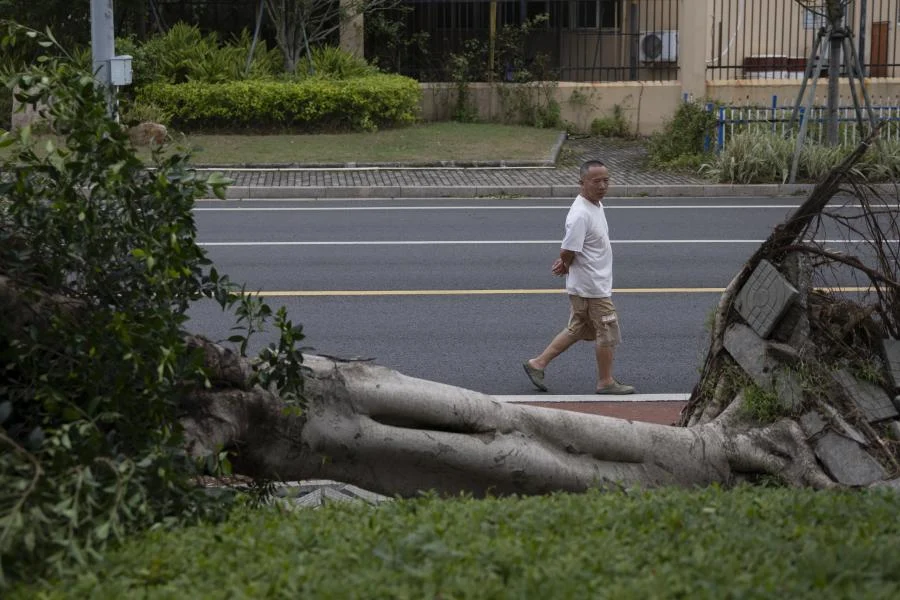
Typhoon Noul forced the preventive evacuation of more than 750,000 people, in addition to causing flooding and damage across several regions of southern China.
The current typhoon season also coincides with a summer marked by torrential rains and other extreme weather events that have caused dozens of deaths in different parts of China.
