

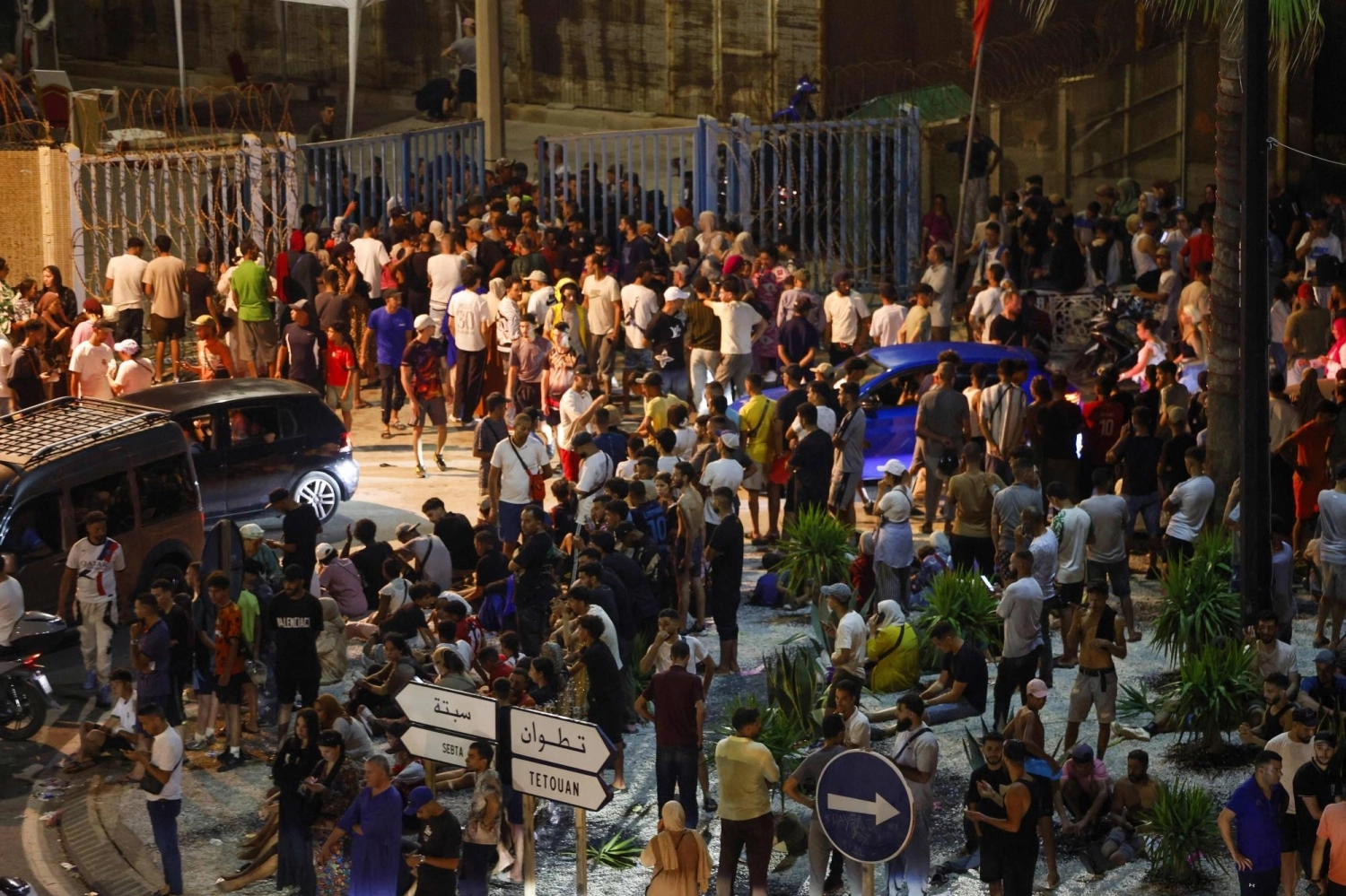
Hundreds or even thousands of migrants who entered Ceuta illegally on Thursday and Friday remain in the Spanish enclave in North Africa and say they don’t want to return to Morocco.
According to initial estimates from the Spanish Government, more than 50,000 people entered Ceuta illegally, mainly in an avalanche on Thursday, and at least 48,300 returned to Morocco as early as Friday, on their own initiative.
But many — hundreds or even thousands — remain in Ceuta, concentrated in areas further removed from the military and police controls that have been reinforced in the city, on beaches or in the vicinity of the temporary migrant reception center (known as CETI), as the Lusa news agency observed.
There are also reports from other media outlets of hundreds of people hiding or taking refuge in the hills surrounding the city. Almost all of those remaining in Ceuta are migrants from sub-Saharan countries, while those who left on their own initiative since Friday were Moroccans.
Read more about this topic: Spain: What to know about Ceuta as illegal crossings from Morocco surge (with videos)
Among the hundreds remaining near the CETI, without access to the reception center that Ceuta authorities say is overcrowded, are people from countries such as Senegal, Gambia, Yemen or Sudan who were already living in Morocco, in cities like Casablanca or Tangier, and headed to the Ceuta border after “hearing” or “seeing on the Internet” that it was possible to cross to the Spanish side, as several of these migrants told Lusa.
All those who spoke with Lusa said they had swum across on Thursday, taking advantage of the massive influx of people and the low tide that allowed them to get around the El Tarajal jetty, on the border between Ceuta and Morocco.
They are now on the street, crowded onto sidewalks and the road leading to the CETI, “without eating, without drinking and without bathing,” but they want to remain in Ceuta, Spain, Europe, said Florence, 32, from Senegal.
“I want to live well, like everyone. And freedom,” Senegalese Ali, 32, who had already been living in Morocco for four years working in “small-scale trade,” told Lusa. “There is war in our country,” added Fátima, 28, from Sudan.
Read more about this topic: Spain: Ceuta tries to return to normal as Melilla enjoys quiet night after illegals swarm cities (with video)
Spain sent military personnel to Ceuta and reinforced the presence of security forces in the city, and the Government announced as early as Friday an agreement with Morocco for the rapid repatriation of those who entered illegally last week.
The closure of shops and other services in the city for two days, preventing those who had entered from buying food, for example, ended up leading tens of thousands to leave the city hours after entering, according to accounts given by the migrants themselves to media outlets.
The border near the El Tarajal jetty was also reinforced, with a new half-kilometer pneumatic barrier already installed over the sea on Saturday. From this location, 71 bodies have been recovered since Thursday, according to the most recent count from Spanish police. Throughout all of 2025, 46 people drowned at this same spot, also while attempting to enter Ceuta illegally.
Sources in the city cited today by the newspaper El País confirm that facilities, with refrigerated chambers, are being prepared to receive up to 200 bodies, acknowledging the possibility that more deaths may be found in the waters. For now, the number of bodies recovered from the sea on the Moroccan side remains unknown.
Read more about this topic: Spain: Illegal migrants torch vehicles near Ceuta as thousands attempt crossing (with videos)
Meanwhile, nearly 1,150 of the people who entered Ceuta since Thursday have received medical assistance, local authorities said today. The city of Ceuta is partially returning to normality, with shops and restaurants open again since Saturday, tourists filling the terraces in the city center, and traffic flowing once more.
All of this, however, with a strong police and military presence on the streets and with the cancellation of the city’s major annual festivities, which culminate in the celebration of the Day of the Virgin of Africa, on August 5, and which should have begun on Saturday.
