

The 2025 Macau Environmental Report shows a city with cleaner air and lower local greenhouse gas emissions, but also more waste. Municipal solid waste reached 532,053 tonnes last year, up 1% from 2024, while the recyclable waste collection rate fell for the fourth consecutive year, from 21.7% to 21.1%.
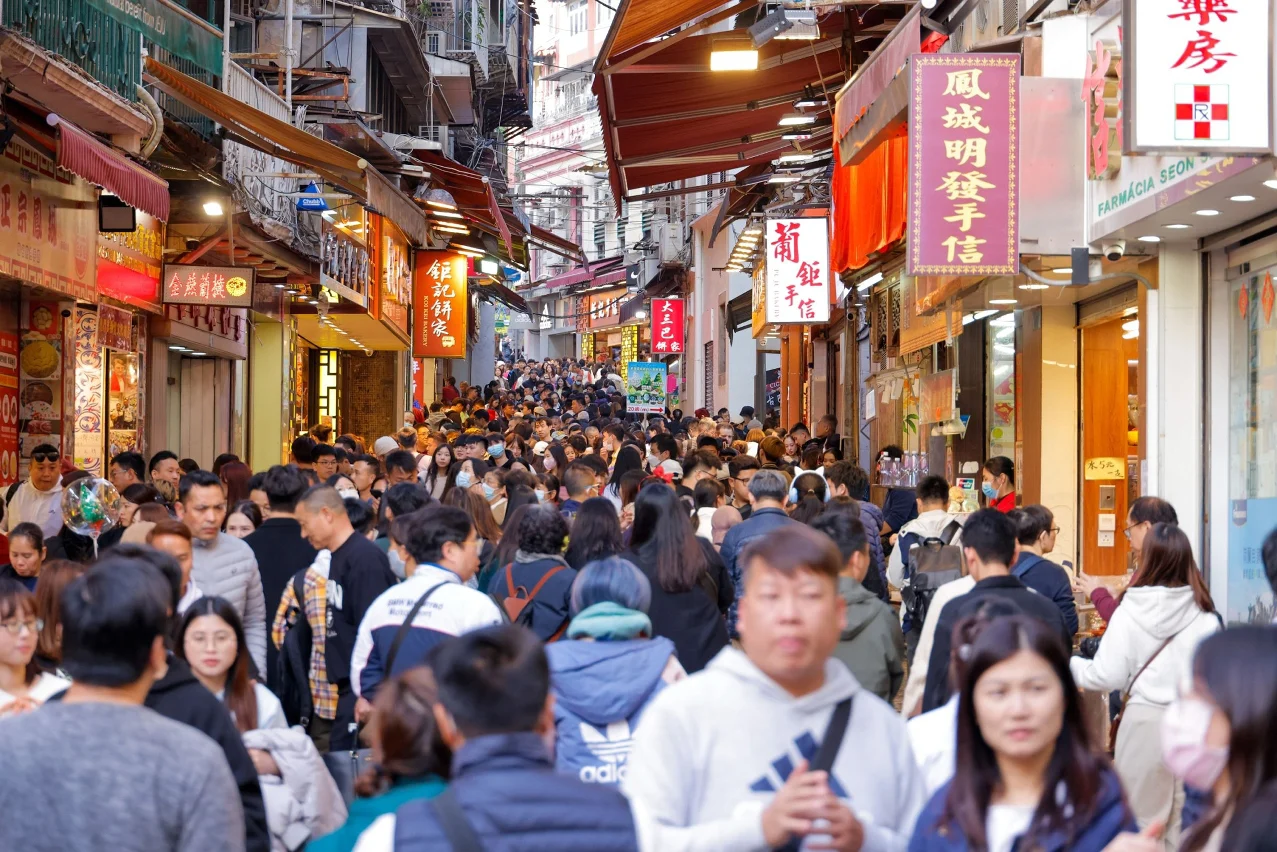
The report by the Environmental Protection Bureau (DSPA) justifies the pressure from waste with the city’s tourism structure: “Although Macao’s population is relatively small, tourism intensity is high” and, as a result, “the amount of municipal solid waste produced annually exceeds the normal amount generated by the local population”.
Also according to the report, each resident generated an average of 2.13 kilograms of municipal waste per day last year. For Joe Chan, the reading cannot be limited to the “responsibility of residents”.
“In Japan, Taiwan and Korea, tourists have to cooperate with the city in recycling waste. They cannot simply put it in the rubbish bin; they have to take it back to the hotel and recycle it there,” he tells PLATAFORMA, arguing that separating tourism waste from domestic waste is a “scientific strategy”.
The increase in ozone and sulphur dioxide indicates that air pollution remains a regional problem — Thomas Lei, professor at the University of Saint Joseph
Chan argues that Macao should follow the examples of Singapore, South Korea, Japan and Hong Kong by legislating against the provision of single-use disposable items in hotel rooms. The environmentalist also underlines the lack of determination in applying the “polluter pays” principle, pointing to the absence of a “ban on the import of single-use disposable plastic containers” and the “lack of rules for excessive packaging of products delivered from mainland China”.
“The proportion of parcel packaging has increased dramatically, but there is no charge for disposal to the buyer or consumer,” he says. For Chan, charging for domestic waste should be the ultimate solution, provided it is accompanied by “environmental education” and “effective promotion of recycling”.
Air improves, ozone raises concern
In terms of the atmospheric environment, the report presents an overall positive trend. In 2025, annual average concentrations of PM10 and PM2.5 fell by 3.5% and 2.3%, respectively, while nitrogen dioxide decreased by 1.7%. Compared with 2016, annual average concentrations of PM2.5, PM10, sulphur dioxide, nitrogen dioxide and carbon monoxide fell by 32.9%, 17.6%, 45%, 29.2% and 25%.
In Japan, Taiwan and Korea, tourists have to cooperate with the city in recycling waste. They cannot simply put it in the rubbish bin; they have to take it back to the hotel and recycle it there — Joe Chan, environmentalist
Even so, not all indicators improved. Ozone rose by 2.4% and sulphur dioxide increased by 2.3%. The report identifies fine suspended particles and ozone as the city’s main air pollutants.
Thomas Lei, environmental scientist and assistant professor at the University of Saint Joseph, considers that the long-term decline in primary pollutants shows the “effectiveness of local and regional measures” to reduce emissions. But he issues a warning: “The increase in ozone and sulphur dioxide indicates that air pollution remains a regional problem.”
Ozone is a “secondary pollutant formed through complex photochemical reactions of precursors”, including “volatile organic compounds and nitrogen oxides, transported over long distances”, Lei explains to PLATAFORMA. Sulphur dioxide, meanwhile, is associated with major industrial sources and the combustion of heavy fuel oil, “especially in maritime transport”, in the region.
Read also: Demolition of the Transparent Building in Porto: “It is ugly and will be redesigned for the good of the environment and people”
Local greenhouse gas emissions fell by 1.8% in 2025, a reduction Thomas Lei describes as “modest”. He points to two main reasons: electricity generation remains “heavily dependent on imported energy” and land transport continues to be “dominated by vehicles with internal combustion engines”.
“If Macao wants to achieve significant decarbonisation, the use of renewable energy, such as solar and wind, must increase substantially, and most vehicles with internal combustion engines must transition to battery-electric vehicles,” he argues.
The number of electric vehicles in Macao rose by 34.6% in 2025, to 16,339. Among newly registered light vehicles, the proportion of electric models increased from around 4% in 2019 to 38.5%. For motorcycles, the share of electric models rose from around 2% to 36.8% since the launch of the financial support scheme in 2022.
Even so, Joe Chan regrets that “no significant renewable energy facilities have been built in the new reclamation areas”. The environmentalist believes that the “new urban rail network and the electrification of private cars may help reduce emissions”, but notes that “incineration” remains linked to the “waste problem”.
“Food waste accounts for up to 40% of incinerated waste. If the recycling programme can be promoted citywide, it will greatly relieve the pressure on incineration,” he tells PLATAFORMA.
