

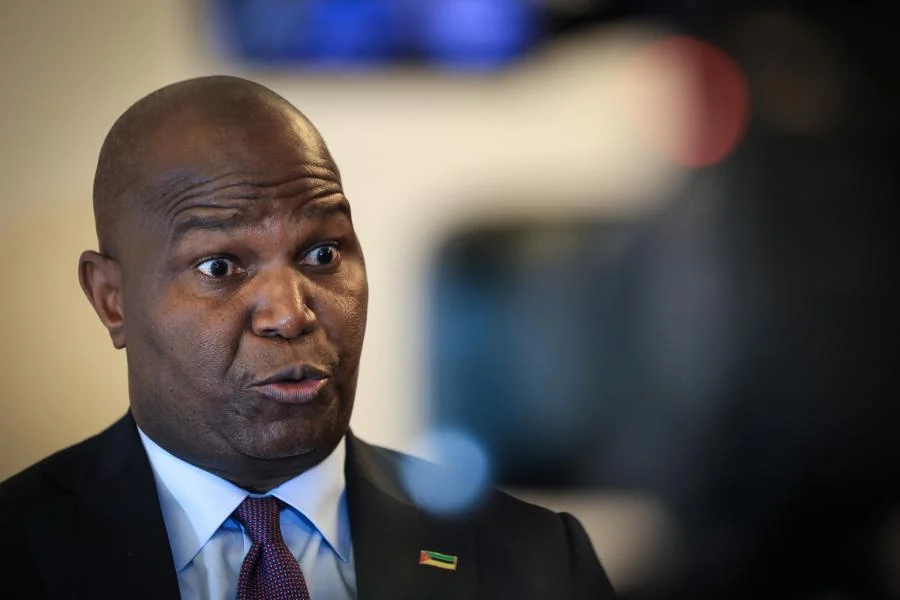
Mozambican President Daniel Chapo has promulgated the legal amendment extending the mandatory retirement age for civil servants from 60 to 65 years, and up to 70 years for special career professionals, it was announced today.
In an official statement, the Presidency of the Republic notes that after verifying compliance with the Constitution, the Mozambican President promulgated and ordered the publication of the law modifying the General Statute of State Civil Servants and Agents, as well as the revision of laws concerning the organization, competencies, and functioning of executive organs of decentralized governance.
These legislative changes fulfill the commitment assumed by the head of state during his inauguration, whose core essence consists of valuing state civil servants and agents by extending the retirement age to 65 and allowing special career professionals, under specific legal requirements, to remain active until 70.
The Mozambican parliament approved the increase to 65 years for the mandatory retirement age of civil servants on April 29, which will now become automatic despite a rejection by Renamo.
Read more: Portugal pledges to support Mozambique in AI
In its justification for the proposal, the Government indicated that the previous law resulted in a significant departure of experienced cadres, severely affecting the capacity to provide essential services, mainly in health, education, diplomacy, and scientific research.
The Mozambican National Resistance (Renamo) voted against this bill in parliament, with amendments to the General Statute of State Civil Servants and Agents, because it considers that the average life expectancy of Mozambicans is currently 61 years.
Renamo lawmaker Ricardo Tomás argued that since the life expectancy of Mozambicans hovers around 60 to 61 years, increasing the mandatory retirement age to 65 means that the vast majority of citizens will not live long enough to benefit from their pension.
For the Government, the evolution of average life expectancy, the improvement of health conditions, and the increase in active longevity justify the re-evaluation of the current mandatory retirement limit, stating that it was already unadjusted and affecting civil servants in full physical and intellectual condition to exercise their functions.
Read more: Portugal supports Mozambique SME’s with €17 million
The legislative review seeks to achieve a balance between valuing professional experience, the necessity of renewing staff, and guaranteeing the efficiency and continuity of public services, contributing to the institutional strengthening of the state.
The text also provides for the possibility of annual extensions for special categories up to 70 years of age, including specialist doctors, full and associate professors, ambassadors, plenipotentiary ministers, counselor ministers, as well as coordinating and principal researchers.
The new proposal sets out an automatic mandatory retirement mechanism, with the executive indicating that the implementation of the law will open at least six thousand new vacancies in the public service.
The World Bank stated in March that the Mozambican public sector is not oversized with its 357,000 workers compared to regional peers, though it is constrained by a sharp increase in the payroll following the 2022 salary reform.
Read more: “Portugal and Mozambique share solid partnerships,” minister says
The sharp increase in the wage bill was driven by raises in individual salaries rather than expansions in the total workforce, according to the World Bank’s Mozambique Economic Update report, titled “From Fragility to Stability – Why Fiscal Reforms Cannot Wait.”
The World Bank estimates that the weight of the civil service payroll grew from less than 5% of the Gross Domestic Product (GDP) in 2000 to 15% in 2023. This financial shift highlights the structural challenges Mozambique faces as it attempts to manage public spending while maintaining experienced staff across vital public sectors.
