


A trio that composes original songs in Patuá will perform in Hong Kong on Saturday in their first concert outside Macau, in an attempt to build a new audience for the Portuguese-rooted Creole dialect.
Around six years ago, civil engineer Delfino Gabriel began trying to write songs in Patuá, a dialect created over the past 400 years by the Macanese — a Eurasian community with many people of Portuguese descent.
“I am Macanese and a father of two children. So I think it is necessary to promote and show them what their roots are, which is not just Macanese gastronomy,” Gabriel says.
Macanese cuisine was inscribed by Macau in 2019 as an intangible cultural heritage of the region. Two years later, it was also included by China on the National Intangible Cultural Heritage List.
Read more: Last Council of Ministers presided by President of Portugal to focus on Lusophony
“Most of the time, I would write in Portuguese and then ask good friends of mine who have a talent for Creole to help me. They taught me and tried to translate for me,” Gabriel explains.
After releasing several solo works, the singer formed the trio Gabriel & Friends two years ago, with Water, a local multi-instrumentalist, and Halen Mory Woo, a percussionist from Hong Kong.
“When we met, it was love at first sight, because we share the same passion for making original music with unusual instruments — handpan, djembe, kora — all champurado [mixed in Patuá],” Gabriel says.
The trio performed in October at the Macau Lusophony Festival, organised annually by Portuguese-speaking community associations in the region.
For 2026, the goal is to go beyond Macau, starting on Saturday at Museek Studio in Hong Kong, a venue that hosts alternative music concerts for a maximum of 25 spectators.
“The owner was very interested when he heard about music in Patuá and he very much supports this kind of cultural sharing,” says Halen, who teaches at the University of Macau.
“Gabriel is trying not only to preserve the language, but also to promote it. Except instead of a lecture with a PowerPoint presentation, we present Patuá through music,” the percussionist said.
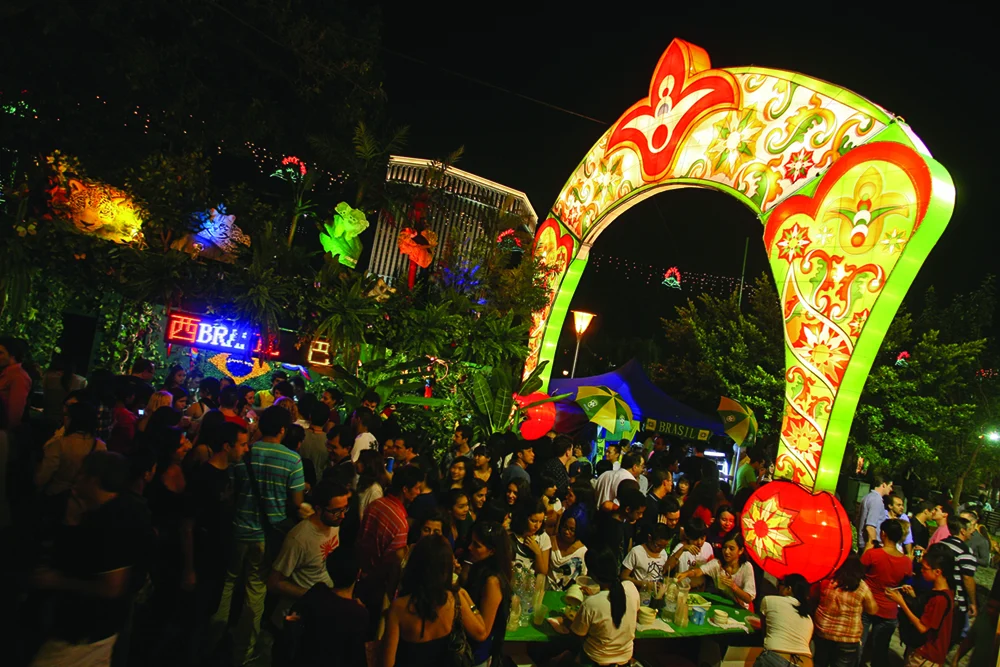
Patuá has survived in the productions of the Dóci Papiaçám di Macau theatre company and in the concerts of the Tuna Macaense, which plays mainly songs with lyrics by poet José dos Santos Ferreira, better known as Adé (1919-1993).
“The traditional songs are very interesting. I was inspired by the Tuna Macaense. But we are trying to do something different, something new — alternative pop music,” Gabriel explains.
The singer believes he can “attract a new audience” to Patuá, something he has also been doing through the activities of the Macanese Cultural Studies Association.
Read more: Lusophony and Arts and Culture Festival between China and the PLP start Friday
“Many of the students [from mainland China] find Macanese culture in general very interesting,” says Gabriel, who works full-time at the University of Macau.
Considered by UNESCO as “severely endangered” — the level before extinction — Patuá gradually disappeared due to the mandatory learning of Portuguese in schools imposed by the Portuguese administration.
Gabriel stresses that the Chinese regional government has “very much supported” efforts to preserve Patuá and dreams of a future in which the Creole becomes “like the Macau pastel de nata.”
“Not just a heritage that can be passed from generation to generation, but also something that, when a tourist comes here, they know Patuá exists — like a symbol of Macau,” the Macanese man explained.
