

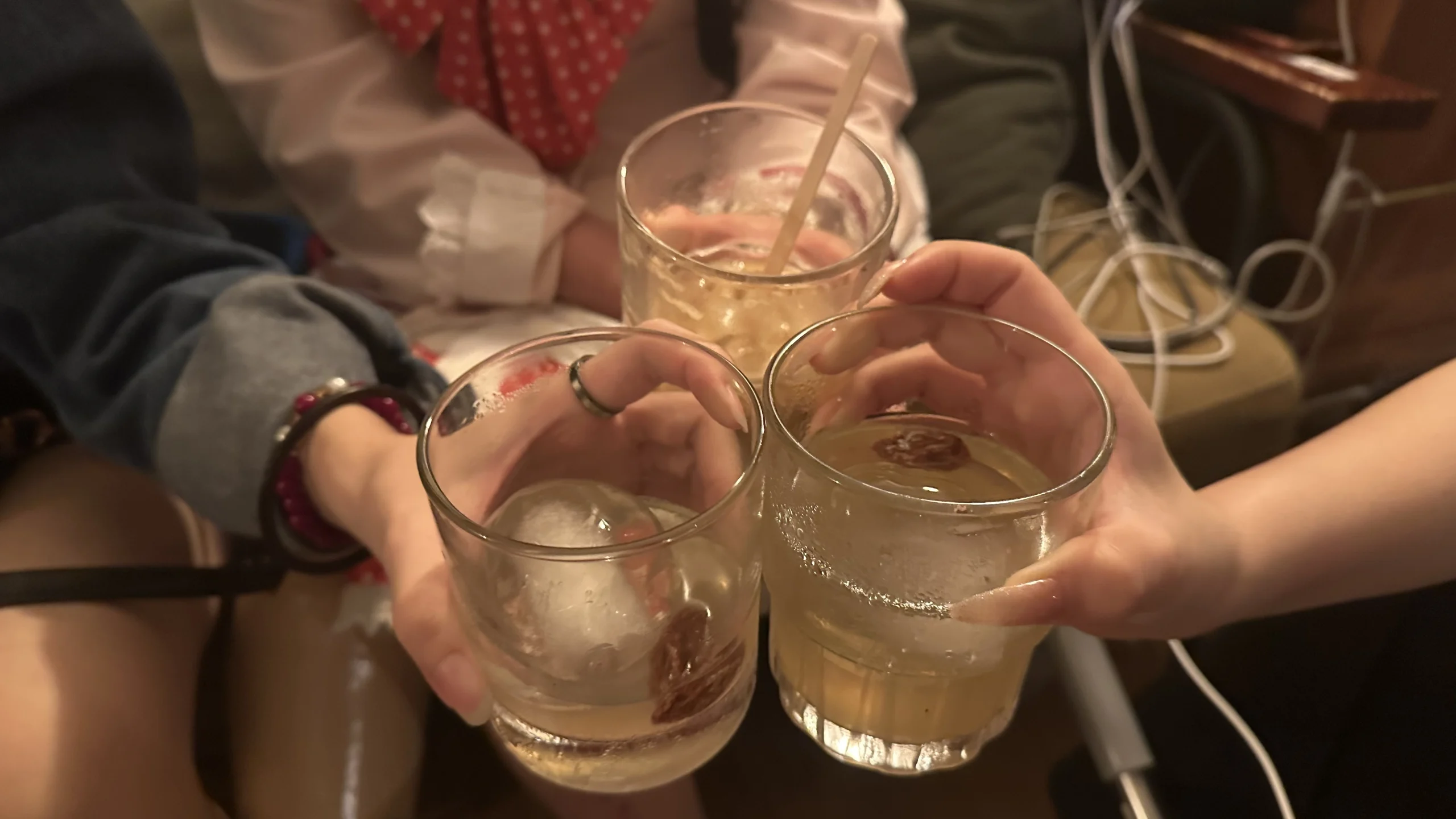
While Macau’s economy remains closely tied to tourism and the gaming industry, part of the city’s commercial activity exists outside that ecosystem. On side streets and in historic neighborhoods, independent cafés are carving out their own place by serving residents and fostering closer relationships with the surrounding communities.
That was precisely what led Miguel Rodrigues, co-owner of Fill Café near the A-Ma Temple, to choose a location away from the city’s main commercial districts.
“I wanted to find a place that felt like a hidden gem,” he told PLATAFORMA. “Here I found a more relaxed atmosphere, almost like Coloane. It feels like a secluded retreat in the middle of the city’s hustle and bustle.”
At Kokomo Coffee, tucked away in a narrow residential alley, owner André Ng came across the space almost by accident but ultimately found exactly the environment he had been looking for.
“A friend found it while I was still deciding what kind of business I wanted to open,” he recalls. “What I like most is that it’s far away from the tourist areas and the casinos.”
The Demands of Running a Small Café
Despite the differences between the two businesses, daily life follows a similar pattern. Running a small café means wearing many hats and handling everything at once.
“In our case, there isn’t any specialized division of labor,” Rodrigues says. “I might be making coffee, clearing a table, going back into the kitchen, and answering customers’ questions almost simultaneously. It’s essentially constant multitasking, which I find to be the most mentally exhausting part of the job.”
Beyond the daily operations, he says the biggest challenge is maintaining consistency. “It’s difficult for a small independent shop to achieve the same consistency as a large chain. That’s why we place so much value on communicating with our customers.”
Ng sees the work differently. “I almost never feel mentally exhausted,” he says. “I only feel physically tired rather than mentally stressed. Overall, I don’t experience much psychological pressure because I genuinely enjoy spending time talking with my customers.”
Community as a Business Model
That sense of closeness defines the business model at both cafés. At Fill Café, more than 70% of customers are local residents.
“The number of tourists fluctuates a lot. At the same time, we have our own regular customers. Many first discovered us during the religious festivals and later came back,” Rodrigues says.
Read more: Sands China launches ‘Community Revitalization Programme 2.0 for Rua das Estalagens’
Building customer loyalty has become part of the café’s strategy: “Because our shop is small, we can personally explain our products or invite customers to try new items. We also communicate very naturally with local customers. I manage our Instagram account myself to strengthen our brand identity, which has been very useful from a marketing perspective.”
At Kokomo Coffee, the relationship is even more informal: “We operate in a way that’s not particularly commercial,” Ng explains. “I treat my regular customers as friends. My mother and I have created a laid-back, relaxing atmosphere that attracts many loyal visitors. Some of them even come here every single day.”
A Tougher Market
Several independent cafés in Macau have closed in recent years, including Pink Bird in Old Taipa Village and Highway in Praça Ponte e Horta. Rodrigues follows those closures with concern.
“Of course I think about it. But those cases also remind me of why I started in the first place. Adjusting our mindset is actually more important, because deciding to close is the easier option.”
Read more: SMEs under pressure: neither credit nor consumption
Ng views the trend with less anxiety, although he recognizes the broader challenge: “My business model, the style of my café, and my target customers are completely different from theirs,” he says. “I simply think Macau lacks a diverse culture of independent local businesses, so these outcomes don’t really surprise me.”
Competition has also changed as more Macau residents travel regularly to Zhuhai. According to Rodrigues, what once differentiated cafés was primarily their products; today, it is their philosophy and identity.
“Our products are created by Macau residents, so we share the same cultural understanding as our customers. The way we communicate, express ourselves, and create things is much closer to local tastes and values. That’s our greatest advantage.”
Identity, Pricing, and the Future
Even so, Fill Café has adjusted its strategy. “We didn’t directly lower our prices, but we introduced promotional discounts ranging from 20 to 30 percent.”
At Kokomo Coffee, the decision was to remain largely unchanged. “We’ve never altered our menu or business model just to follow the market,” Ng says. “If we constantly change to chase trends, we eventually lose our identity.”
“The rising cost of raw ingredients is affecting the entire industry. We’ve had to raise our prices slightly in response. So far, however, our revenue has remained stable, and we haven’t faced any major operational difficulties.”
Looking ahead, Rodrigues hopes “to run this café as a small neighborhood business that can last for twenty or thirty years.” “The important thing is to keep improving our products and strengthening our connection with the community.”
“The world changes far too quickly to make long-term plans,” Ng says. “As long as I remain true to what I believe in, I feel like I’m on the right path.”
