

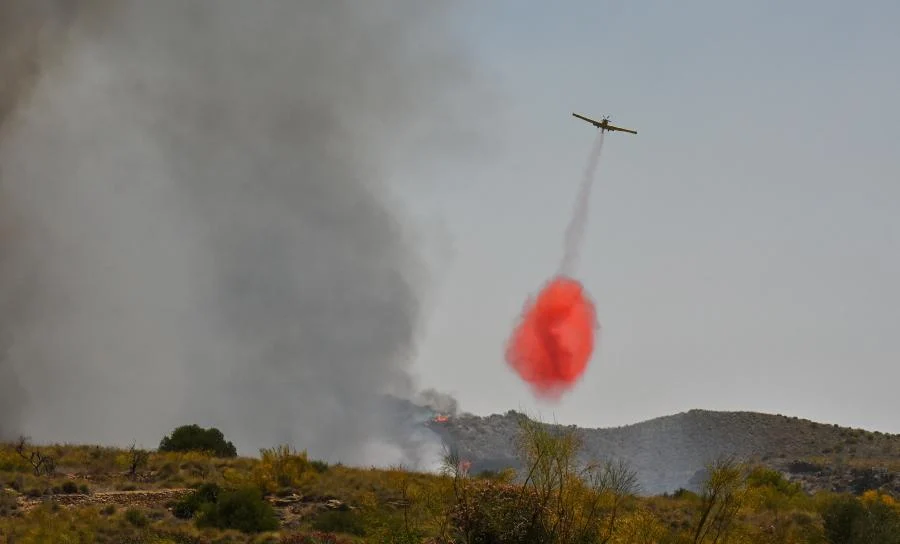
The ongoing wildfire in Los Gallardos, located in the Andalusian province of Almería, has claimed 11 lives, placing it among the deadliest forest fires recorded in Spain this century. While the human toll is severe, it remains below the numbers seen in Europe’s most catastrophic wildfire disasters in Greece and Portugal.
The tragedy in Almería mirrors a grim pattern observed across the continent over recent decades. The vast majority of victims in these large-scale disasters lose their lives while attempting to flee the rapidly advancing flames, finding themselves trapped on roads, inside vehicles, or within their own homes due to the extreme speed of the fire.
The most lethal wildfire in modern European history occurred in Greece between July 23 and 24, 2018. A ferocious blaze tore through the coastal resort towns of Mati and Kokkino Limanaki outside Athens, killing 104 people.
Many victims became trapped in their cars amidst traffic jams or inside their homes, while others drowned in the Aegean Sea while trying to escape the smoke and flames. This disaster remains the second-deadliest worldwide in the 21st century, surpassed only by Australia’s 2009 “Black Saturday” bushfires, which killed 173 people.
Read more about this topic: Spain wildfire leaves 11 dead as high winds threaten spread (with video)
Greece had previously suffered another massive tragedy a decade earlier. Between August 23 and 27, 2007, a series of severe wildfires swept across the southern Peloponnese peninsula—particularly the Zacharo region—and the island of Evia. At least 67 people died during those few days alone, with the total death toll for that entire fire season eventually reaching 84.
Portugal experienced its worst wildfire disaster in June 2017 in the central region of Pedrógão Grande. The blaze resulted in 66 fatalities, including 65 civilians and one firefighter. In a tragic sequence that shocked the nation, the majority of the victims lost their lives on the EN236-1 road, where they were overtaken and trapped by flames inside their vehicles while attempting to evacuate.
Just a few months later, between October 14 and 17, 2017, a renewed wave of late-season wildfires fanned by the high winds of Hurricane Ophelia struck the Iberian Peninsula. The fires caused an additional 49 deaths, with 45 casualties recorded in Portugal and four in neighboring Spain.
While the 11 confirmed fatalities in the current Los Gallardos outbreak solidify its place as one of Spain’s worst environmental and human disasters of the century, the scale underscores the ongoing threat of extreme weather across Southern Europe.
