

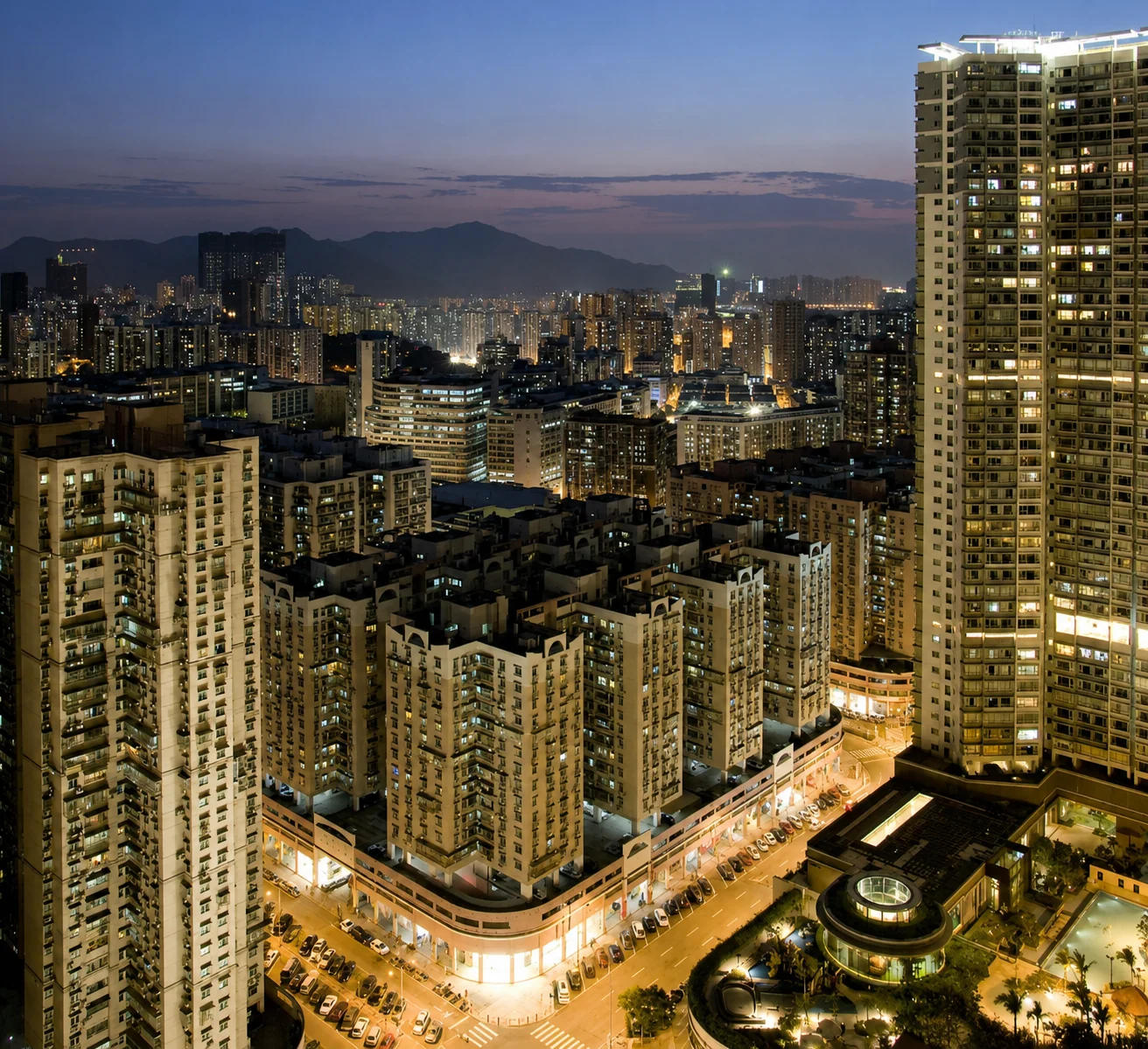
The average price of residential properties fell to HK$68,000 per square meter in the second quarter, down 4 percent from the same period in 2025 and below the HK$72,634 recorded during the first three months of the year.
According to Centaline Property, the market has reached its lowest valuation since 2013. The agency estimates that 2,097 residential units changed hands during the first half of the year, around 50 percent more than during the same period last year. However, the recovery lost momentum after an initial surge in purchases driven by tax changes and more favorable financing conditions.
Chris Wong, president of the Macau Association of Real Estate Agents, compares Macau’s response with that of Hong Kong, where authorities began introducing measures to support the housing market at the end of 2022 and maintained regular consultations with the industry.
“In 2022, I repeatedly stressed the importance of maintaining stability in the real estate market during various government consultation sessions. However, the Macau government did not remove its cooling measures until April 2024, a year and a half after Hong Kong.”
By the end of 2025, “the government finally relaxed the loan-to-value ratio and reduced the stamp duty. It was too late,” Wong told PLATFORM.
In recent years, many affluent residents have found themselves in negative equity because property values have declined
“In the short term, this generated some demand from owner-occupiers. However, weak consumer and investor confidence kept both institutional and private investors on the sidelines. As a result, transaction volumes weakened again starting in the second quarter.”
Economy Fuels the Downturn
The president of the Macau Association of Real Estate Agents believes the market decline “is not caused by a single problem but by a combination of several factors.”
Wong points to Macau’s economic dependence as one of the main reasons behind the weakness of the property market. “Gaming revenue accounts for more than 70 percent of Macau’s gross domestic product, and more than 70 percent of visitors come from mainland China. During the pandemic, the mainland government’s prolonged lockdown policies severely damaged its economy, indirectly making it much harder for Macau’s economy to recover, even long after the pandemic had ended.”
Read more: Macau: new mortgage loans rise 65% in March
The weakening economy has also affected the decisions of both homebuyers and investors. “As the economy slowed, consumer and investor confidence weakened, creating a vicious economic cycle.”
Banks Tighten Lending
Tighter lending standards and expectations of further interest rate increases in the United States continue to weigh on the residential market.
“Rather than committing substantial amounts of money to Macau real estate, which may continue to lose value, many residents now see alternative options – such as investing in the U.S. stock market or placing funds in high-interest U.S. dollar time deposits – as much smarter financial decisions.”
The pressure is compounded by the growing supply of public housing. “Macau is currently experiencing a substantial increase in public housing supply, placing significant downward pressure on the private residential market. Yet the government appears largely indifferent to this growing imbalance,” Wong says.
Falling property valuations are also affecting homeowners who borrowed when prices were much higher. “In recent years, many affluent residents have found themselves in negative equity because property values have declined.”
According to Wong, the scale of the problem is already influencing banks’ lending decisions. “Negative equity has become a very serious issue, and banks are fully aware of this reality.”
“As a result, even after the loan-to-value limits were relaxed, banks remain far more cautious than before when approving loans, whether for home purchases or business expansion,” he explains.
Wong argues that this caution further suppresses demand. “This conservative approach places even greater pressure on Macau’s housing market and commercial investment, creating a vicious cycle that will be difficult to break in the short term.”
“Without decisive government intervention to support the real estate market, there is still no clear path forward.”
No Relief for Luxury and Commercial Property
Centaline recorded just six transactions above HK$15 million during the second quarter, down 40 percent from a year earlier.
“Macau’s luxury residential segment is likely to remain under prolonged pressure unless investment-based immigration programs are reinstated,” Wong says.
Negative equity has become a very serious issue, and banks are fully aware of this reality
“However, because Macau failed to introduce such a program before Hong Kong, it is now simply too late.”
Read more: Macau housing records lowest average price per square meter in 13 years
According to Wong, the gap between the two cities has reduced Macau’s ability to attract this type of buyer. “Whether in terms of education, healthcare, or international connectivity, Hong Kong is unquestionably the more attractive destination.”
“For that reason, I do not foresee any meaningful recovery in Macau’s luxury property market over the next five years.”
In the commercial property market, Taipa and the main tourist districts continue to outperform residential neighborhoods. However, the closure of satellite casinos is reshaping surrounding commercial areas in a lasting way.
“The closure of the satellite casinos has clearly increased retail vacancy rates in the surrounding neighborhoods. This is not a temporary trend but a structural one,” Wong says.
“As the leases of the remaining operating stores expire, the vast majority of tenants are unlikely to renew,” he concludes, warning that “vacancy rates will continue to rise, creating an irreversible situation.”
