

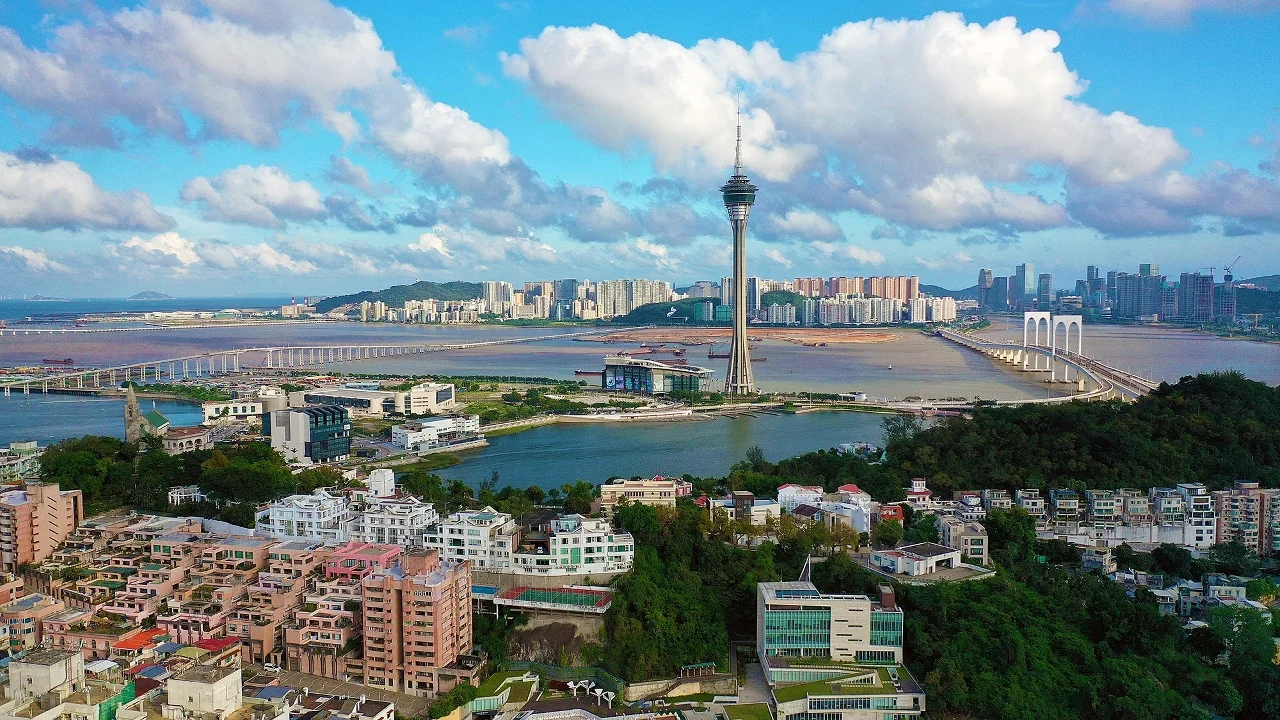
The initiative aims to direct investments towards emerging industries, scientific and technological innovation, industrial modernization, and projects aligned with the national strategy and positioning Macau as “One Center, One Platform, and One Base,” while also supporting the creation of skilled employment and attracting talent, while reinforcing regional integration with Hengqin and the Greater Bay Area.Sure, please provide the text you would like translated.
For economist Henry Lei, the fund represents a change in the way the government seeks to stimulate economic diversification: “The Fund marks the beginning of a new proactive approach adopted by the Government of the Macao SAR, which simultaneously uses fiscal resources and market mechanisms to promote economic diversification,” he tells PLATAFORMA.
According to the economist, the mechanism differs from the traditional public investment model by relying on professional managers to select projects with potential. “The Fund differs from traditional public investment in that it invites professional asset management companies to select projects or”startups“with strong potential and controllable risk”.
Thus, it is expected that these companies will carry out “joint investments through equity, assuming a dominant shareholding (with the parent fund of the Fund holding around 30% of the shares). This helps, in a certain way, to ensure that the selected projects have potential and a reasonable probability of success,” explains Lei.
Push for local SMEs
The arrival of foreign companies and the Greater Bay Area could transform the local business ecosystem, explains Henry Lei. “At the moment, it is not clear whether the Fund will prioritize local companies or projects if they manage to meet the requirements for contributing to economic diversification.”
The Fund marks the beginning of a new proactive approach adopted by the Government (…) to promote economic diversification – Henry Lei, economist
“The fund was designed to invest in Macau and, as long as it can mobilize private capital to attract foreign companies with strong potential to establish operations in the region, it could generate visible contributions even in its early stages—from seeking office space to the need for support staff and other business services,” says the economist.
“This could create diffusion effects that generate new business opportunities for local SMEs, forming a new business environment or ecosystem that forces SMEs to transform and modernize to adapt to this new context.”
The fund should only finance part of the initial capital of the projects, typically between 20% and 30%, which implies a significant participation of private investors. Despite the local economic structure historically being dependent on Tourism and Gaming, Henry Lei believes that the design of the fund allows for attracting a wider variety of investments.
Read also: China State Council sets post-Spring Festival agenda and targets silver economy
“(…) The Fund has a fairly broad scope, (…) covering projects or companies that[podem]strengthen Macau’s role as a ‘Platform-Center-Base’ and its integration with the Greater Bay Area and Hengqin”.
“Perhaps this is precisely a response to the historical dependence of Tourism, allowing projects that are not exclusively technological to also be considered, thus ensuring that Macau maintains sufficient attractiveness to capture investment,” Lei explains to PLATAFORMA.
Regarding sectors with the greatest potential for growth, the economist points to a combination of technological innovation and services associated with the regional economy: “Given the relatively broad scope of the Fund, I speculate that it could attract companies and projects in areas such as tourism not related to Gaming,”fintech“high technology and initiatives highlighted for regional integration”.
Utilizing financial reserves
The launch of the fund comes at a time when financial reserves have reached record levels, strengthening the city’s fiscal capacity to invest in new economic initiatives. Henry Lei emphasizes the importance of this ‘financial cushion’ for facing periods of crisis.
“In line with the continuous recovery of the Gaming sector and the increase in gross revenues, along with highly satisfactory investment returns, the financial reserve has managed to exceed the level recorded before the COVID-19 pandemic.”
For Henry Lei, the expansion of these reserves reinforces Macau’s ability to face external risks. “The increase in reserves can significantly strengthen fiscal resilience, which is crucial for a small open economy that is heavily dependent on Tourism and Gaming in a context of great uncertainty in the current global geopolitical environment.”
(… ) I am optimistic about the results of the Fund and believe that Macau may be able to significantly reduce its dependence on gaming revenues – Henry Lei, economist
The economist also argues that part of these resources could support long-term investment instruments similar to those adopted by other economies. “There are suggestions recommending that the Government create a sovereign wealth fund to undertake more diverse and long-term investments worldwide.”
In your view, a strategy of this type could contribute to reducing Macau’s dependence on the gaming sector in the coming decades. “Regarding this issue, I am optimistic about the results of the Fund and believe that Macau can significantly reduce its dependence on gaming revenues (although tourism will continue to be a pillar of the economy).”
If given enough time for new industries to consolidate, they may become alternative growth drivers. “With the support of the Central Government’s policies, the injection of fiscal resources by the Macao SAR and this new approach to attracting projects, companies, and startups“with genuine potential, and given enough time for emerging industries to develop, they could transform into new drivers of the economy and make a significant contribution to economic diversification.”
