

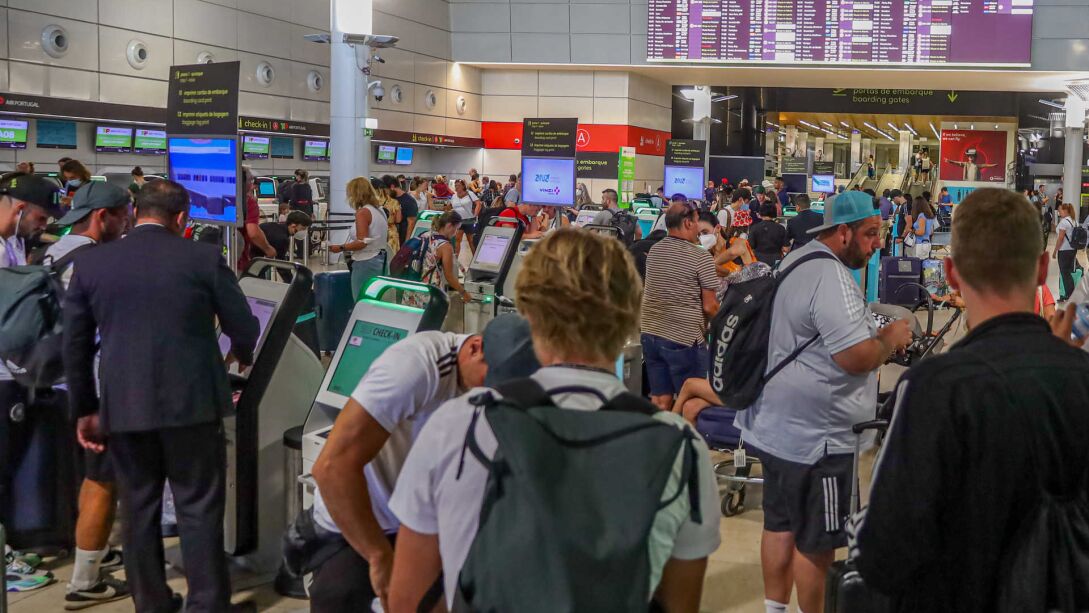
The situation is affecting tourists, airlines and airport authorities alike, in a context where the newly implemented EU Entry/Exit System (EES) adds biometric checks to traditional passport control procedures.
What passengers are facing in practice
Reports from airports such as Paris Charles de Gaulle, Frankfurt, Madrid, Amsterdam and Milan indicate that waiting times are highly variable, but with recurring peaks:
- 60 to 120 minutes during moderate traffic periods
- 2 to 3 hours during peak hours
- occasional cases exceeding 3 hours at congested hubs
In extreme situations, some passengers report missing flights and connections, especially when multiple intercontinental flights arrive simultaneously and border control desks cannot absorb the volume.
A recent report by airport association ACI Europe confirms that several European airports are recording queues of up to 3.5 hours at peak demand, with a tendency to worsen during the summer period.
The structural factor: more than just “simple queues”
The increase in waiting times is not solely linked to tourist volume. Three structural factors are converging:
- Implementation of the EES (Entry/Exit System)
The new EU system replaces passport stamping with:
- biometric registration (facial image + fingerprints)
- digital recording of entries and exits of non-EU citizens
Although designed to modernise and improve security, the initial registration process can add several minutes per passenger, creating large-scale congestion.
- Limited capacity at peak times
The core issue is not the daily average, but “simultaneous arrival peaks”:
- multiple long-haul flights landing at the same time
- cascading queue failures
- insufficient active border control booths at certain airports
- Uneven infrastructure and staffing
Some airports are operating with:
- fewer open lanes than demand requires
- still unstable biometric systems
- reliance on manual fallback procedures
Read more: Chaos, queues and friction: EU Entry/Exit System (EES) faces criticism at airport gates
How tourists are adapting
Given the unpredictability, standard recommendations are emerging:
Arriving earlier
Airlines are advising:
- 3 hours before departure for intra-European and extra-Schengen flights
- additional buffer time for connections
Preparing for long waits
Common suggestions include:
- power banks
- water and snacks
- documents prepared before queuing
Avoiding peak hours
The most problematic periods:
- late afternoons
- weekends (especially Thursdays and Sundays in some tourist hubs)
- intercontinental flight arrival windows
Airlines push for adjustments
Several European carriers have warned that the system, despite being strategic, is generating real operational inefficiencies, including:
- missed connections
- cascading delays
- flights departing with empty seats due to immigration bottlenecks
According to sector operators, this has led to calls for:
- temporary staffing reinforcement
- greater operational flexibility at border controls
- in some cases, temporary suspension of biometric procedures during peak hours
The paradox of European summer travel
The key tension in the debate lies in the contrast between intention and reality:
- EES objective: automate, speed up and enhance security
- initial reality: increased friction and longer processing times during peak periods
European authorities argue the system will stabilise after an adaptation phase. Operators and industry associations, however, warn that without structural reinforcement, summer 2026 could cement a “new normal” of long queues at Europe’s entry and exit points.
