

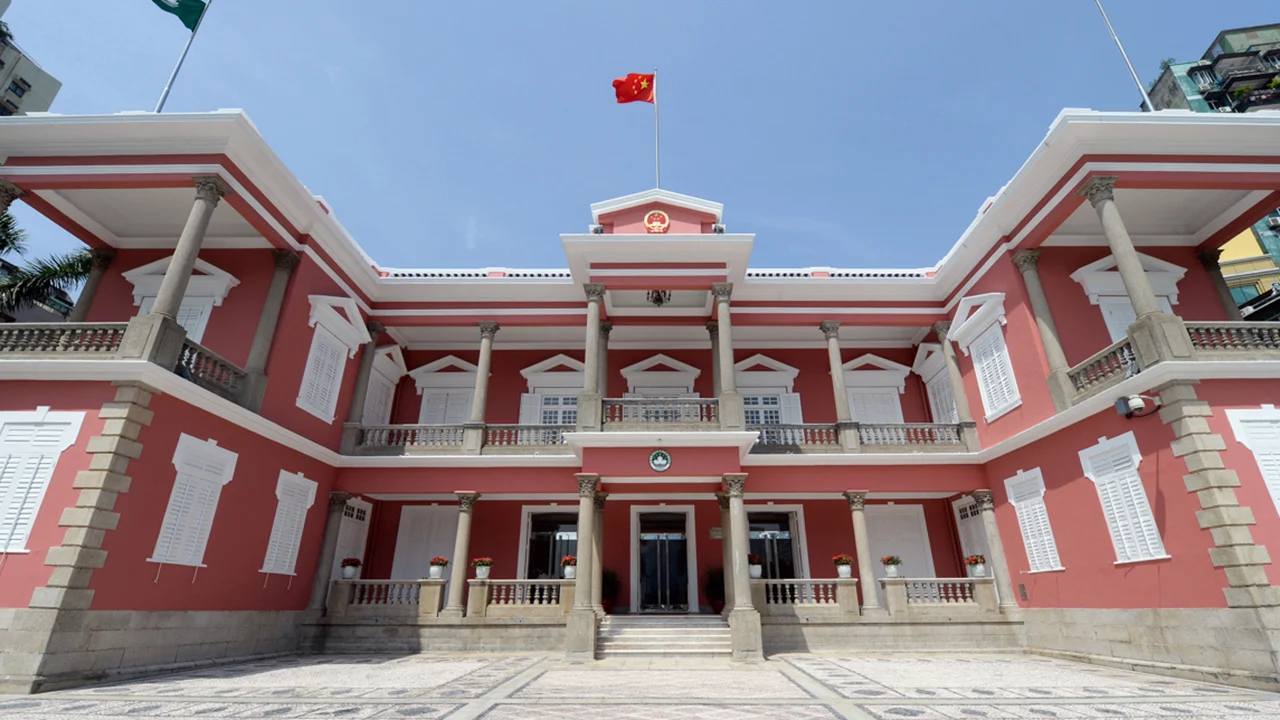
The launch of the public consultation on the Third Five-Year Plan for Economic and Social Development of the Macao Special Administrative Region does not merely mark the beginning of an administrative process. At a time defined by the need for economic redefinition and technological transformation, in the context of growing regional integration, it is an exercise in strategic choice over the place Macau can occupy in the next cycle of national development.
Over recent decades, the MSAR’s five-year plans have gradually taken on increasing importance as instruments of policy coordination and the definition of public priorities. But the plan for the 2026–2030 period comes in a particularly relevant context. For the first time since the period of severe impact caused by the pandemic, Macau is entering a phase in which the priority is no longer merely to stabilise or recover, but rather to structure a more diversified, sustainable and results-oriented development model.
The moment at which the public consultation is launched also carries clear political significance: it coincides with the preparation of the national 15th Five-Year Plan and reinforces the convergence between the MSAR’s priorities and the development strategy defined by the Central Government. More than a coincidence of timing, this articulation reflects an evolution in the Region’s own planning logic.
Macau has progressively stopped planning solely in response to its immediate needs or the cyclical management of its economy. The new cycle points to a planning model in functional articulation with broader national objectives, integrating priorities linked to modernisation, innovation, regional integration and China’s international opening.
This convergence does not diminish Macau’s singularity nor reduce the scope of the “One Country, Two Systems” principle. On the contrary, it reinforces the strategic value of the region’s own characteristics. Its distinct legal framework, its tradition of linking different cultures and systems, and its historic relationship with the Portuguese-speaking Countries continue to represent unique assets within the national context.
The comparison with the Second Five-Year Plan helps explain the change of cycle Macau is experiencing. The 2021–2025 period was inevitably marked by the pandemic, economic recovery and the need to preserve social and institutional stability. Many of the priorities defined at the time responded to extraordinary circumstances, requiring mitigation measures and the strengthening of resilience.
The Third Plan emerges in a different reality. The challenge is no longer merely to withstand external factors, but is now centred on the ability to build lasting results. In this sense, the new document represents a transition from a logic of response to an ambition of transformation and consolidation.
The preliminary axes presented by the Government point precisely in that direction. Among the priorities identified are the strengthening of governance and security, the promotion of appropriate economic diversification, the integration of education, science and talent, the acceleration of Hengqin’s development, the improvement of social well-being, and the advancement of urban and digital modernisation.
More than a simple enumeration of sectoral objectives, these priorities reflect an integrated vision for the future of the MSAR. Economic diversification, for example, no longer appears merely as a generic ambition and is increasingly associated with concrete policies linked to innovation, modern services, regional cooperation and the formation of qualified human capital.
The same applies to Hengqin. In recent years, deepened cooperation between Macau and the neighbouring island has become one of the main laboratories of Chinese regional integration. The new plan should clarify more concretely how this space can contribute to expanding economic opportunities, creating new development platforms and supporting the diversification of the local economy without diluting the MSAR’s institutional identity.
At the same time, governance assumes a central role. In an international environment marked by rapid geopolitical change, technological competition and the reconfiguration of global economic chains, the effectiveness of public policies becomes a decisive factor. The ability to define clear priorities, mobilise resources and measure results will tend to carry increasing weight in assessments of administrative success.
It is precisely here that the Third Five-Year Plan may represent a qualitative shift. More than a programmatic document or a formal planning exercise, the plan is called upon to function as an instrument of governance oriented towards execution, coordination and accountability. The policy of action and results, frequently emphasised by local and national authorities, finds in this process its most decisive test.
The public consultation therefore takes on a meaning that goes beyond institutional formality. The debate surrounding the plan offers society the opportunity to participate in defining the priorities of the next decade and to contribute to a broader consensus on the region’s development paths.
The true meaning of the Third Five-Year Plan may lie not only in the objectives it comes to define, but in the ability to transform strategic vision into concrete execution. For Macau, the next cycle may reveal whether the Region is prepared to move from historical advantage to strategic leadership; asserting itself not only as a participant in national development, but as one of its most singular points of connection to the world.
