

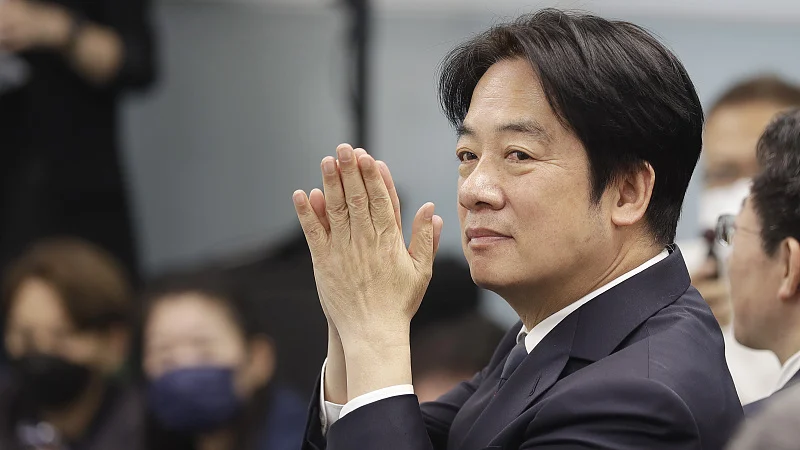
Taiwan will not accept China’s attempts at infiltration nor the red terror promoted by the ethnic unity law approved last month in Beijing, Taiwanese leader William Lai Ching-te said Tuesday.
In his opening speech at the Ketagalan Forum, an Indo-Pacific security conference organized by the Taiwanese government, Lai once again sharply criticized the Law for the Promotion of Ethnic Unity and Progress, which took effect in China and which Beijing says is intended to strengthen national unity and promote development in regions inhabited by ethnic minorities.
One of Taiwan’s main concerns centers on Article 63 of the law, which states that organizations and individuals outside China who engage in acts that undermine ethnic unity and progress or promote ethnic separatism will be held accountable under the law.
According to Taiwanese scholars, this provision could expose the island’s citizens to political and legal risks, particularly those who travel frequently to mainland China or who maintain employment, investments or family ties there.
Read more about this topic: Xi labels Taiwan reunification an “unshakeable” historic mission for the Communist Party. What Beijing’s 105th anniversary address changes in the Pacific
“China’s ethnic unity law violates Taiwan’s sovereignty and persecutes religions and minority groups. But it goes further. Through forms of transnational repression, it imposes political censorship around the world and creates an intimidating effect,” Lai denounced, someone frequently labeled by Chinese authorities as a separatist and agitator.
In this context, Lai affirmed that Taiwan will not deviate from its path and will continue defending the values of freedom and democracy, also pledging not to retreat in protecting those rights in the face of threats stemming from the new Chinese legislation.
“We will not accept united front infiltration or red terror. We will not stand idly by while China attempts to expand its influence over Taiwan or any other free nation or region. We will build more robust systems to prevent, respond to and protect ourselves from these threats,” he stated.
The Taiwanese leader also stressed that Taipei will respond with actions grounded in the principles of collective defense and shared responsibility, committing to deepen the modernization of the Armed Forces and strengthen the resilience of society as a whole.
Read more about this topic: Taiwan’s first domestic submarine set for delivery this year after passing sea trials. What the secret supply chain battle reveals
“Even in the face of authoritarian threats and new global challenges, we will stand firm. We will ensure that this beacon of democracy continues to shine and that the foundations of our freedom remain solid,” he declared.
The remarks come amid growing tension between Taiwan and China, which considers the island, self-governed since 1949, an inalienable part of its territory and does not rule out the use of force to bring it under its control.
Taiwan’s Armed Forces begin the live-fire phase of the annual Han Kuang military exercises on Wednesday, designed to test troop readiness in the event of a potential Chinese military offensive.
