

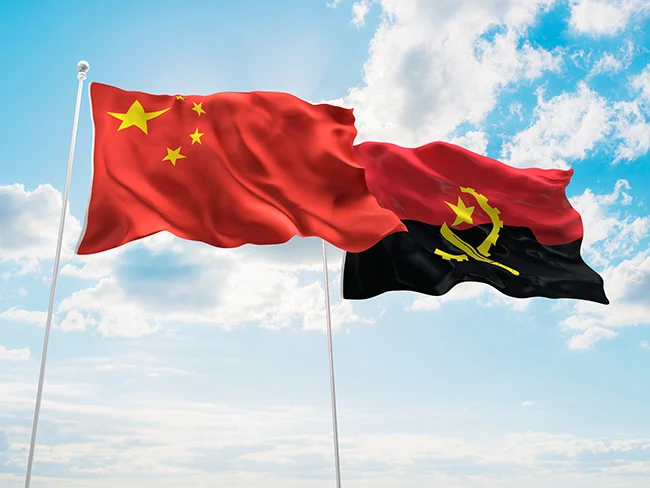
Angola’s exports of goods to China registered a significant decline at the beginning of 2025, highlighting the country’s dependence on crude oil sales to its main Asian trading partner.
Data from the Chinese Customs Service indicates that in the first two months of the year, sales of Angolan products to the Chinese market declined by approximately 16.4% compared to the same period in 2024, breaking a historical trend of growth centered primarily on oil.
Helena Cardoso, from the Association of Angola’s Material Industries (AIA), associates this trend with “the volatility of international crude oil prices and the slowdown in global demand,” factors that have directly affected the revenue from Angolan petroleum exports, she explains to PLATAFORMA.
Thus, both experts and private sector representatives are beginning to look at Macau and the Macau Forum as strategic alternatives to the mainland Chinese market.

According to Helena Cardoso, “Macau and the Macau Forum offer opportunities to diversify businesses and trade with the East without relying exclusively on oil sales to China. It is a way to increase business with other regional partners and explore sectors such as agro-industry, technology, and services.”
Along the same lines, José Domingos, a member of the leadership of the Angolan Business Confederation, highlighted that “cooperation with China continues to be crucial, but it is time to build a more resilient export portfolio. The observed decline can serve as a catalyst for investments that increase the competitiveness of our companies outside the oil sector.”
Sectoral reports also indicate that the low diversification of the export base worsened the impact of these external disturbances, leaving Angola particularly vulnerable to international fluctuations.
Faced with this scenario, the country’s business community expresses concern but also proposes solutions involving action and diversification. “It is clear that the drop of more than 10% in exports to China is not an isolated phenomenon. It demonstrates the fragility of our productive structure and our excessive dependence on oil,” says Helena Cardoso.
“We urgently need to strengthen our capacity to produce and export goods with higher added value, such as agro-industrial and manufactured products, which can find markets not only in China but also in other emerging and developed economies,” he emphasizes.
Read also: Angola: maturity of grassroots guarantees “vitality” of UNITA at 60 years
On the executive side, a source from Angola’s Ministry of Foreign Affairs and Cooperation tells PLATAFORMA that the government is “clearly concerned about the decline in exports to China, but not caught off guard.” According to this official, the variation results from “external factors, such as the slowdown in the Chinese economy and pressure on prices forcommodities“, as well as ongoing strategic restructurings in the global energy market”.”
The same source added that the executive is working on “policies that encourage economic diversification, including granting fiscal incentives and supporting the internationalization of sectors such as agriculture, light industry, and technologies related to the digital economy.” The goal is to reduce Angola’s vulnerability to fluctuations in international markets and to build a broader and more sustainable export base.
Meanwhile, economic operators hope that adjustments in commercial relations with China will serve as an impetus for productive modernization and openness to new markets. “Bilateral cooperation between the two countries remains solid, but the challenge of transforming this cooperation into balanced export growth remains central in Luanda. Macau and the Macau Forum can play a strategic role in this effort, allowing for the exploration of commercial opportunities and strengthening ties with other countries in the region,” concludes Helena Cardoso.
