

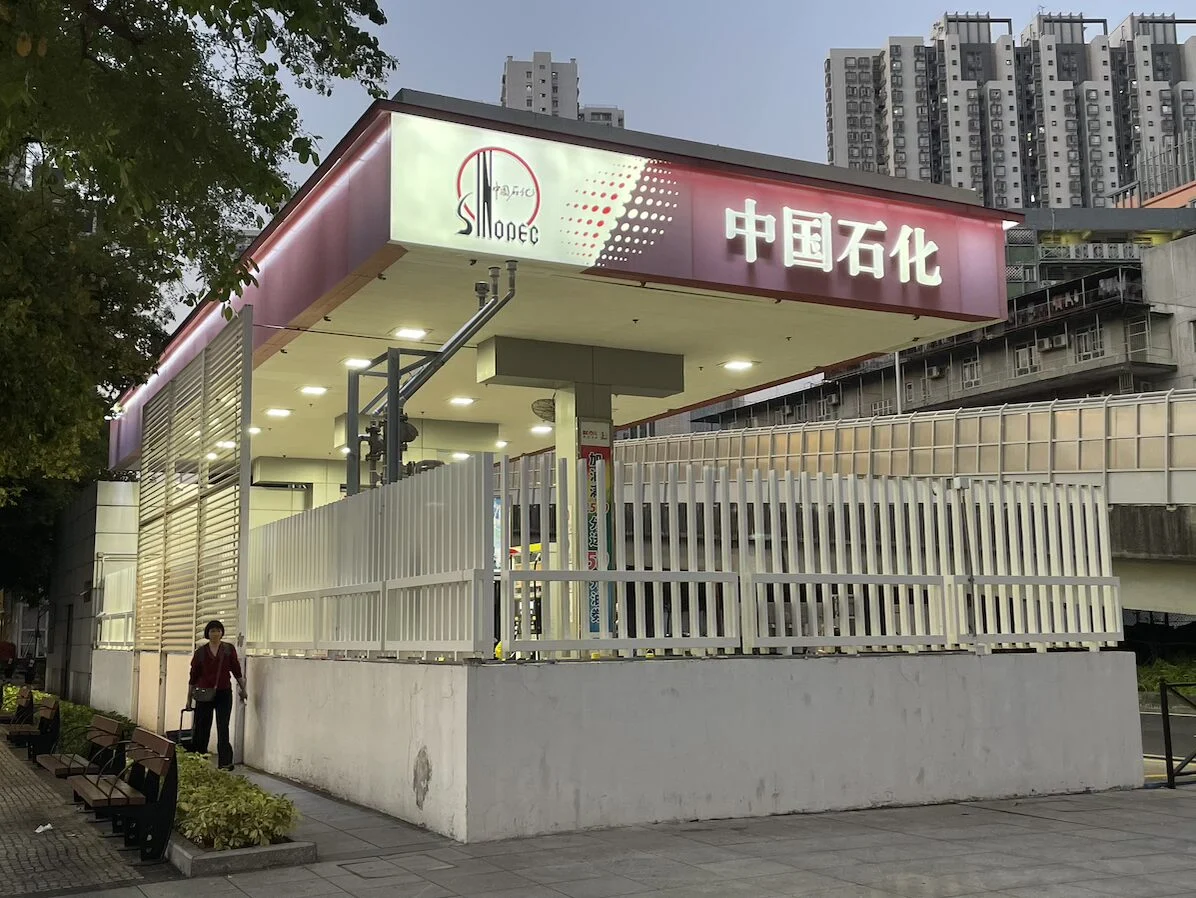
The Macau SAR Government has announced a special allocation of 80 million patacas (€8.4 million) to local oil operators, aimed at shielding the public and businesses from the skyrocketing cost of fuel triggered by the ongoing war in the Middle East.
Yau Yun Wah, Director of the Economic and Technological Development Bureau (DSEDT), detailed the “provisional and time-limited” measure on Thursday. The plan introduces a subsidy of 3.3 patacas (€0.35) per liter of diesel—the territory’s primary fuel for transport and logistics. The subsidy will run for two months, from May 11 to July 10, 2026.
According to Yau, the primary goal is to prevent rising operational costs from being passed on to consumers through more expensive goods and services. Macau currently registers around 8,600 diesel-powered vehicles, consuming approximately 11 million liters of the fuel every month.
The global energy crisis hit a critical point in April after the Strait of Hormuz was effectively closed following the conflict launched by the United States and Israel against Iran on February 28. Consequently, Asian oil imports—which rely on the Persian Gulf for 85% of their supply—plummeted by 30% last month.
Read more about this topic: Iran War: EU prepares for potential fuel shortage
In Macau, this shortage caused diesel prices to surge to 21 patacas (€2.21) per liter between April and May. In contrast, in the neighboring Chinese city of Zhuhai, diesel is priced at roughly 8.14 yuan (€1.00)—less than half the price in Macau.
Yau explained that while mainland China’s prices are regulated by the National Development and Reform Commission to mitigate global shocks, Macau operates as a “free market” that follows the Singapore price platform.
Participating fuel providers in Macau, including Total, Shell, Esso, Caltex, and the state-owned Nam Kwong Oil, will be required to maintain their existing discounts while applying the government subsidy on top of them.
To ensure the funds reach consumers, gas stations will be required to display informative posters, and receipts must clearly state the original price and the subsidy amount. The five oil operators are also obligated to submit bi-weekly reports, which will be scrutinized by independent auditors to prevent irregularities or falsified records.
When asked if the plan might be extended, Yau noted that the administration would continue to monitor international developments and maintain communication with the oil sector to adjust its strategy as needed.
