

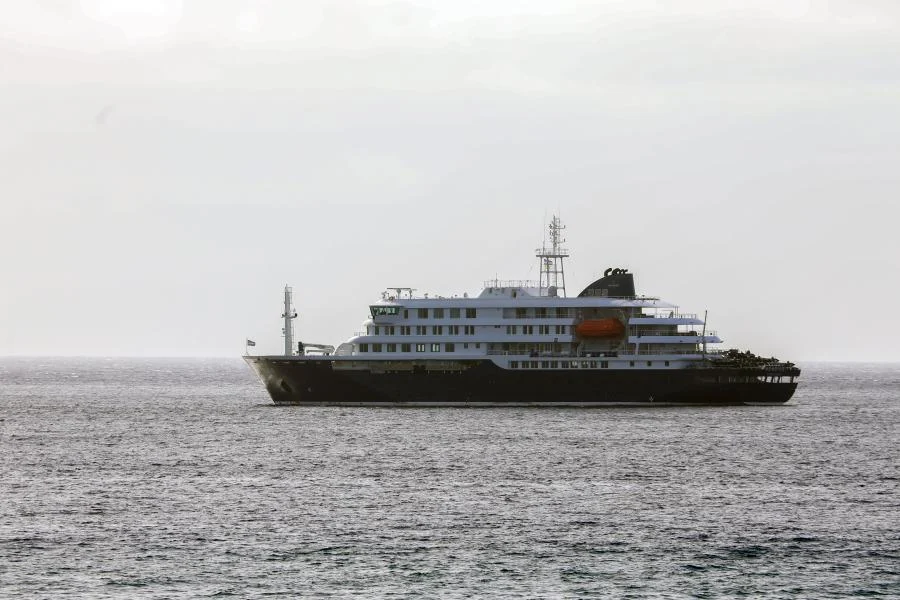
The World Health Organization (WHO) has clarified that the hantavirus outbreak aboard the cruise ship MV Hondius poses a “very low” risk to the general public, as transmission requires extremely close personal contact.
Speaking at a press conference on Friday, May 8, WHO spokesperson Christian Lindmeier explained that transmission only occurs through direct exposure to saliva or respiratory secretions—such as sneezing, coughing, or spitting—at very close range.
“By close contact, we mean being practically face-to-face, in direct proximity, sharing a very tight space,” Lindmeier specified.
To illustrate the limited nature of the spread, Lindmeier noted that even among those sharing cabins on the affected vessel, some individuals became infected while others did not.
Mr. Lindmeier emphasized that while the hantavirus is dangerous for the infected individual, it does not share the high transmissibility of viruses like measles or COVID-19. “This is not a new COVID; the risk to the population is absolutely low,” he insisted.
Read more about this topic: Understanding hantavirus: the disease behind isolated cruise in Cape Verde (with videos)
The cruise ship, operated by the Dutch company Oceanwide Expeditions, departed from Ushuaia, Argentina, on April 1. It is currently en route to Tenerife in the Canary Islands, where it is expected to dock this Sunday.
The current epidemiological balance provided by the WHO is as follows:
-
Confirmed Deaths: 3 passengers
-
Confirmed Cases: 5
-
Suspected Cases: 3
Investigators are still working to determine the origin of the outbreak. The primary goal is to establish whether the initial victims were infected by rodents while on land in Argentina, Chile, or Uruguay, or if the transmission began once the ship was already at sea.
