

In an increasingly competitive international environment, the issue of talent has become central to economic development strategies.
Governments around the world are seeking to attract skilled human resources, aware that human capital is now one of the main factors differentiating economies. However, this ambition raises a structural challenge: how to balance openness to external talent with the protection of internal equilibrium, particularly in terms of local employment and social cohesion.
It is precisely at this point of balance that the Macau Special Administrative Region (MSAR) positions itself. In recent years, the Government has been developing its own framework for attracting qualified professionals, with the aim of strengthening competitiveness and supporting economic diversification.
As established by Law No. 7/2023, the legal regime for attracting qualified talent aims to “enhance the overall quality, technical competence and competitiveness of the population,” while also contributing to the optimisation of the demographic structure and the sustainable development of the Region.

This framework translates into a selective and phased model. Operational since 2023, the system is organised into differentiated programmes — top-tier talent, outstanding talent and advanced professionals — designed to meet the specific needs of strategic industries.
As the MSAR Government emphasised when implementing the scheme, it is a mechanism intended to “introduce high-quality human resources in a precise and targeted manner, aligned with the needs of economic development.”
Recent data illustrates this careful approach. The relatively limited number of candidates selected in the early stages of the programme reflects a clear policy choice: to prioritise quality over quantity and ensure sustainable integration. In the words of the former Secretary for Economy and Finance, “talent attraction should serve the development of key industries and not compromise the stability of the local labour market.”
In this context, the challenge lies not only in attracting talent, but in building a qualified critical mass that complements — rather than replaces — local human resources. Protecting employment for residents remains a fundamental principle of public policy.
As authorities have repeatedly stated, “the priority is to ensure employment opportunities for residents, while introducing skills that the local market is not yet able to supply.” It is therefore a delicate equation, where each decision has a direct impact on social and economic balance.
This is where the concept of talent circulation becomes particularly relevant. In a region with Macau’s specific characteristics, value creation does not depend exclusively on the permanent settlement of foreign professionals, but on the ability to generate flows of knowledge, cooperation networks and effective mechanisms for skills transfer.
This approach makes it possible to reconcile two fundamental imperatives: protecting local employment while ensuring access to international knowledge and expertise within a framework of controlled openness.
In this context, institutions such as the Macau Foundation play a structural role. Through support for training, research and academic exchange, they contribute to building lasting networks between China and Portuguese-speaking countries.
This investment, strategic and medium-term in nature, strengthens Macau’s capacity to function as a platform for connectivity. As highlighted in various institutional initiatives, the objective is to “train professionals with an international outlook and strengthen ties between China and the Lusophone world through knowledge.”
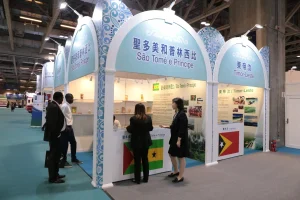
The Lusophone dimension adds an additional layer of relevance to this strategy. By positioning itself as a platform between China and Portuguese-speaking countries, Macau benefits from a unique position to facilitate the mobility of students, researchers and skilled professionals.
This role aligns with the strategic objective of “deepening cooperation with Portuguese-speaking countries and promoting appropriate economic diversification,” while reinforcing its international positioning.
In this context, building an international critical mass is not achieved solely through permanent residency, but through the creation of ecosystems of qualified mobility.
Short- and medium-term programmes, academic networks, joint research projects and temporary professional experiences become central instruments of a broader strategy focused on connectivity rather than permanence. It is within this network logic that one of Macau’s key comparative advantages lies.
At a time when Macau is deepening its economic diversification process, this balance between openness and protection is becoming decisive. The ability to attract relevant talent without compromising social stability and local employment is one of the main tests of the maturity of MSAR public policies and their capacity to adapt to a rapidly changing global environment.
Rather than replicating global models of competition for talent, Macau is developing its own approach — selective, gradual and aligned with its specific characteristics. As a government official recently summarised, “the objective is not only to attract talent, but to integrate it effectively into Macau’s development.”
It is in this ability to articulate — between internal and external, between protection and openness, between local training and international circulation — that Macau may consolidate its role as an increasingly relevant knowledge platform linking China and the Lusophone world.
