

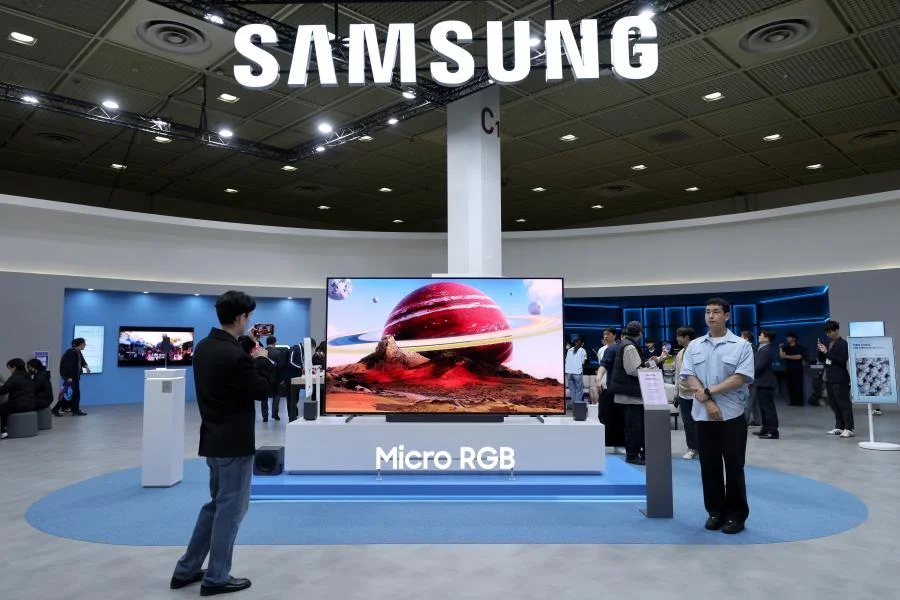
Samsung has officially announced its withdrawal from the household appliance market in mainland China, citing a “rapidly changing market environment” as the primary driver for the decision. In a statement released via its Chinese after-sales support portal on Thursday, the South Korean conglomerate clarified that it will cease sales of all domestic products after a “prudent study” of its current position.
While the company is exiting the appliance sector, it confirmed that mobile phones will continue to be sold through its usual channels and emphasized that after-sales service will remain available to existing customers in accordance with national regulations.
The scope of this strategic retreat is extensive, covering nearly the entire spectrum of Samsung’s consumer electronics beyond telecommunications. According to the company’s official website in China, the products affected include televisions, monitors, large-format commercial displays, air conditioners, and refrigerators.
The withdrawal also extends to washing machines, dryers, audio equipment, projectors, vacuum cleaners, and air purifiers. Since entering the Chinese market in 1992, Samsung had successfully positioned itself as a premium brand; however, its market share has eroded significantly over the last decade due to the aggressive expansion of local competitors.
Read more about this topic: Xiaomi profit rises 76% in 2025 thanks to AI
Industry data highlights the steep challenges Samsung faced in maintaining its foothold against domestic giants. Recent figures from April indicated that the company’s physical sales share had plummeted to 3.62% in the television segment, while refrigerators and washing machines saw shares drop below 0.5%.
Experts from the China Video Industry Association point to a combination of factors for this decline, including a lack of product localization and the surging popularity of Chinese brands like Hisense, TCL, and Xiaomi. Furthermore, analysts suggest that foreign brands no longer hold the same aspirational appeal for younger Chinese consumers, who increasingly favor home-grown technology.
This move marks a significant pivot for Samsung as it reallocates resources within the global electronics landscape. By stepping away from a hyper-competitive appliance market dominated by local manufacturing powerhouses, the company appears to be refocusing its efforts on sectors where it maintains a stronger competitive edge, such as its flagship smartphone business.
The shift underscores the broader trend of international tech companies struggling to compete with the price points and rapid innovation cycles of Chinese domestic firms within their home market.
