

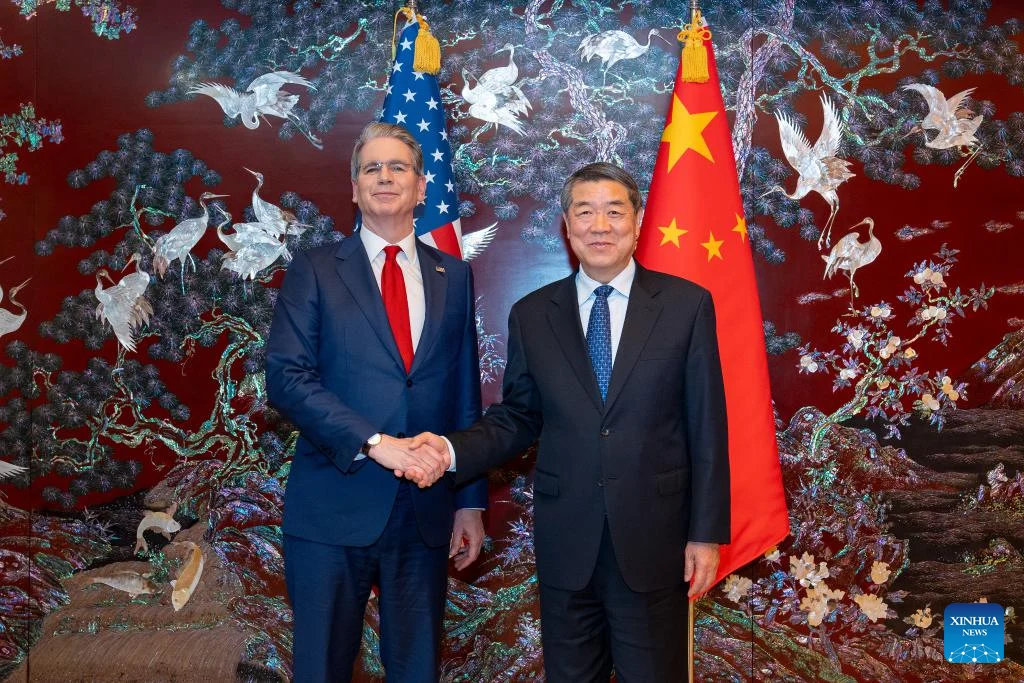
Delegations from the United States and China convened at Incheon International Airport near Seoul today to lay the groundwork for high-stakes economic discussions between their respective leaders.
The meeting, led by U.S. Treasury Secretary Scott Bessent and Chinese Vice Premier He Lifeng, serves as a critical prelude to President Donald Trump’s arrival in Beijing. Scheduled for Thursday and Friday, the upcoming summit with President Xi Jinping aims to stabilize a relationship strained by years of intense tariff disputes and geopolitical rivalry.
The closed-door discussions in South Korea focused on aligning priorities for the Beijing summit, where trade is expected to be the central theme. According to the official Chinese news agency Xinhua, the exchanges were “candid, in-depth, and constructive,” touching on further practical cooperation and resolving persistent economic friction.
U.S. officials are reportedly seeking expanded market access for the aeronautics, agriculture, and energy sectors, while both sides are exploring the creation of a permanent bilateral “Board of Trade” to handle less sensitive commercial exchanges, such as consumer electronics.
Read more about this topic: China confirms Trump’s visit from May 13 to 15 (with videos)
One of the most delicate points on the table remains the global supply chain for critical minerals. China’s dominance in the production of rare earths—essential for everything from high-tech smartphones to advanced military defense systems—is a primary concern for Washington.
These negotiations follow a fragile trade truce established last October, and the outcome of the meetings in Beijing will likely determine whether that ceasefire is extended or if the world’s two largest economies will return to a cycle of escalating trade restrictions.
The summit takes place against a backdrop of broader global uncertainty, including the ongoing conflict in the Middle East, which has increasingly influenced U.S. foreign policy and trade strategy.
President Trump, who is traveling with a delegation that includes prominent tech leaders like Elon Musk and Tim Cook, has expressed optimism about reaching “more good deals.” However, analysts warn that significant hurdles remain regarding industrial subsidies, artificial intelligence regulations, and the long-term rebalancing of the U.S.-China economic partnership.
