

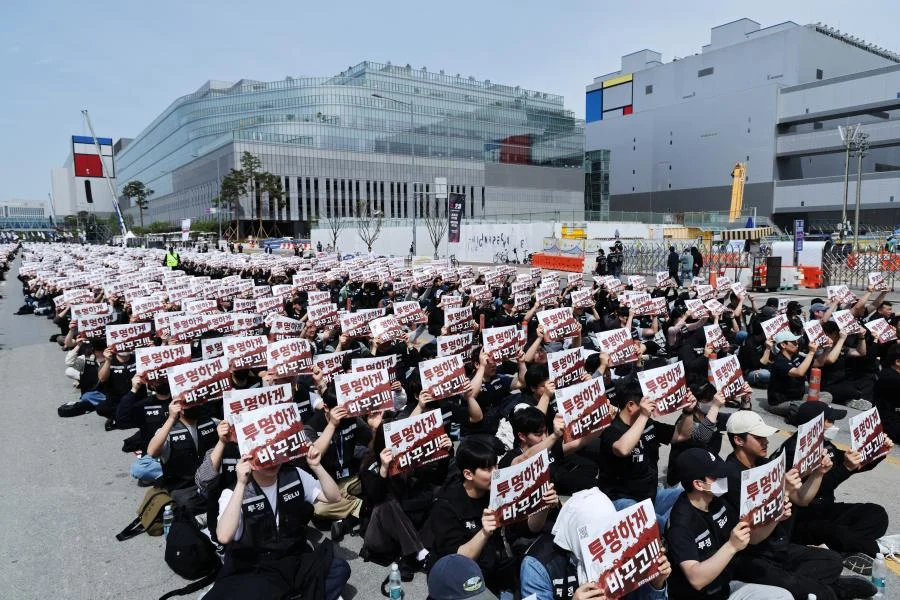
The global semiconductor supply chain is facing a major disruption after Samsung Electronics failed to reach an agreement with its labor unions during intense wage negotiations. Following a marathon 17-hour mediation session hosted by the National Labor Relations Commission in Sejong, the largest union declared a final breakdown in talks early Wednesday morning, May 13, 2026.
The failure to find common ground makes a planned 18-day general strike, scheduled to begin on May 21, increasingly likely.
The core of the dispute centers on how the company distributes its profits during the current AI-driven semiconductor boom. Union leaders, including branch head Choi Seung-ho, are demanding that Samsung institutionalize a performance bonus equivalent to 15% of the company’s operating profit and eliminate the current cap that limits annual bonuses to 50% of a worker’s base salary.
Tensions have been further exacerbated by the generous bonus structure of rival chipmaker SK Hynix, which recently committed to sharing 10% of its operating profit with its workforce over the next decade.
Read more about this topic: Samsung’s profits surge sixfold as AI chip demand hits record highs
Government officials have expressed deep concern over the impasse. Finance Minister Koo Yun-cheol emphasized on social media that the world is closely watching the situation, warning that a strike could have devastating effects on the national economy and the stability of the global tech industry.
Industry analysts estimate that a full-scale, 18-day walkout could result in direct and indirect losses exceeding 40 trillion won (approximately €22.7 billion), given that semiconductor fabrication plants must operate 24/7 to remain functional.
While Samsung management has stated they will continue “sincere efforts” to avoid the worst-case scenario, the union maintains that the company’s latest proposals were a “step backward.” If a compromise is not reached before next Thursday, more than 41,000 workers are prepared to halt production, marking what would be the most significant labor action in the tech giant’s history.
