

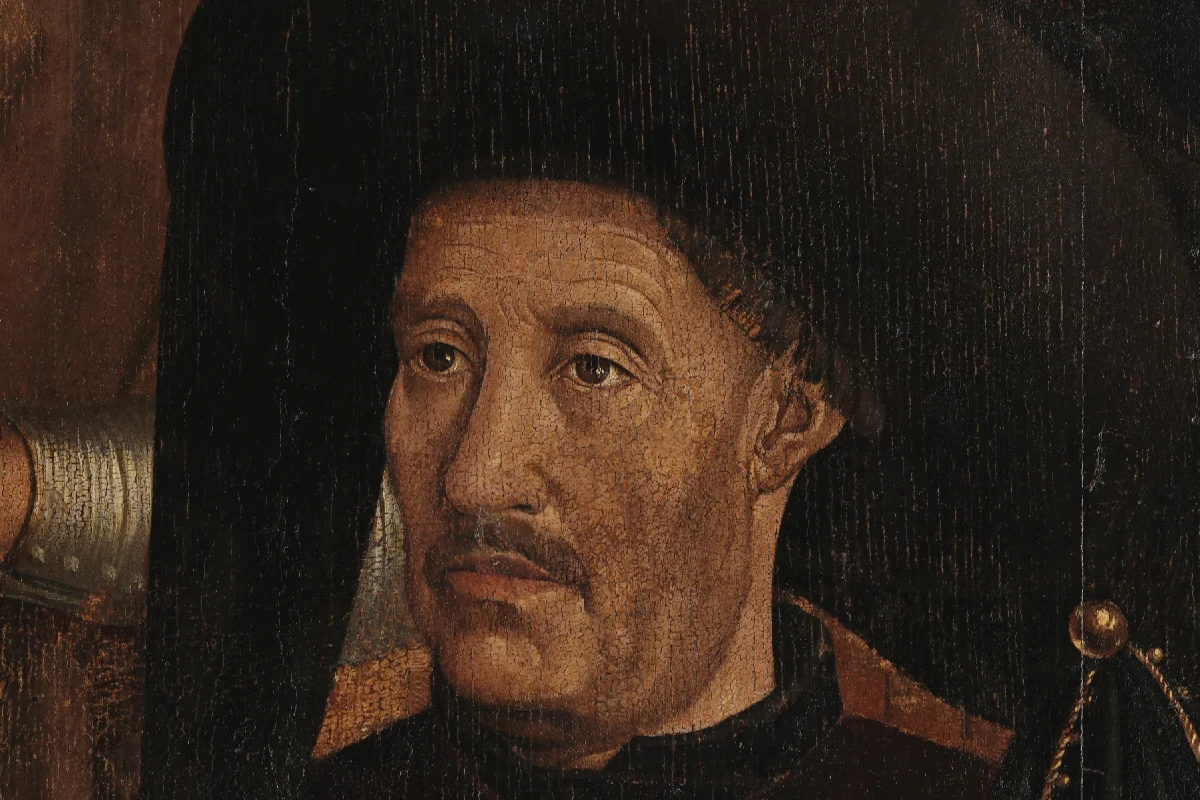
Who was Prince Henry the Navigator, and why is he central to Portuguese history?
Prince Henry of Aviz was born in Porto on March 4, 1394, the son of King John I of Portugal and Philippa of Lancaster. Although he never personally commanded exploration voyages, he was the driving force behind Portuguese initiatives at the beginning of the Age of Discovery, encouraging the training of navigators, cartographers, and mathematicians, and promoting expeditions along the African coast and beyond.
After a successful expedition to Ceuta in 1415, a project in which he was deeply involved, he sought to go beyond. Journeys were perilous, men were fearful, but Prince Henry did not give in. For twelve years, he insisted on passing the dreaded Cape Bojador, and in 1434, Gil Eanes accomplished the feat of rounding it. From then on, the geography of the world was changed.
It was also through the patronage of Prince Henry that the island of Madeira, the Azores, and parts of the west coast of Africa were discovered and colonized.
The “Navigator” part of his title was only given to him much later, in the 19th century, when foreign historians popularized the term to recognize his role in maritime expansion.
Prince Henry’s vision went beyond simple territorial or commercial expansion: he promoted a systematic effort to observe and record maritime experiences, creating a legacy of scientific and technical knowledge that transcended the boundaries of the time and paved the way for Portugal’s global reach.
Heritage in Portugal: Monuments and memories
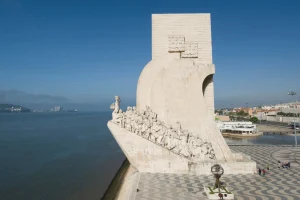
Pavilion of Discoveries, erected in memory of Prince Henry the Navigator (Photo: Monument to the Discoveries).
In Lisbon, the Monument to the Discoveries towers majestically on the banks of the Tagus River. Originally designed for the 1940 Portuguese World Exhibition and rebuilt in 1960 to commemorate the 500th anniversary of the death of the Prince, the monument celebrates not only Henry, but the entire generation of explorers and scholars whose voyages connected distant worlds.
Nearby, the Naval Museum preserves an important collection of navigational instruments, models of caravels and maps that testify to the evolution of maritime techniques based on the scientific and institutional efforts promoted by the Prince. A highlight is the statue depicting the Navigator, part of the museum’s collection as a symbol of the birth of the Portuguese Atlantic expansion.
Read also: Centenary of Camilo Pessanha: IPOR Honours the Poet Who Made Macau Home
In addition, archives such as the Overseas Historical Archive preserve key documents on the Portuguese presence in overseas territories that have become milestones in global history, including records related to Macau and other trade routes.
Macau and the memory of Henry the Navigator in Asia
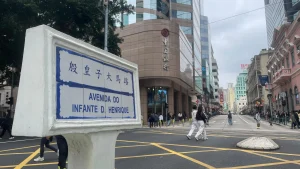
Avenida Infante D. Henrique, in Macau (Photo: Platform).
In Macau, the founding legacy of Prince Henry is celebrated in a different way, reflecting the long Portuguese presence in the Far East. One of the most visible reminders is Avenida Infante D. Henrique, inaugurated in 1960, which has since become an urban landmark linking Portugal’s historical past to the city’s multicultural identity.
This avenue and other commemorative features were inaugurated as part of the “Henrique Year” celebrations, when Macau participated in the tributes marking the 500th anniversary of Henrique’s death.
The Macao Maritime Museum, located in the São Lourenço area, contextualizes the history of navigation and trade routes that connected Portugal to China and Southeast Asia. Although the Infante did not visit Macao, the routes that developed from the ideas and incentives he promoted made it possible for Lisbon and Macao to become strategic points of cultural and economic exchange for centuries.
Cultural and educational legacy

On the occasion of its 20th anniversary, the Portuguese School of Macao staged a play inspired by Prince Henry the Navigator (Photo: Portuguese School of Macao).
The legacy left by Prince Henry the Navigator goes beyond the places he discovered. The Duke of Aviz continues to influence cultural institutions and initiatives that explore the intercultural history between Portugal and Portuguese-speaking regions.
The Orient Foundation, for example, was awarded the Order of Prince Henry the Navigator in recognition of its work in promoting Luso-Asian culture and intercultural relations.
Another example is the Portuguese School of Macau, created in 1998 to promote the Portuguese language and culture in a multilingual context, which marked its 20th anniversary with a play inspired by the Age of Discovery. The plot follows three students who, after talking to a statue of Prince Henry, travel back in time to Portugal, moments before ships set sail for the East.
Museums in Lisbon, such as the Macau Scientific and Cultural Center Museum, maintain collections that document the historical relations between Portugal and China in the 16th and 17th centuries, providing additional context to the historical connection that began in the Age of Discovery.
Lasting impact
Much of what is known today about the navigation techniques developed during the Henrican period derives from manuscripts and chronicles written by navigators and chroniclers who accompanied the expeditions supported by the Prince. Records such as studies on winds, currents, and sea routes were essential not only for the success of Portuguese voyages, but also for the transfer of geographical and scientific knowledge that would transform European cartography.
The influence of Prince Henry therefore remains, both in material and intellectual heritage, reflected in archival collections, exhibitions, and educational initiatives that seek to explain how a small Atlantic kingdom projected itself onto the world stage and established a cultural bridge between Portugal, Macau, and the rest of the world.
