

Portuguese-speaking countries are among the prime examples of nations with UNESCO-designated sites that serve as “vital refuges for biodiversity,” according to one of the co-authors of the organization’s report published today.
Tales Carvalho Resende, one of the lead co-authors of the UNESCO report titled “People and Nature in UNESCO-Designated Sites: Global and Local Contributions,” reveals that the Bijagós Archipelago in Guinea-Bissau, which was elevated to Natural World Heritage status on July 13, 2025.
This became the first site from that African country to join the UNESCO list, is an “exceptional site” where there is an extremely strong relationship with the local populations, who have always protected the environment.
The UNESCO (United Nations Educational, Scientific and Cultural Organization) report, released today, presents the first global assessment of over 2,260 World Heritage Sites, Biosphere Reserves, and Global Geoparks—”a network covering an area larger than China and India combined and supporting about 10% of the world’s population across more than 175 countries,” the report reads.
Read more: Brazil: Lula urges Europe to drop “ideological resistance” on biofuels (with video)
In the report, which measures the global value and contributions of UNESCO sites, the organization reveals what could be lost “if priority is not given to them.”
One of the report’s main conclusions is that “while wild animal populations have declined by 73% globally since 1970, those living in UNESCO-protected areas have remained comparatively stable,” and “more than 1,000 languages have been recorded in these sites, and a quarter of them coincide with indigenous peoples’ territories.”
“It is an urgent call to raise our level of ambition and recognize UNESCO sites as strategic assets for addressing climate change and biodiversity loss, and to invest now in protecting ecosystems, cultures, and ways of life for future generations,” UNESCO Director-General Khaled El-Enany declared in a statement.
On the other hand, as Resende explains, “the major highlight [of this study], which is quite encouraging, is that, despite the intensification of environmental pressures around the world,” UNESCO-designated sites have proven to be extremely resilient.
Read more: Brazil: police operation against PCC leaves 200 tourists trapped (with video)
Among them, Resende cites the inscription of the Maputo National Park in Mozambique as an extension of the iSimangaliso Wetland Park in South Africa, “which shows, for example, that these UNESCO sites are also places for promoting peace.” Following the same logic, the author also mentions Angola in the process of extending the Okavango Delta.
Resende, one of the lead co-authors of the report along with Martin Delaroche, explains that the whole issue of transboundary sites is also extremely important because nature knows no borders.
Another country mentioned is Brazil, where according to Resende, there is a site in the Amazon where the relationship with indigenous peoples is remarkable. “This report allowed us to see that one-quarter of UNESCO sites are on indigenous peoples’ territories, and in the case of Latin America, that number reaches 50 percent.”
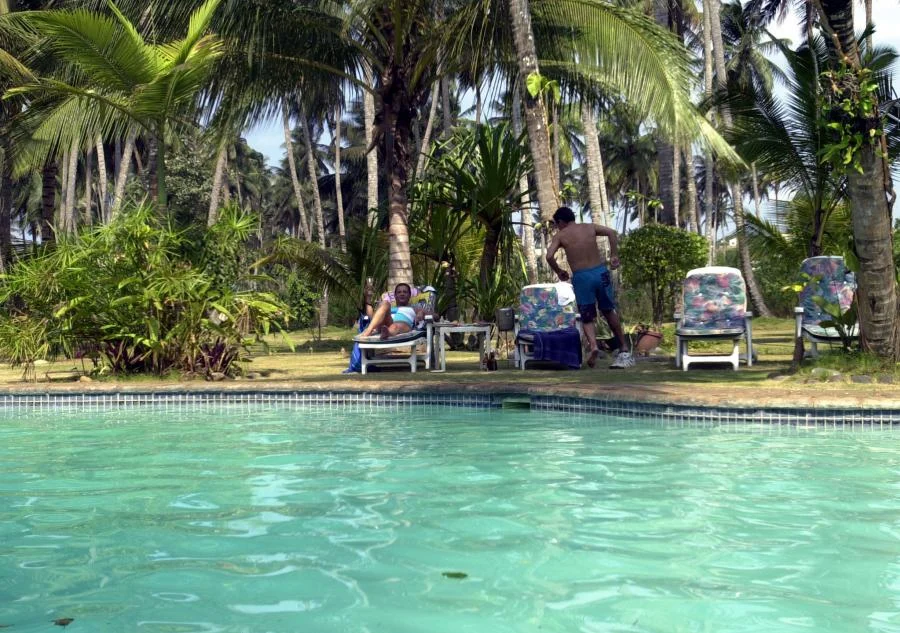
Still regarding Portuguese-speaking countries, Resende highlights the case of São Tomé and Príncipe, which “is the only and first country in the world to be 100 percent a UNESCO site.”
Read more: São Tomé and Príncipe broke tourism record again in 2025
Speaking to Lusa, António Abreu, Director of UNESCO’s Division of Ecological and Earth Sciences—who in September 2025 highlighted the “very interesting dynamics” and “significant growth” of biosphere reserves in Portuguese-speaking countries, noting the work of the network created within the scope of the CPLP—also mentioned São Tomé and Príncipe, among other examples of Lusophone sites designated by UNESCO.
“The report does not specifically analyze the situation of one particular site or another, but it is natural that some sites contribute more or less depending on their size, location, and specific conditions. For example, Príncipe Island, which is a biodiversity ‘hot spot,’ just like Madeira or Porto Santo, which possess very expressive endemic biodiversity in terms of plants and some invertebrate animals.
Or the Bijagós Archipelago, or the Cerrado Biosphere Reserve in Brazil, which also possess very important specificities, whether in biodiversity, landscape, water, or culture,” he added.
Similar to São Tomé and Príncipe, Angola, Equatorial Guinea, and Portugal were classified as World Biosphere Reserves in September 2025, on the list of 26 new sites across 21 countries.
