

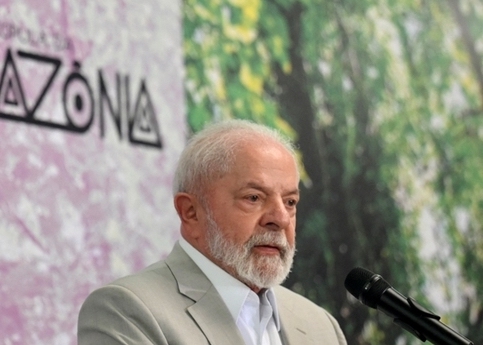
Brazilian President Luiz Inácio Lula da Silva traveled to Hannover, Germany, this Monday to advocate for the expansion of biofuels, challenging the European Union to reconsider its current environmental regulatory approach. In a joint press conference with German Chancellor Friedrich Merz, the Brazilian leader criticized the EU’s stance, arguing that “Europe needs to overcome its ideological resistance to biofuels.”
President Lula highlighted that energy security relies on diversification, pointing to the volatility of global oil prices—exacerbated by ongoing conflicts in the Middle East—as evidence that the transition is urgent. “Biofuels are an affordable, reliable, and efficient option to decarbonize the transportation sector,” Lula stated.
Chancellor Friedrich Merz aligned with this perspective, suggesting that Europe should not discard technologies that will become increasingly vital in the coming years.
During his visit, which included the Hannover Messe and the 42nd Brazil-Germany Economic Meeting, Lula spent time debunking what he called “mythology” surrounding Brazil’s biofuel production. He firmly rejected concerns that biofuel cultivation threatens food security or infringes upon the Atlantic Forest and the Amazon rainforest.
Read more about this topic: Germany and Brazil to double bilateral trade volume (with video)
“There is no chance that Brazil will stop producing food or occupy the Atlantic Forest or the Amazon because of biofuel production,” the President emphasized. He noted that Brazilian sugarcane ethanol emits significantly less CO2 than gasoline, positioning Brazil to become a global leader in renewable energy.
“Those who are afraid to discuss the reduction of fossil fuel use can stop being afraid, because Brazil is showing that there is an alternative. And remember, Brazil is also an oil-producing country,” Lula remarked, describing the nation’s potential to become a “kind of Saudi Arabia of biofuels.”
Brazil is taking concrete steps to bolster its renewable sector. The government recently announced plans to increase the mandatory ethanol blend in gasoline from 30% to 32% within the first half of this year.
This follows the progress made under the “Fuel of the Future” law enacted in 2024, which has seen the ethanol blend in gasoline rise from 27% to 30% and the biodiesel mix in diesel climb from 14% to 15% throughout 2025. These measures underscore Brazil’s commitment to sustainable energy as a cornerstone of its long-term economic and environmental strategy.
