

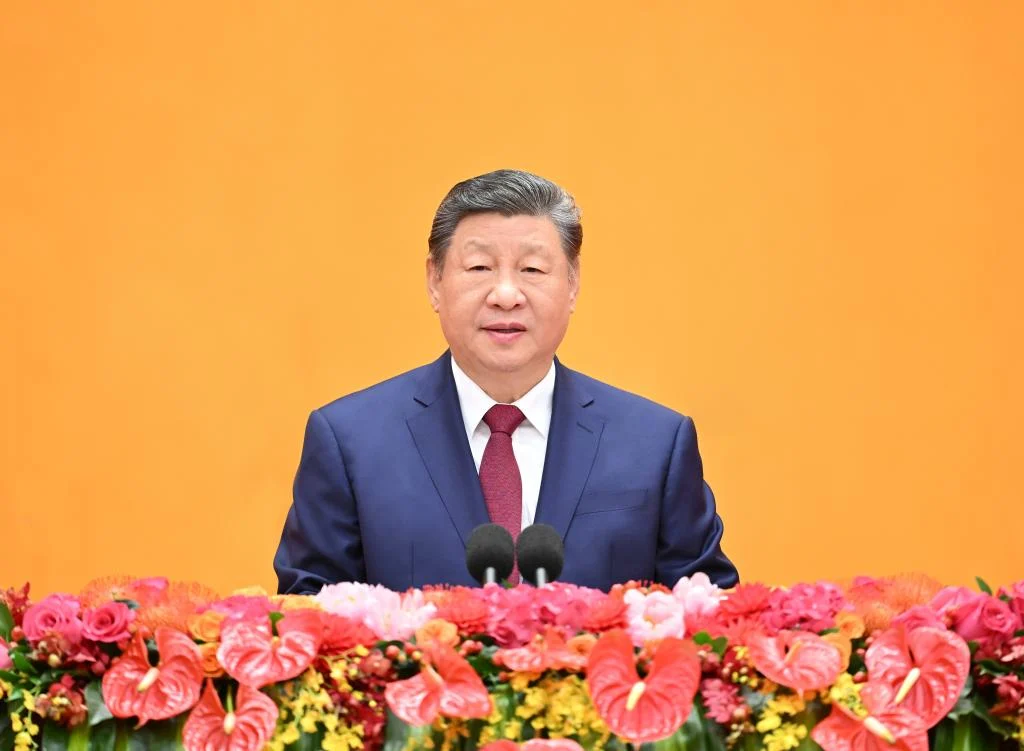
Once a year, roughly 3,000 delegates converge on the Great Hall of the People in Beijing for one of China’s most consequential political gatherings. The National People’s Congress is known as China’s “supreme organ of state power” — the highest government body — and though functionally separate from the Chinese Communist Party, in practice it is guided by the CCP’s policy recommendations, according to Al Jazeera. The NPC runs alongside the Chinese People’s Political Consultative Conference, and together the two meetings are known as the “Two Sessions” — a window into how China aims to advance its development in an ever-changing global landscape, China’s news agency Xinhua reported.
This year’s session carries particular weight. Lawmakers will deliberate on March 5th the central government’s annual work report, review the draft government budget and development plan for 2026, and examine a draft outline of the new five-year plan, which will anchor policy priorities until 2030, according to Xinhua.
The reports spell out Beijing’s priorities and indicate which industries it will favour with generous funding and policy support. Premier Li Qiang will also present the Government Work Report, and China is expected to announce a GDP growth target of 4.5 to 5 percent for 2026, according to the International Monetary Fund.
The new planning cycle is beginning on solid ground — China’s economy surpassed 140 trillion yuan (around 20 trillion US dollars) in 2025, and key targets from the previous five-year period broadly met or exceeded expectations, Xinhua noted. But the environment China now faces is more demanding. Trade tensions, geopolitical friction and sluggish global growth all weigh on the outlook, while domestically, a flagging property market, deflation and youth unemployment have left consumers cautious.
Technology is set to dominate the agenda. China will outline how it plans to push the next phase of its technology race with the West, converting breakthroughs in artificial intelligence, space and robotics into industrial scale and capital market momentum, Reuters reported. DeepSeek, the Chinese AI startup whose viral model release last year triggered a global tech share selloff, is widely expected to roll out a next-generation model in the coming days.
As Alfredo Montufar-Helu, a managing director at Ankura Consulting in Beijing, told Reuters: “The shock is over. Now there is an expectation of what China can come up with next.” Quantum technology, biomanufacturing, hydrogen and nuclear fusion power, brain-computer interfaces, embodied AI and 6G mobile communications have all been highlighted as new growth drivers in the recommendations for the 15th Five-Year Plan, according to Xinhua.
The five-year plan will also be scrutinised for how Beijing intends to protect its industrial foundations, Reuters reported. Over the past year, China has expanded its use of export controls into rare earths and low-end semiconductors, disrupting global supply chains and underscoring Beijing’s economic leverage. Doug Friedman, CEO of US Biomanufacturing institute BioMADE, warned Reuters that what is happening with rare earths is also playing out in industrial chemicals — and that whoever doubles down over the next three to five years will gain a real lead.
Beyond economics, lawmakers are set to deliberate on a draft environmental code, a draft law on promoting ethnic unity and progress, and a draft law on national development planning, Xinhua reported. One law being closely watched is the legislation on ethnic unity, which analysts told Al Jazeera could see further ethnic, social and political assimilation among China’s 56 recognised groups.
The session also takes place against a charged political backdrop. The delegate list is notable for the absence of at least 19 members whose credentials were revoked ahead of the session, including nine high-ranking military officers — part of a broader pattern in which more than 100 military officers have been dismissed by President Xi Jinping in recent years on charges including corruption, Al Jazeera reported. The NPC also takes place weeks before a planned meeting between Xi Jinping and US President Donald Trump, where technology controls and supply chains are expected to feature prominently, according to Reuters.
The day before the session opened, NPC spokesperson Lou Qinjian held a press conference at the Great Hall of the People, briefing journalists on what to expect from the fourth session of the 14th National People’s Congress, China’s state news agency Xinhua reported. It was at that same briefing that Lou made his remarks about Europe and China needing each other — a reminder that even as Beijing maps out its next five years at home, it is also watching closely what is happening beyond its borders.
